Sometimes, in the middle of writing class assignments and web articles, you gotta’ write something just for fun! So last week, as I was trying to squeeze a paper down to its required 5-6 pages (I failed), I wrote about my favorite “office away from home,” Cafe K’tizo, and submitted my just-f0r-fun poem to DineANDRhyme, a blog of poems about restaurants.
Here’s the link to my poem about my favorite treat at my favorite place. The piece on DineANDRhyme also has a link to K’Tizo’s website. You can order teas from the website no matter where in the world you are, but if you happen to be in the western suburbs of Chicago, I would suggest visiting the store in person. Who knows–you might see me there!
A good family picture, which, for us, is an amazing feat! This was just after Judy’s graduation ceremony. She’s a college freshman now!
When our realtor, a long-time friend, came into our home for our “putting the house on the market” interview, she was complimentary overall, but she also helped us come up with a to-do list for our open house in a couple weeks’ time.
So we did the first “weeding” of the extra stuff we’ve accumulated, and we sold some of it in a yard sale and carted what was left over to the local thrift store, and then realized, as we looked around with critical eyes, there was still much to do
We often have people stay in our house, and I clean in different ways depending on how well I know them. When my sister or in-laws come, I clean mostly so they’ll be comfortable. I don’t go overboard. But when, two summers ago, we told our church pastors they could house some incoming conference attendees at our place while we were out of town, I cleaned like a madwoman. I’d never met these people; their entire impression of us would be based on our house.
I did the same as we prepared our house to go on the market. The dirt at the base of the windows, between the glass and the screen, has never bothered me, but what if it disgusted some potential homebuyer? Two days before the open house, we got a request for a showing. I was still de-cluttering, still cleaning, but we agreed to the showing.
They arrived before we’d even left, didn’t say a word to me, stood outside looking the house over as I piled the kids and dog in the car. Later that evening I got an email telling me their realtor had written an online review of our house. I shouldn’t have looked at it, but I did. “Buyer considered the lack of central AC a negative. House could have shown better.”
Well, the AC was their issue; it was clear on the listing we didn’t have it. But “could have shown better”—those four words haunted me. I went to sleep, late, thinking of more things I needed to clean, more areas to clear out. Suddenly our house—the place where we’ve become family with our international students, the hangout spot for so many of our neighborhood children, our home!—didn’t feel good enough for others.
I woke the next morning still fixated on what I could do to make our house “show better.” I stood in the laundry room, mindlessly folding, while my mind raced from one idea to another. Suddenly I realized I was humming, the same phrase over and over.
“On Christ the solid rock I stand; all other ground is sinking sand. All other ground is sinking sand.”
I hadn’t turned the radio on that morning, hadn’t listened to anything on my phone, hadn’t heard that hymn recently. I wasn’t actively trying to get my gaze back on Christ at all! It was a clear Holy Spirit nudge, and I saw my frantic thoughts for what they were, a sandbar eroding beneath my feet.
And I remembered the words from Psalm 146.
3 Don’t put your confidence in powerful people; there is no help for you there. 4 When they breathe their last, they return to the earth, and all their plans die with them. 5 But joyful are those who have the God of Israel[a] as their helper, whose hope is in the Lord their God. 6 He made heaven and earth, the sea, and everything in them. He keeps every promise forever.
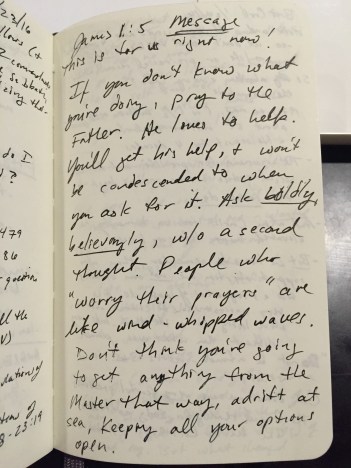
I wrote this in my journal in late January. We’d been quietly praying about direction for months, and this verse came up as the verse of the day on Bible Gateway. I wrote it in my journal and then took a pic of it so I would have it on my phone as well.
With our upcoming move into the city of Chicago, we’re facing lots of questions.
Where will the kids go to school? Don’t know.
Where will we go to church? Ditto.
What ministries will we be able to plug into as a family? Another unknown.
Where will we live? Still in process on that one, too!
But the biggest one of all for me is not one of the “W” questions, but the “H” one. How? How, in all these different, new places and contexts, do we learn how to live out our faith? How do we approach others with sensitivity and get to know them well? How do we make authentic friendships in which Jesus is evident? How do we become good neighbors and trusted members of a neighborhood?
Each time I’ve opened my daily prayer app this spring, I get the answer.
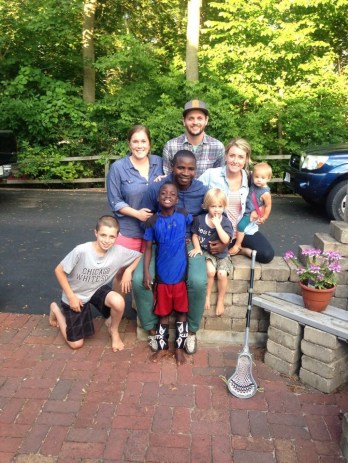
The picture above was taken in spring 2008 in Uganda. See the little guy on the right side? That’s our Patrick. He was being cared for by all the other people in this picture while we, in the States, were in the process of adopting him. That was also a time filled with questions! In the picture below, taken just outside our house in West Chicago, Patrick is front and center, and his brother Jake is kneeling on his right. Four of the other people in the picture above are also in this pic–joined by two of Jody and Aaron’s children.
It is the season of Pentecost in the church calendar, and the opening sentence for this time is Acts 1:8. “You shall receive power when the Holy Ghost has come upon you; and you shall be my witness in Jerusalem and in all Judea, and Samaria, and to the ends of the earth.”
I am reminded: the disciples in “real” Pentecost time experienced some of the same feelings we are experiencing. After three years of following Jesus around, of always knowing who their leader was, of seeing his example of love and faith and care, they lost him to the skies.
They returned to their upper room and huddled together, unsure of where to go, what to do, and how to do any of it.
Yep, same questions.
But the beginning of Acts, written later in retrospect, begins with some of Jesus’ last words to his disciples. “You’ll get the Holy Spirit,” he told them, “And when the Holy Spirit comes on you, you will be able to be my witnesses…”
And where will they be able—enabled—to be his witnesses?
Answer: Everywhere.
Downtown Chicago, therefore, is covered by this promise. It may be new to us, but it’s not new to him.
The “when,” the “what,” the exact “where”–he’ll answer all of these.
Hi everyone, it’s been awhile since I posted. It’s been a little crazier than usual around here, as our family has been praying about and anticipating a move this summer. The decision was just made final this week, and we’ll be heading just about 25 miles to the east to live in the city limits of Chicago. Specifics beyond that aren’t set (well, other than that husband Dave will be teaching at a charter school downtown–that’s a huge answer to prayer!), but we’re waiting to see how God leads.
In the meantime, I’d like to share a teaching that I gave at our women’s Bible study a couple weeks ago. It was written during one of the most uncertain times of this journey of moving (though I know there are more to come!). I’ve done an audio of it as well; it’s about 25 minutes in length and you can find it just below this paragraph. This is far longer than my usual posts, and I apologize for that.
“I AM the Way”
Our teaching topic today is Jesus’ “I Am the Way” statement. I’ve been thinking about that statement for weeks now, so the collect that was prayed at the beginning of the service this past Sunday jumped out at me. I’d like to pray it over us today as we look at Jesus as the Way for us.
Almighty God, whom truly to know is everlasting life: Grant us so perfectly to know your Son Jesus Christ to be the way, the truth, and the life, that we may steadfastly follow his steps in the way that leads to eternal life; through Jesus Christ your Son our Lord, who lives and reigns with you, in the unity of the Holy Spirit, one God, for ever and ever. Amen.
Before we get into talking ABOUT the passage, let’s read it together. This is John 13:31-14:10, some of Jesus’ last words to his disciples before he was betrayed. (Follow the link above to read the passage on Bible Gateway.)
In John 14:6, Jesus said, “I am the way and the truth and the life. No one comes to the Father except through me.” This morning we’re looking at the first noun in Jesus’ statement: “Jesus is the Way,” and exploring what that means for us, both in terms of salvation but also for our daily lives, for the step-by-step journeys we are all on. I’m “preaching” to myself this morning. That is usually the case when I teach—God always makes it very personal, but this is one that has been intensely applicable to me right now, and I’ve been praying that the journey I’m on and what I’m learning of Jesus being the Way for me in it will be of real use to you as well.
For about a year now, my husband and I have felt a pull to move to the inner city, with my husband sensing a specific draw to urban education. We’ve sought discernment about this urge, we’ve gathered people to pray with us, we’ve gotten counsel, and my husband has applied for a couple of jobs in inner-city Chicago schools. I won’t bore you with the process that has followed, but it has been very much a 3-steps-forward, 2-steps-back kind of journey, and both jobs are still possibilities even though it’s now almost May—and in the educational world, that’s getting late! Meanwhile as I’ve sensed the Lord’s leading, I’ve fought fears of “If this happens, what about school for my kids? Won’t they all have closed their enrollment? What about housing? How will we sell our house and find someplace to live in that short of time? What neighborhood?” It’s gotten to the point that I realize that if God actually opens doors and makes this happen, it truly is miraculous because I’ve got no control over it.
So, with all this swirling around in the background of my life, I began to prepare for this teaching. One of the things we do to prepare is to work our way through a set of pre-sermon questions, and one of the questions is this: “How is this passage supposed to make you feel?”
I laughed out loud when I read that question because, honestly, I identified in many ways with the disciples. I’m asking some questions that sound really similar to theirs. “Where are you leading? What is going on? Is your way for us here or there? Can you please just make the way clear?”
So, just like the disciples in the passage, I was feeling confused. I was identifying more with their feelings than with what Jesus was saying. But then I had to look at the question again, because it doesn’t ask, “How does this passage make you feel?” It hadn’t asked me how I actually felt when reading the passage but instead asked how the passage was supposed to make me feel—and that was entirely different, because the intent of this passage is hope! It’s an incredibly hopeful passage, full of eternal belonging and promises of home.
But I, just like the disciples, needed to see it differently. I needed a different perspective on Jesus being the Way. I needed a different understanding of the way.
We, here in 2016, know that verse 31 is speaking of Jesus’ crucifixion and resurrection; he’s speaking of our salvation. Then, in verse 33 he is referring to his ascension and in 34 to the new resurrection life his followers will live. These are huge, eternity-changing events!
And after he says all these monumental things, Peter asks, “Where are you going?”
Peter missed the salvation; he missed the new life of love, and he focused on Jesus leaving. I get that! Peter missed all the other stuff because Jesus just said something that threatened Peter’s imagined way of life. “What? You’re leaving? That can’t happen! We’ve got plans! You’re our leader!” Peter, along with probably all the other disciples, had his sights set on something other than God, something other than God’s purposes. They couldn’t see anything other than their own purposes. Peter was still expecting Jesus to establish an earthly kingdom, to restore Israel to glory, and Peter was wanting a significant part in this restoration. Now please understand I’m not putting Peter down for this. He wanted to be Jesus’ right-hand man, the one known for being completely supportive. He wanted to be the rock that Jesus had called him.
None of these things are bad, but they were what Peter wanted. Peter wasn’t asking what God wanted. He wasn’t looking to the Father, as Jesus always was. In chapter 14 we see the same tendencies in Thomas and Philip. Thomas, in verse 5, said, “We don’t know where you’re going.” He, too, has his eyes somewhere OTHER than God. And that’s when Jesus points him—all of them—back to God, telling him that the way Jesus is going is ALWAYS to the Father and then Jesus makes the I Am statement that He is the complete and only way to the Father,
And before I smack my forehead and say, “C’mon, guys, don’t you get it?” I have to realize I do the same thing. I formulate my own plans, and I get my eyes off the Father. I forget that HE is my ultimate goal, my complete belonging. I, too, form a plan that seems right to me, one in which I know my place and feel settled and secure, and when God does something or says something that upsets my plan—or suggests that’s not His plan, then I’m just like Peter. “What?”
And when I do this, it’s like I’m walking through an open field with my eyes on the ground, making my own way—forgetting my way doesn’t lead to the Father. I forget to look up at the Father and keep looking up, so I also forget that in him I am home.
This looking, this Father-gaze—this Father-fixation, you could say—is only possible through Jesus. He made a Way, the only Way possible, between us and the Father. Through his death and resurrection he wiped out all the sin and evil that was between us so we can see the Father and know his loving face and feel his arms around us. So we can know that in the Father’s love, we are home. We belong. In and through Jesus, we are brought to our true home with him and the Father. That home is our ultimate destination.
And this Destination influences the journey to it, and this is another meaning to Jesus being the Way. He is not only the destination, He is the way of the Father. Jesus perfectly lived this way of the Father. He revealed it to us in both his words and actions. In the Gospels, he said, over and over, in many different ways, that his eyes were on the Father. And that determined how he lived. He wasn’t trying to please others or himself—just the Father. And this is the kind of life, the kind of way to which Jesus is referring in John 13:34-35. He tells his disciples—he tells us—Love one another. As I have loved you, so you must love one another. Earlier in this chapter he’d given them a very concrete example of this when he washed their feet and told them to do the same. Bishop Stewart spoke of this call to love in the sermon this past Sunday. He told us we are called to choose a life of costly love, sacrificial love—that is the Christian life. That is the life Jesus lived, the life that revealed the Father to us, that showed us the Father’s way. And it is also the life we are to live. We are called to service, to other-focused lives.
And here is where I get a little stuck–in a couple of different ways: first, HOW do I do that? I’m selfish by nature. How do I live a life of sacrificial love when I am unable to do that? Second, how do we know exactly which direction this life of sacrificial life should take? For example, in my particular situation right now, we have a lot of good choices, and all of them—including the choice of staying in our current situation—involve costly love and service. I don’t think there’s ONE right choice. I think God could and would use all of them, but we still are faced with a choice, and that can be overwhelming.
I see this in my head kind of like a Google map with the middle part missing. It’s as if I’m looking at the map, and two dots are flashing on it. One dot is the “You are here” dot; it’s our current location. The other dot is the “destination” dot. The map behind the “You are here” dot is filled in, in a lot of detail. We can look back on our journey and see a few of its twists and turns and kind of how it got us to the point we’re at. The other dot, the destination dot, is labeled “eternal home,” “eternal life with the Father,” and around the dot are all these wonderful descriptors like “full satisfaction in Christ,” “freedom from all selfishness,” “completeness,” “wholeness,” “belonging,” “everlasting peace and love.”
So I have the ultimate destination dot and I have the current location dot, but the map in between isn’t filled in. It’s blank, so I don’t know the path between the two dots.
Now, so far I have talked about two “ways” that Jesus is the Way. The first is that Jesus is our destination, our ultimate home with the Father, and the second is Jesus as our example, showing us the Way of the Father—full of sacrificial love.
Those are two wonderful and essential understandings of Jesus being the Way, but I need more! If I only have those two dots—the current location and the ultimate destination—and then the example of Jesus, that still leaves me with big blank space in my map. HOW do I walk your way? I ask. Which direction do I take? How do I know? Am I just supposed to choose the way that looks hardest each time? What if I don’t? What if I choose the easier way and then feel guilty? (Some of us get stuck in that trap, don’t we? You know who you are!) We say, Lord, I’m lost in the in-between place. I’m stuck!
This is where the third understanding of the Way brings hope to my heart. Jesus is the Destination; he is the way of the Father—and he is the way to the Father. He is the path beneath my feet as well as my guide and companion on the journey; He holds my hand as we walk together; he carries me in the difficult parts; he is before me and behind me and beside me. He is in me.
In this passage in John, the disciples couldn’t see this yet. Their vision was still clouded. They didn’t understand; they weren’t saying, “Lord, we get it; You’re completing our eternal salvation with your death and resurrection.” No, they were still looking for an earthly kingdom and still hoping for some recognition and honor in it—but regardless of their clouded perspective, they had this one hugely important thing right: Jesus was their life! They’d walked with him for three years, and they didn’t want that to end. They’d journeyed with him. They’d looked to him for where they were going to go and how they would be fed and where they would sleep at night. And now he was talking about leaving them. I would have asked the same question. I still do!
And Jesus says to me, to us, exactly what he said to them. Please look with me at John 14:16-19, 26-27. (The link will take you to John 14:16-27 in the NIV.)
Jesus didn’t leave the disciples as orphans. He doesn’t leave us either. We are not vainly trying to make our way to the Father, hopelessly striving in our own strength to live as Christ did. No, He gave us His Spirit. “You will see me,” he promised. “You are not alone on the way. I will come to you. Because I live, you also will live.”
So the Spirit guides us through the blank space between the current location dot and the destination dot on the map. This doesn’t mean we get to punch the “list navigation steps” button and see all the twists and turns laid out. No. Often the Spirit reveals only one step in front of us; though at other times the Spirit settles us in a sweet spot for a time. Sometimes the way is full of trouble and hardship. Sometimes we seem stuck—with the way in front covered in fog. We’re not sure where to step.
But no matter what the journey is like, we’re not doing it alone. And that makes all the difference.
As my family has been in this journey of ambiguity—which Pastor Matt calls “a darn good story,” (because he’s not the one living it! J) the Lord keeps reminding me of this truth in a lot of ways. There was the time when Father Kevin stood up after the sermon a few weeks back and said, “I sense there are some here who are in a smog of confusion”—actually, I don’t remember if he said it just like that, but being who he is, I can see him picking words like that—and my husband and I looked at each other and just nodded—and then went and sought prayer. There was the Good Friday service, when I knelt at the cross, full of uncertainty for my children in this possible move, and I heard the Lord say, “I have them. They’re mine.” And then when I shared that moment with my two daughters at the Holy Week reflection service a couple weeks later, my younger daughter’s eyes got wide and she said, “Mom, he told me the same thing when I was at the cross that night. He said, ‘Maddie, I have you.’”
In just the right moments, when my doubts are crowding in, God elbows them out of the way and says, “Look at me instead.” He did this earlier this week when I was meeting with a young mom friend and she said, “God gave me an image while I was praying and I think I’m supposed to share it with you.” And though her vision didn’t give specific direction—it was of a woman lying paralyzed at the feet of Jesus and then being raised by him into courage and strength and service—it encouraged me and renewed my hope. The Lord has done this again and again in this process.
And when I keep my eyes on the Father, when I remember that the Spirit is with and in me, then I also remember I don’t need to worry about the navigation steps. I don’t need to know them. He will reveal what needs to be revealed, when it needs to be revealed. I don’t need to be troubled or afraid. Jesus has made the way for me to be home in the Father, to belong to him. That will be fully realized in eternity, but it’s also a resurrection reality right now. I can live, now, at home in the Father, belonging to him. That is most important—that’s the BIG thing—so I can trust him for everything else, for this journey right now.
You can, too, no matter what your “current location” looks like, no matter what the step in front of you looks like, no matter if you feel paralyzed or overwhelmed or bored or lost or sad or anxious in your “current location.” In these past few months, my husband and I have prayed the prayers for dedication and guidance and quiet confidence over and over. Sometimes we pray them back-to-back, asking for our hearts to be prepared for service, asking for direction and then asking that we would be reminded that our place of belonging is in God. I’ve combined the elements of these prayers into one that I’d like to pray for all of us right now.
Father God, through Jesus we have our home and belonging with you. By the might of your Spirit, lift us, we pray, to your presence, where we may be still and know that through Christ, you are our God, you are our Father. As our Father, please help us to follow the way Christ revealed. Draw our hearts to you, guide our minds, fill our imaginations, and control our wills so that we may be wholly yours, utterly dedicated to you. Then use us, we pray, for your glory and the welfare of your people. And Lord, when we are uncertain of the way, give us the grace to ask you for guidance. May the Spirit save us from all false choices and lead us on your straight path. Through Jesus Christ our Lord. Amen.
Some people pray like a troubadour. Beaming about all the great things the Lover of their Soul has done. Their love is mutual and glorious. It’s dramatic and flowery, stomach flips and sighs. I’ve prayed like that, when my chubby baby smiled up me, and when I caught my husband looking at me from across the room.
Some people pray like a tenant, leaving post-its on the landlord’s door. They roll their eyes whenever something breaks, knowing that whenever the scruffy, absent ex-con gets to it, it’ll be too late. They wait for him to come over smelling like cigarettes with a roll of duct tape, but normally end up fixing it themselves. Which is what the landlord was hoping for anyway. I’ve prayed like that, when my friend’s cancer didn’t get healed, and when my friend’s divorce was finalized.
Some people pray like a child, asking for big things with…
I have been thinking about strength lately (which tells you I’ve been needing some 😉 ).
The word brings to mind the Strengthsfinder book I was required to read for work back in the early 2000s. Its premise was that we spend too much time focusing on and improving our weaknesses and not enough on discovering and capitalizing on our strengths. It included a test that identified a person’s top five strengths. I took it and was told to “lean into” the strengths it told me I had.
Not bad advice, though I don’t remember now what my test results were. I do remember thinking that if I really leaned into my strengths and ignored my weaknesses, it would probably result in my losing my job.
That’s not the strength I need right now.
“Strength” also makes me think of the Rocky movies, which my husband introduced our younger children to during our stay-cation spring break. They were hooked by the first one and quickly watched 2, 3, and 4 on consecutive nights (he convinced them #5 was simply too cheesy). I watched bits of them with the crew but was eventually asked not to because I kept cringing at hard blows and delivering lectures about the violence of fighting sports. “Strength” in Rocky is physical, of course, but it is also human determination and grit and perseverance.
Again, not helpful right now.
Then, a couple days ago, I read the prayer “For Quiet Confidence” in the Book of Common Prayer. I’ve prayed it a lot in the past few months, but this time I noticed the theme of strength in it. It speaks of a strength that is available even when we are bone- and soul-tired, when both the Rocky and Strengthsfinder kinds of strength are simply useless, when we’ve come to the hard-but-blessed realization that we must look completely outside ourselves.
The prayer, drawn from Scripture, tells me my strength is found
in returning,
in rest,
in quietness,
in confidence in the God of the universe,
in stillness,
in the presence of the Lord,
in the might of the Spirit,
in knowing who God is and
in knowing his unfailing love for us.
O God of peace, who has taught us that in returning and rest we shall be saved, in quietness and in confidence shall be our strength: By the might of your Spirit lift us, we pray you, to your presence, where we may be still and know that you are God, through Jesus Christ our Lord. Amen.
The theme of the potter and the clay is a popular one in Scripture. Isaiah and Jeremiah both used it, as did Paul in Romans, and many have learned from and written about the metaphor. My friend Susanna, a nurse, missionary with Kids Alive International (the link is to her missionary page on the KA Int’l website), artist, and oh, so many other things, just wrote about clay on her blog, and I asked if I could share her piece through my blog. (She said yes!)
Susanna is a wonderful potter (the pictures with this post are of a bowl she made and gave to me), and what jumped out at me in her piece was her perspective on the potter’s attitude toward the clay. Many of the Scripture passages emphasize the truth that we, as the clay, should accept the potter’s intent. Susanna, whose journey to the mission field has been challenging and circuitous and downright hard at times, does write about this aspect of the metaphor, but she also talks about these passages from the perspective of the potter. Working with clay brings joy to Susanna. She loves crafting even the simplest pieces. Working AND reworking the clay brings her satisfaction, and she assumes the Potter feels the same!
The potter took what was spoiled and made it into something else. Not only did he take the time to do it, but he found it good to do. It wasn’t a hassle or pain. It was a process that the potter took delight in. I know that it is in the process of creating a piece of work that I take such enjoyment and I must be reminded that the great Potter enjoys the messy process that I am.
I have a poem up today at The Well, InterVarsity’s online blog for women in graduate school and beyond. The poem is titled “Let Me Think.” While you’re at The Well, check out some of its other content. It’s fast becoming one of my favorite sites.
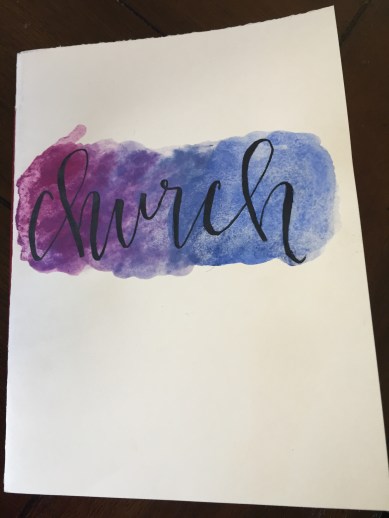
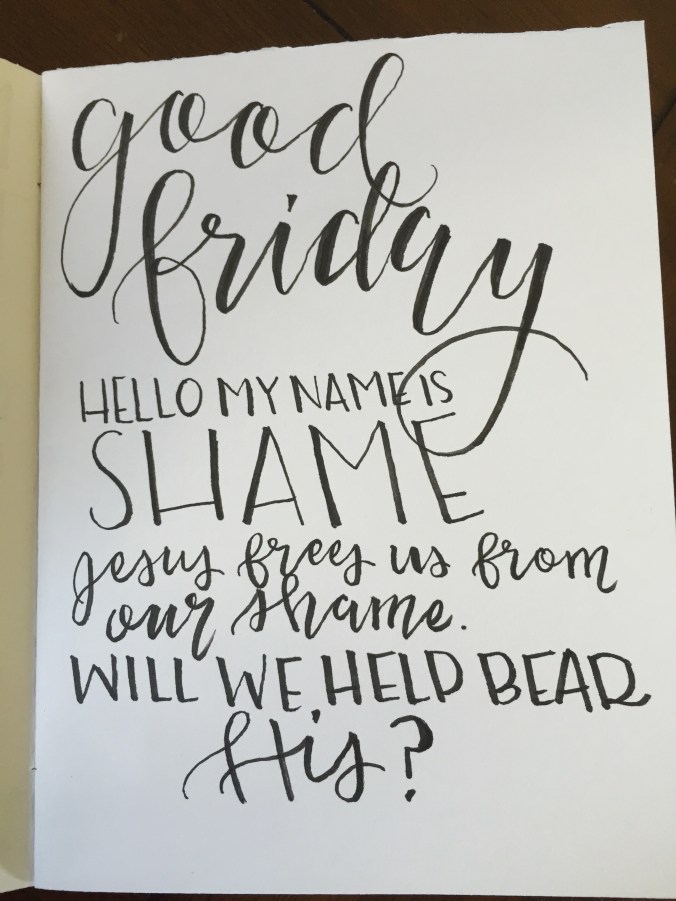
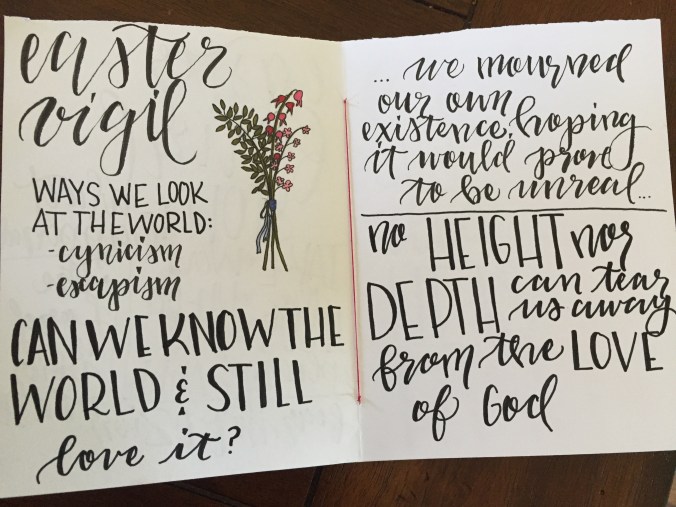
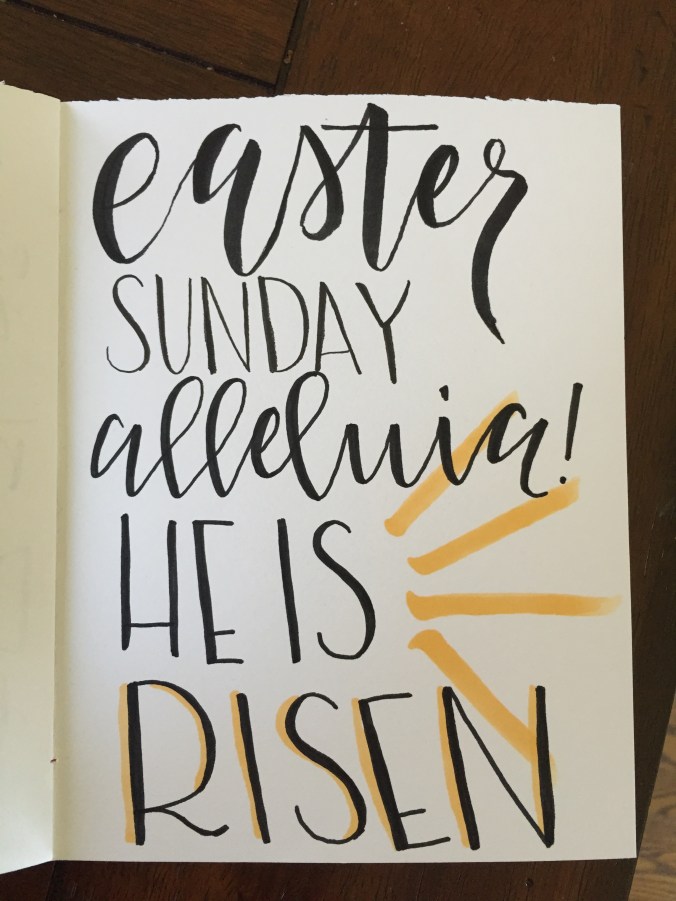
I’m also sharing some of daughter Em’s hand lettering today. She, Judy (the older of our two international student “daughters”), and I spent a LOT of time at our church during Holy Week. Judy, Em, and I went to every single service, spending nearly 20 hours at church between Maundy Thursday and Easter Day. It was wonderful, and Em took her notes from a few of the services and created a booklet. The only page I’m not allowed to share with you is the Easter Festival page (it’s a service at our church on the Saturday before Easter) because some ink from the facing page bled through.
I have a short story up on The Redbud Post. It’s titled “The Body, Broken and Whole.” Here’s an excerpt. If you want to read the whole thing, just click on the link above.
Ming moved down the line of Eucharist ministers, her pastoral robes swaying gently each time she stopped. “The body of Christ, broken for you,” she said, pressing bread into the outstretched hands of the minister in front of her. Another pastor followed behind her, carrying the cup, the two of them serving communion to the ministers so the ministers could then serve the rest of the congregation. At the far end of the line, Leah dropped her head and stared at her hands. One laid over the other, they formed the shape of a cross, ready to receive the bread, but without realizing, she’d pulled them close against her stomach. She noticed her fingers were curled, ready to close tight, ready to refuse the offering.
“Leah?”
Her head jerked up. Ming’s face was next to her own, and Leah could read concern in Ming’s dark eyes, in the expression on her almond-brown face.
Leah’s hands clenched shut. “I can’t, Ming,” she whispered. “I can’t take Communion.”
Ming looked at her a moment longer. Then she slid her arm around Leah’s shoulders and led her away from the others. Inside the small prayer room off the sanctuary, Ming nudged Leah into a chair, and then sat in one herself, pulling it close enough their knees almost touched.
“What is wrong?” Even after years in the U.S., faint traces of accent from her childhood in Cambodia still colored Ming’s voice.
Leah couldn’t meet her eyes. “I got angry with Bree this morning.”
Ming waited. When Leah didn’t say more, she asked, “What happened?”
Leah swallowed. “It was all little things. She didn’t do her homework from two nights ago, took some gum from my purse without asking, left clothes all over her room, and then, when she was supposed to be getting ready for church this morning…” How could she tell Ming what she had said?
The rest is at the Redbud Post. And while you’re there, check out some of the pieces by other Redbud writers–there’s some fantastic stuff!
 Sometimes, in the middle of writing class assignments and web articles, you gotta’ write something just for fun! So last week, as I was trying to squeeze a paper down to its required 5-6 pages (I failed), I wrote about my favorite “office away from home,” Cafe K’tizo, and submitted my just-f0r-fun poem to DineANDRhyme, a blog of poems about restaurants.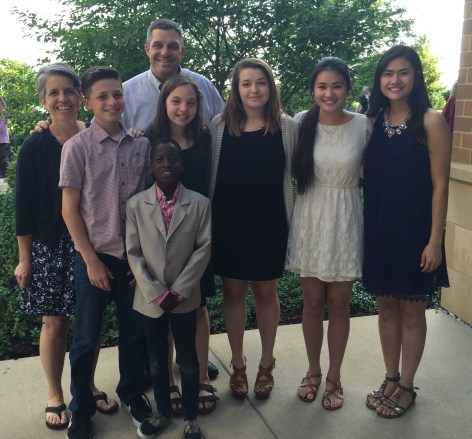

 And where will they be able—enabled—to be his witnesses?
 Hi everyone, it’s been awhile since I posted. It’s been a little crazier than usual around here, as our family has been praying about and anticipating a move this summer. The decision was just made final this week, and we’ll be heading just about 25 miles to the east to live in the city limits of Chicago. Specifics beyond that aren’t set (well, other than that husband Dave will be teaching at a charter school downtown–that’s a huge answer to prayer!), but we’re waiting to see how God leads.
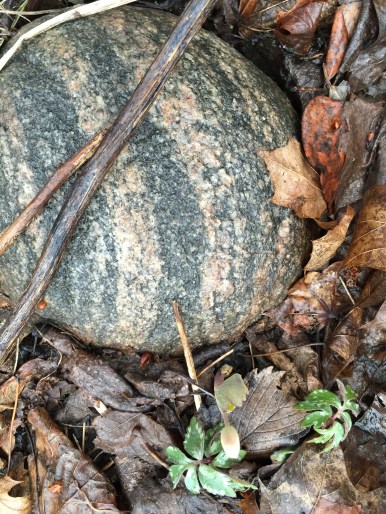 I have been thinking about strength lately (which tells you I’ve been needing some 😉 ).
 probably result in my losing my job.
 The theme of the potter and the clay is a popular one in Scripture. Isaiah and Jeremiah both used it, as did Paul in Romans, and many have learned from and written about the metaphor. My friend Susanna, a nurse, missionary with
 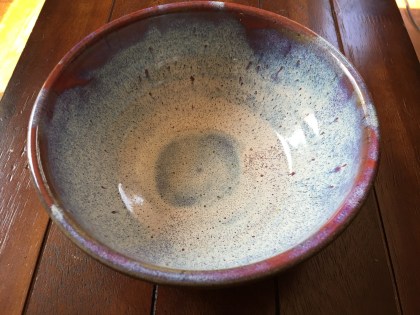 Susanna is a wonderful potter (the pictures with this post are of a bowl she made and gave to me), and what jumped out at me in her piece was her perspective on the potter’s attitude toward the clay. Many of the Scripture passages emphasize the truth that we, as the clay, should accept the potter’s intent. Susanna, whose journey to the mission field has been challenging and circuitous and downright hard at times, does write about this aspect of the metaphor, but she also talks about these passages from the perspective of the potter. Working with clay brings joy to Susanna. She loves crafting even the simplest pieces. Working AND reworking the clay brings her satisfaction, and she assumes the Potter feels the same!
 I have a poem up today at The Well, InterVarsity’s online blog for women in graduate school and beyond. The poem is titled “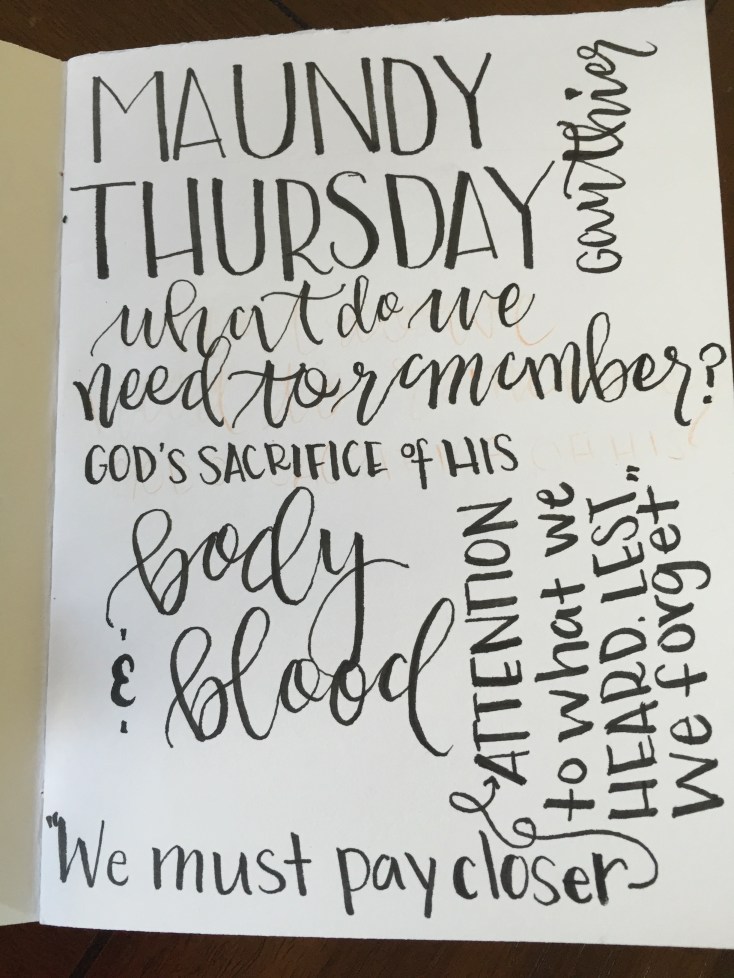
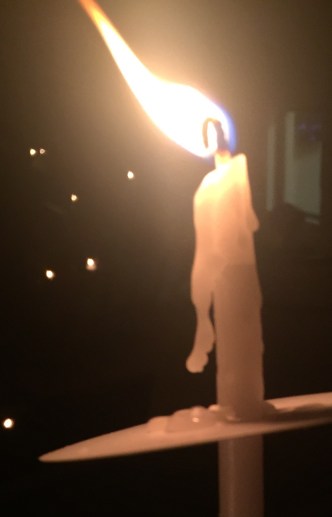 We vigil the night before Easter,
 Jen Underwood