I need the Gospel–everyday

Yesterday afternoon nine-year-old Jake told me he needed to talk to me “in private.”

“Mom, lately I’ve been struggling with the idea that God is mad with me.”

“Why, sweetheart?”

“Because I haven’t been reading my Bible as much lately, but when I am reading it, I’m doing it so He WON’T be angry with me, so I know my reasons are bad, so I think He’s angry with me.”

Oh, we don’t need a DNA test or even pictures of childbirth (thankfully there are none!) to have proof that this child is MINE!

“Do you think Jesus is mad at you?”

“No.”

“Well, who is Jesus?”

“He’s God.”

We talked about how Colossians tells us that Christ is the exact likeness of God. He is the visible representation of the invisible God. (Colossians 1:16, AMP version). Christ is not different from the Father God. Rather, He reveals Him as He is to us weak, frightened, rebellious (which only makes us more frightened) children. Through Jesus–and because of what Jesus did for us–we can know God and His love for us.

“But what about my reasons for reading the Bible? How can I read it if my reasons aren’t good? How do I make them good?”

Simply more proof that Jake is my son!

Another conversation—about how we can’t make them good, only God can, and He knows full well that we aren’t capable of purely pure motives in the here and now anyway. “We just tell God,” I said. “We tell Him we know that our hearts aren’t right, that we can’t make them right, and we ask Him to help us. Then we do what we know is good and right to do—even with our impure motives—because we trust that God can work good and right out of them.”

It was a joy to have this “private talk” with Jake.

It was also necessary.

Not just for him, but for me.

I needed to be reminded of the Gospel, of Grace.

In preaching the Gospel of God’s marvelous Grace to Jake, I was preaching it to myself.

And I need that—every day.

A blast from my past–this one is for all you moms with little ones

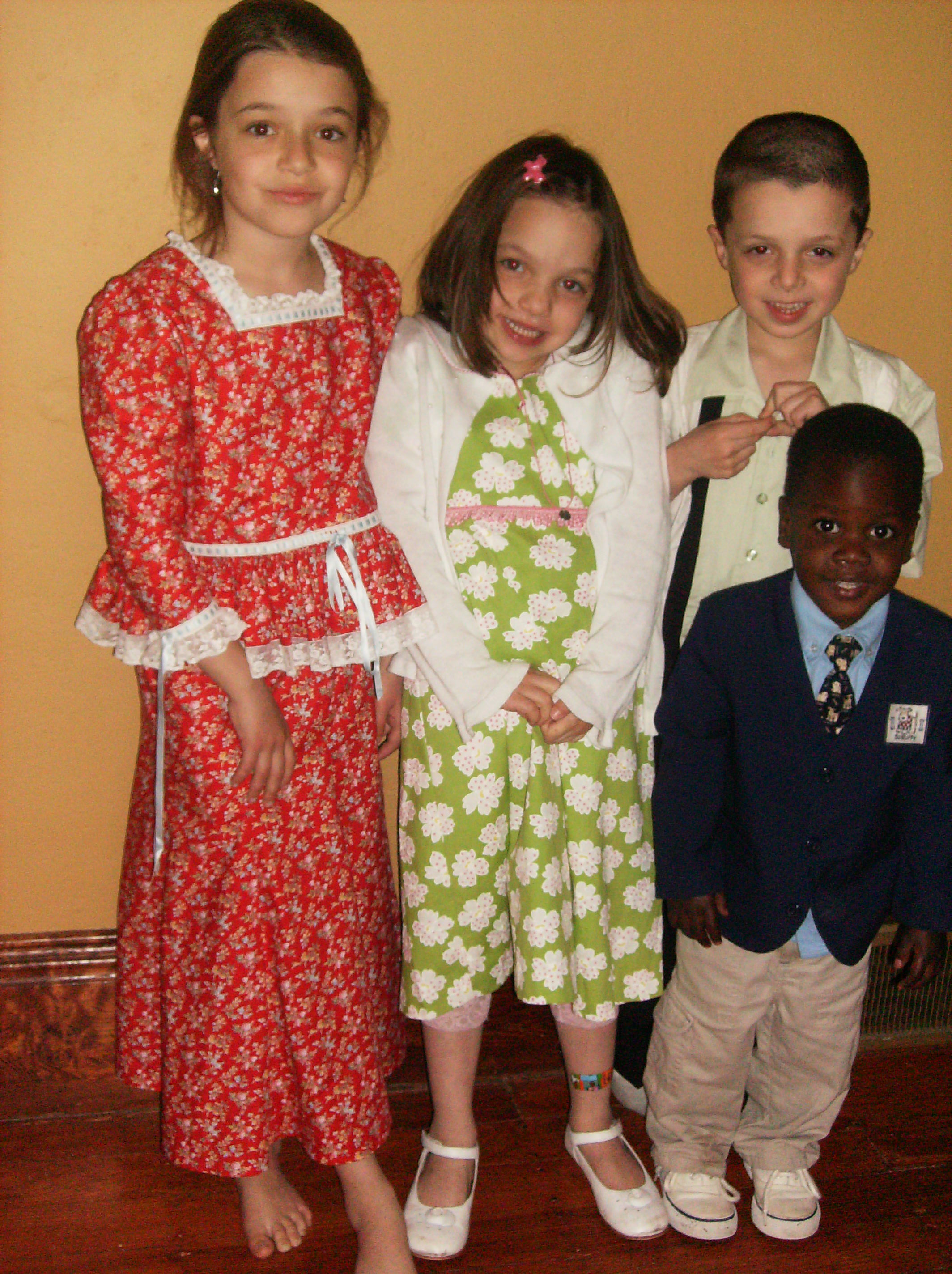
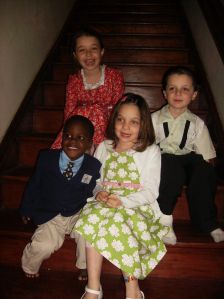
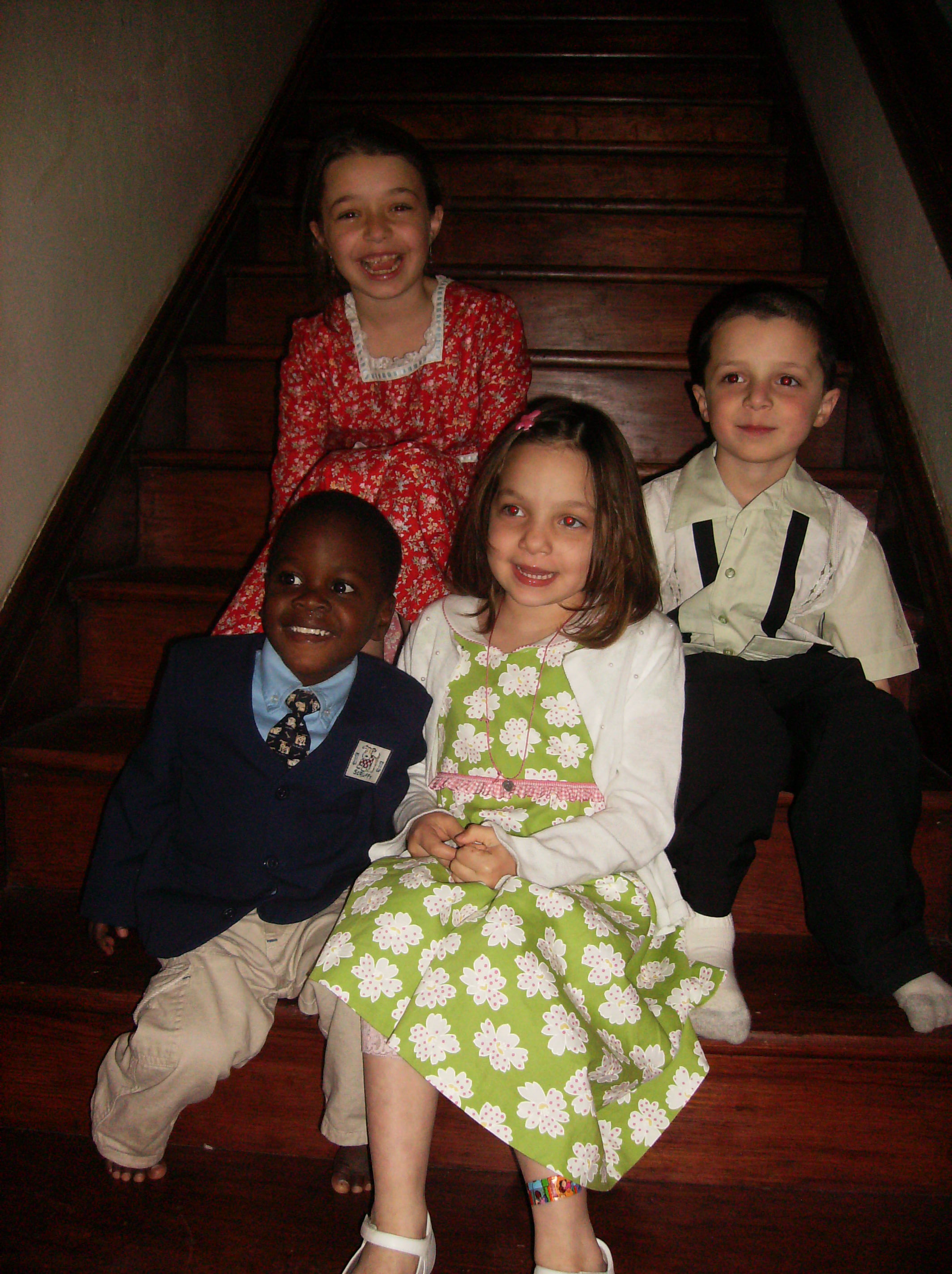
This was written Pre-Patrick, so I had to include a picture of all four of them! Such crazy days! (Not that they're less crazy now--just different).

This was written Pre-Patrick, so I had to include a picture of all four of them! Such crazy days! (Not that they’re less crazy now–just different).

I am a mom with 15 month-old twins and a 4 year-old. Much of my day is spent feeding meals, straightening my house, doing laundry, and entertaining children. It sounds simple, but I have never had another job more challenging. Throwing trash away has become an intricate maneuver. The trash can first received a lid, then was moved to the top of a counter, and now is hidden in the pantry where I must perform basketball-worthy faking moves to open the pantry door, toss in the trash (another athletic skill, this one requiring hand-eye coordination—ha!), and close the door—and all this without some wriggly body intervening. The same or similar feat is required when negotiating the bathroom door, the refrigerator, the under-the-sink cabinet, etc. The stereo and computer were another issue entirely until I got smart and enclosed them in an armoire—thus creating another “door” situation. The poor dog’s food has been moved four times until finally being relegated to the basement, and his appetite is now at the mercy of my memory and time (another “ha!”). Our dining room chairs are not where they should be; i.e. they are not at the dining room table. The youngest child figures herself a centerpiece.

When the smaller two collapse into exhausted heaps—and I desire to do the same—the four-year-old beckons. “Read to me, sing with me, let’s play,” she says, and then, “Now it’s Mommy-and-me time.” And the Grand Teton of laundry becomes Mount Everest as I capitulate and remind myself of that old “The house can wait” ditty.

It’s a life so full of blessings it can feel like a nightmare keeping up with them, the nightmare of the overwhelmed, under-equipped heroine faced with three ultra-endowed foes. But when this is at its worst, I sometimes indulge in the horror’s anti-equivalent, my fantasy. In this I am equipped, with x-ray vision, super strength, lightning-fast speed, night vision, a stretch arm, you name it, and I can endure a chaotic afternoon imagining myself as Super-Mom.

With x-ray vision I could locate that missing shoe, stray lunchbox, roving child, etc. Two minutes prior to the we-must-leave-now-or-we-will-be-late moment, x-ray vision would be exceptionally handy. It could also avoid many trips to the doctor or emergency room: “Nope, that arm’s not broken, just badly bruised.” Of course, it could also prove when a trip is needed! “So that’s where my diamond ring is!”

Super strength sounded particularly good the day I forgot the stroller and had to carry both twins the long hike from the parking lot to the library, but I’ll be honest; most often this figures in the nightmares every mom really has, the “What do I do if my car plunges into water with me and my children in it?” terrors.

More helpful, though, in the day-to-day routine would be lightning-fast speed. I could clean my house in ten minutes, run my daily five miles in four, fix breakfast in two, and all this before seven in the morning. I could catch my fearless child mid-trip between treetop and ground, run the kids to Grandma in Alabama after lunch and be back in time for a date with my husband, and bring in some extra cash as a professional marathoner.

044Night vision would enable me to locate that stray pacifier at two in the morning and not kill my shin on my son’s ready-steady indoor tricycle on the trip back to my own room. Even better, a stretch arm would allow me to locate said pacifier and soothe its owner without leaving my bed at all. Supermom’s choices are endless.

Always, however, at the zenith of my imagined glory, the wax melts and reveals to me exactly what and who I really am, just a regular mom with three energetic kids. Just a mom, like all others, who is trying to develop real super mom powers: X-ray vision to see into my kids’ hearts and read their minds, super strength to carry or push or pull, lightning-fast speed to be there when I’m needed and give space when I’m not, night vision to soothe the tears and fears away, arms that can stretch long enough to hug all three every minute of every day, and—the most important supertrait of all—protecting, trusting, hoping, persevering love.

Africa Devos, LAST ONE!: Re-entry

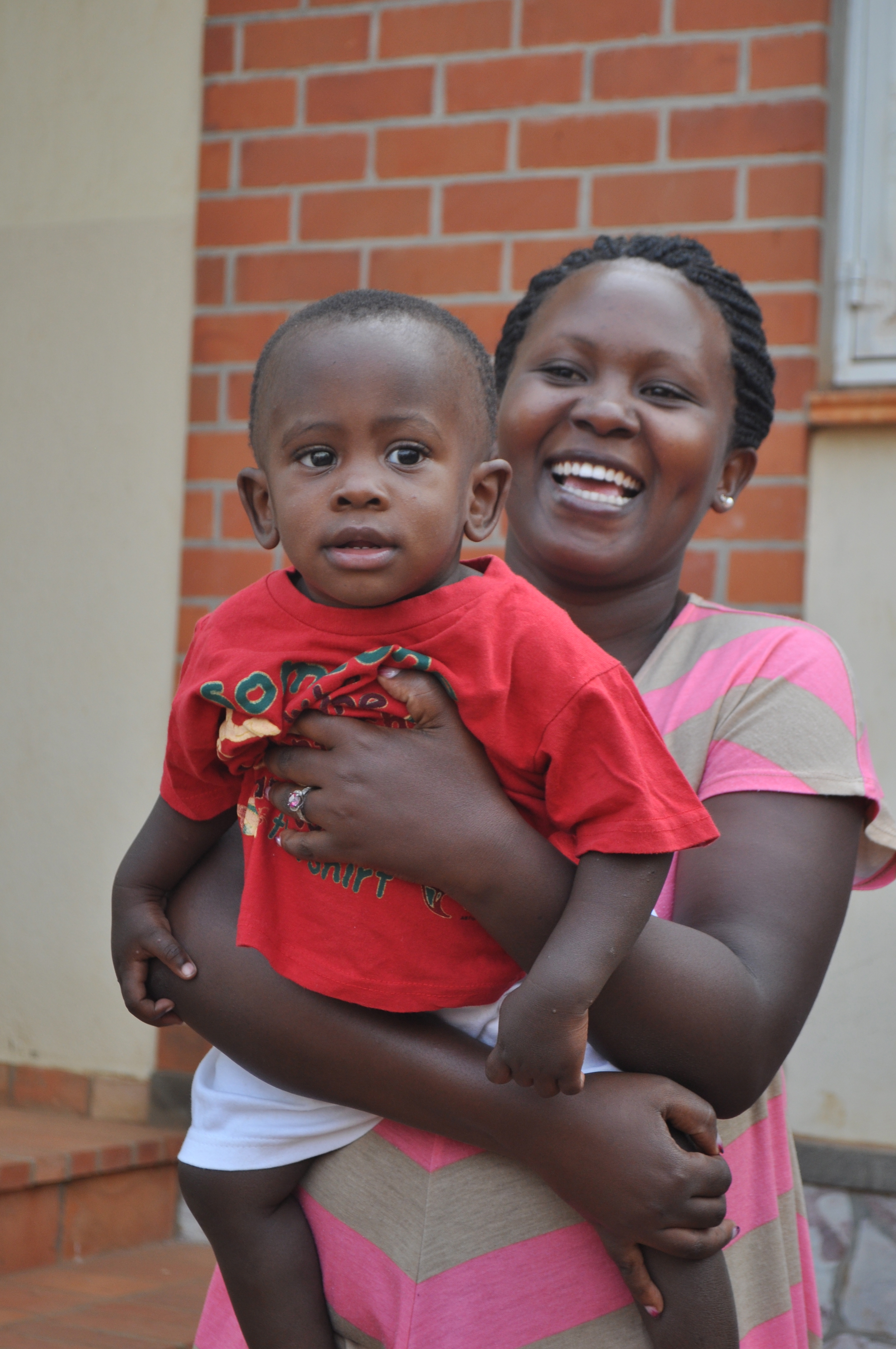
This is Vena, wife to Wilfred Rugumba (who directs Mercy Childcare Ministries), and her younger son, Joshua. Amazingly, I just got to see them IN the U.S. last weekend!

This is Vena, wife to Wilfred Rugumba (who directs Mercy Childcare Ministries [MCM]), and her younger son, Joshua. Amazingly, I just got to see them IN the U.S. last weekend as they have been visiting churches/groups informing them about God’s work at MCM. I love this pic–they’re both as cute as can be!

You are about to re-enter the United States. This can be a difficult transition after being in Africa. Though you long to see family and friends and you want, too, some of the comforts we’re accustomed to, it’s not a simple adjustment. You will probably see “stuff” differently. We have three general temptations as we return to the States: 1. We try to forget, particularly the difficult feelings/thoughts we experienced; 2. We look down on others for not feeling as we do about Africa and providing for the poor; or 3. We feel guilty.

Katie writes about re-adjustment difficulties in chapter 7 (see page 121 in particular). You may want to re-read that chapter. Bottom line, though: you HAVE to stay close to Christ during this transition time. You have to take all your confusion and frustration and guilt to Him. He has a good work to do in you through all this. Go to Him.

Commit to praying for each other,

Commit to getting together to pray for your African brothers and sisters.


May God use all that we’ve experienced to help us to…

See/know Him more clearly

Love Him more dearly

And follow Him more nearly.*

Day after day.


*prayer by Richard, Bishop of Chichester, early 1300s

First world problem: Roomba and dog puke

I have to put a disclaimer here: The following complaint/story is completely first world, so–all my dear, dear friends in developing countries–please bear with me.

It’s also a bit gross, so just bear with that, too.

This summer a friend gave me a Roomba, a robot vacuum that moves around the house on its own and sucks up all the hair/dust/dirt/hair/hair (did I say hair more than once? Sorry, I have four girls in the house.)

So, I LOVE Roomba. I talk to Roomba while it cleans–not a lot, just things like “Roomba, you’re so wonderful. Good job! Keep it up!” My kids complain that I appreciate Roomba more than I appreciate them. My answer to that? “Well, you make messes. Roomba cleans them up. Hmm.”

But Tuesday morning, when I was taking PJ and his little friend Emma to their first-grade orientation (AAH! first grade! how did he get so old?), the dog evidently threw up in the house (see, there’s another first world issue; in what developing culture would a dog be in the house?). Amazingly, she (the dog) actually picked a spot on the hardwood rather than on a carpet, so all should have been well.

Actually, all should have been well when my older kids found the puke because–seems logical to me–they should have cleaned it up.

They didn’t clean it up. They left that for me.

In their defense (those were their words), they did move the curtains out of the way of the puke.

But then they left it.

And when Roomba began its daily sweep at 10 a.m., they never thought about the fact that Roomba was going to run directly over the puke.

Which it did.

I really do “love” my Roomba–even when I have to wipe up smeared puke and clean out all its puke-smeared brushes.

And, kids, I love–truly love–you all, too!


Africa Devotions, the Eternal versus the Long View

That sound funny, doesn’t it—aren’t “long-term” and “eternal” similar? No. When we say “long-term,” we generally mean the next few months, a five-year plan, a decade. We like to ask questions like this: “So what do see yourself doing in four years?”

But we only have two times assured to us. One is eternity. The other is now. We have no idea if tomorrow brings success or catastrophe. We have no control. When we truly recognize this, we realize we have to follow God step by step. We have to loosely hold any plans we make. When we hold our futures with clenched fists, we fall into one of two traps: worry or a false sense of control.

Neither of those is trust.


I don't know how clearly you can read this poster--which I found in the hallway at a girls' rehabilitation school in Kenya--but it sure helps me to realize that a lot of my "first world" problems aren't really problems at all.

I don’t know how clearly you can read this poster–which I found in the hallway at a girls’ rehabilitation school in Kenya–but it sure helps me to gain perspective on many of my “problems.”

Questions for thought/discussion:

  1. Katie’s plans for college fell apart, but what was far harder was when she and her boyfriend broke off their relationship. How do we trust God for things so close to our hearts? Read her journal on pages 227-230 and reflect.
  2. How does being Spirit-led fit into this?
  3. Jesus said this in Luke 14:26: “If anyone comes to me and does not hate father and mother, wife and children, brothers and sisters—yes, even their own life—such a person cannot be my disciple.” Then read pages XX and XXI in the introduction to Katie’s book. How does Katie’s story shed light on this verse?
  4. What happens when we ask for “more than we can handle” in our everyday lives? (See page 135). Is this a prayer of release? What happens when we pray like this for our everyday, “ordinary” lives?


The Eternal View

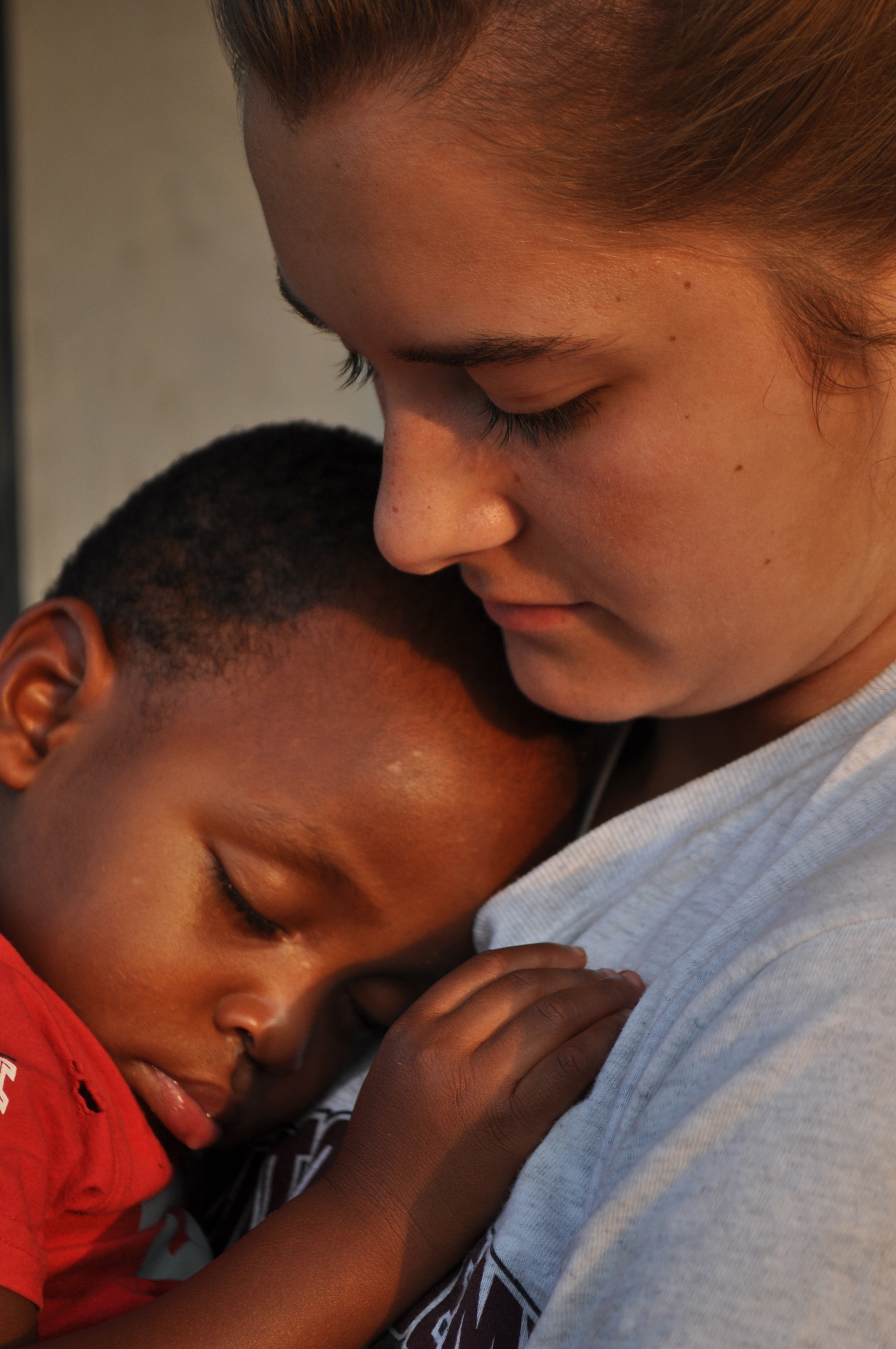
This little one fell asleep in Molly's arms. When I think about how many children never know this sense of safety...

This little one fell asleep in Molly’s arms. When I think about how many children never know this sense of safety…

Katie has seen more people die than many Americans do in an entire lifetime. She knows that for every person she is able to help, there are hundreds more in similar conditions. All of this has given her an eternal perspective. She says this on page 192: “I may never see the end of horrendous situations on this earth, so instead of trying to fix the situations here and now, I will focus on helping these people come to heaven with me, so we may say together: ‘Death and sadness have been swallowed up in a victory.’ … Christ has overcome the mess that is in this world and I am humbled to get to witness His salvation on a daily basis.”

It is easy to focus on the physical needs of the people we see, but many have the same ultimate hope we have—and they often have a better grasp on it because they don’t have a whole lot to hold onto here on earth. They sing more about heaven than we do because they truly would be glad to trade this life for that! (Sometimes we’re not so sure!)

Remember that Christ saves for eternity. Providing physical necessities is GOOD—and we should do it—but it’s worth very little if it doesn’t open doors for the Gospel that reaches beyond death and gives LIFE that never ends.


Side note: Some of you may be feeling that your sense of “home” is being disrupted on this trip. In some ways, this is good. God wants to prepare our hearts for our true home, and part of this process is making us dissatisfied with belonging here on earth. He wants us to long for our home with Him, where all His beauty, righteousness, justice, and love are revealed in full glory.


Questions for thought/discussion:

  1. Spend some time thanking God for His eternal gifts—things that will last forever.
  2. Have you heard your Ugandan friends talk about heaven? Maybe in church? How was it different than the ways we talk about heaven?
  3. The Gospel doesn’t only provide us with an eternity spent with God, it also has the power to transform us NOW. Has any African told you their transformation story? How are YOU being transformed by the Gospel? (remember there is no “small” or “big” in God’s eyes)
  4. The long view also encompasses the ability to look past creature comforts and the years of this life to an eternal perspective. How can we live for eternity—not just on this trip but in our at-home lives as well?
  5. We long to “belong” with people. As Christ draws us closer to Himself, we will find our hearts drawn to others who are also nestling close to His heart. When all the members of Christ are joined completely in heaven, we will know belonging as we never knew it here on earth. Have you ever felt a hint of that kind of kinship with someone?

Africa Devos: The Diversity of God’s Callings

We cannot rank the work God calls different believers to do. It’s easy to put Katie Davis and people like her on a pedestal, but when we do this we diminish what others are called to. Watch fellow believers around you today (especially your team members). Some of them are particularly gifted to meet new people, to reach out to others no matter what they look like or how clean—or not—they are. This meeting and greeting actually brings joy to people gifted in this area.

Others of you are gifted at processing what we are experiencing. You pray and think through how we can apply what we are learning to our lives back in the U.S. You help others to process.

Some are great advocates. You already have plans for sharing what you’ve seen here with friends at home and spurring them on to give and be involved.

Encourage and celebrate this diversity of gifts. Don’t think of your particular gift as higher or lower than others’. We are ALL part of God’s plan—and we don’t control it. Don’t question how He has made you. Just lean into Him and what He has put before you right now—on this trip and at home. You will find that He has work planned for you that is tailor-made to use your unique gifts.

Questions for thought/discussion:

  1. How do you feel you are gifted in general?
  2. What do you feel are your roles right now in the particular stage of life you’re in?
  3. How can you recognize the gifts in others and then encourage others in their gifts?
  4. Read the last two paragraphs on page 108 of K from K. THAT is what God wants to do in each of us through our particular gifts.

Africa devos, cont.: BIG and small

Aunt Josephine (right) and Suzanne (left) spend their days taking care of babies and toddlers. It probably doesn't feel very significant many days--but it IS. Thank you, dear ladies, for your selfless, redemptive work.

Aunt Josephine (right) and Suzanne (left) spend their days taking care of babies and toddlers. It probably doesn’t feel very significant many days–but it IS. Thank you, dear ladies, for your selfless, redemptive work.

On page 101 of K from K, Katie writes this: “Every day, we have a choice. We can stay nestled in our safe comfortable places. … Or we can take a risk, do something to help someone else, make a person smile, change someone’s world.”

God has used Katie to touch the lives of many, many people. We see this as ‘bigger.’ But no less of a calling is when God calls us to meet the needs of ONE! We see this example in Scripture. The shepherd went out in search of the one lost lamb. The widow swept her house top-to-bottom looking for the one lost coin. The angels rejoice over one lost sinner who turns to God. Do you feel overwhelmed by stories like Katie’s? Do you feel like there is no way you could do something like that? Are your “dreams” smaller? Maybe you’re supposed to care for “one.” Your life—with all its moments—has been planned for YOU, with your gifts and background in mind. Lean into the God who planned not only your life but YOU—and He will lead you into your BIG “calling” one step at a time.

Questions for thought/discussion:

  1. What do you think is “big” to God? Where does “big” start?
  2. Read Matthew 25:21, 23. How does that relate?
  3. On page 181 Katie hints at the fact that often this life of hers is not easy. Sometimes she may not even feel like it’s very fulfilling. It can be very tedious and repetitive. WE see redemption written all over Katie’s story, but sometimes she may wonder if she’s doing any good. Redemption doesn’t always “feel” purposeful or good. It’s often messy. Sometimes it feels like we are spinning our wheels. Ask God for glimpses of the bigger picture, for patience and endurance to continue till you catch a glimpse. Continue in the good work. Read page 204.
  4. Could it be that every moment has something “big” in it—we just miss it b/c we’re looking through the wrong eyes? He created every moment for a purpose, not just the ones we consider “big.” How is God using you now?

Africa devos: Desperation

My daughter, Emily, and her friend, Rita, whom I have known since she was around four.

My daughter, Emily, and her friend, Rita, whom I have known since she was around four.

How do we learn to be desperate for God when we live in abundance? Katie Davis wrote that during her semester at college in the States, she missed this most of all—the constant recognition that she needs God. Perhaps on this trip, you are realizing you “need” Him more than usual—or at least you recognize your need more easily. Most Christians acknowledge that we cry out to God most fervently when they are going through difficulties and trials. Could this mean that Africans, in one way of looking at it, are more spiritually blessed? Think of the Beatitudes (Matthew 5) and (if you have the book Kisses from Katie), read Katie’s words in pages 25-27.

Let me put a twist on this: though I “see” more physical need when I am in Africa (and that pushes me to pray and weep more), the spiritual need is just as great–perhaps greater–here in the United States. I meet almost no atheists in Africa. Many are not following Christ, but they DO believe in a powerful, Creator God. That is in great contrast with our spiritual culture in the U.S.

Many years ago I went on a trip to Argentina. One of the team members was a believer from Latin America. I was blown away with his ability to share Christ–lovingly, passionately, yet gently–with people he’d only just met, with people he’d approached on the street. “How do you do that?” I asked him.

“I see dead people,” he answered (this was well before The Sixth Sense came out, so he wasn’t trying to be funny).

He explained. “If I truly believe that people without Christ are dead–are separate from Christ–and will eventually spend eternity without Him–then my desperation for them increases. I see them as dying people–in as great a need as if they were bleeding or starving–and I am motivated by that to help them.”

If we could see spiritual need as if they were physical–like great gaping wounds or skin pulled tight with starvation–we would have greater desperation. We would see our own spiritual need–that without Christ, we, too, are in a state of decay.


Questions for thought/discussion:

  1. Read page 131-132 of K from K. How does this relate to Paul’s statement “When I am weak, then I am strong”?
  2. Is wealth a blessing or a curse?
  3. In what way is it potentially easier to depend on God in difficult circumstances or in places of physical need?
  4. How do we begin to understand and then see our spiritual needs as greater than physical needs?

Kisses from Katie, devos: Rich and Poor

Shoes vs. Feet

Shoes vs. Feet

Rich and Poor

Jesus said, “You will always have poor among you.”

We know that we, as Americans, are among the richest people in the world. Much of the time we can ignore this uncomfortable truth: that while we live in plenty, others suffer and die from the lack of food, shelter, and medicine. But on a trip like this, we can ignore it no longer, and that is a good thing. God does not want us to live in ignorance of the needs of others. So what do we do with this tension?

Questions for thought/discussion

  1. What are our responsibilities for/to the poor?
  2. What do we “do” with the extravagance/materialism of our culture and the great need of people in places like Africa?
  3. How do we avoid giving out of guilt? What’s the “right” motivation for giving?
  4. What do we do with the argument that we have needy people in the U.S. and we should give to them first?
  5. How does contentment relate to this issue? What does contentment look like in our home culture? Not just being content in having less than some BUT in having more than others? Is there such a thing in being content in having more?
  6. How does God view our homes/our spaces/our stuff? Is sharing more difficult than giving outright?