From death to life: the blessing of communion

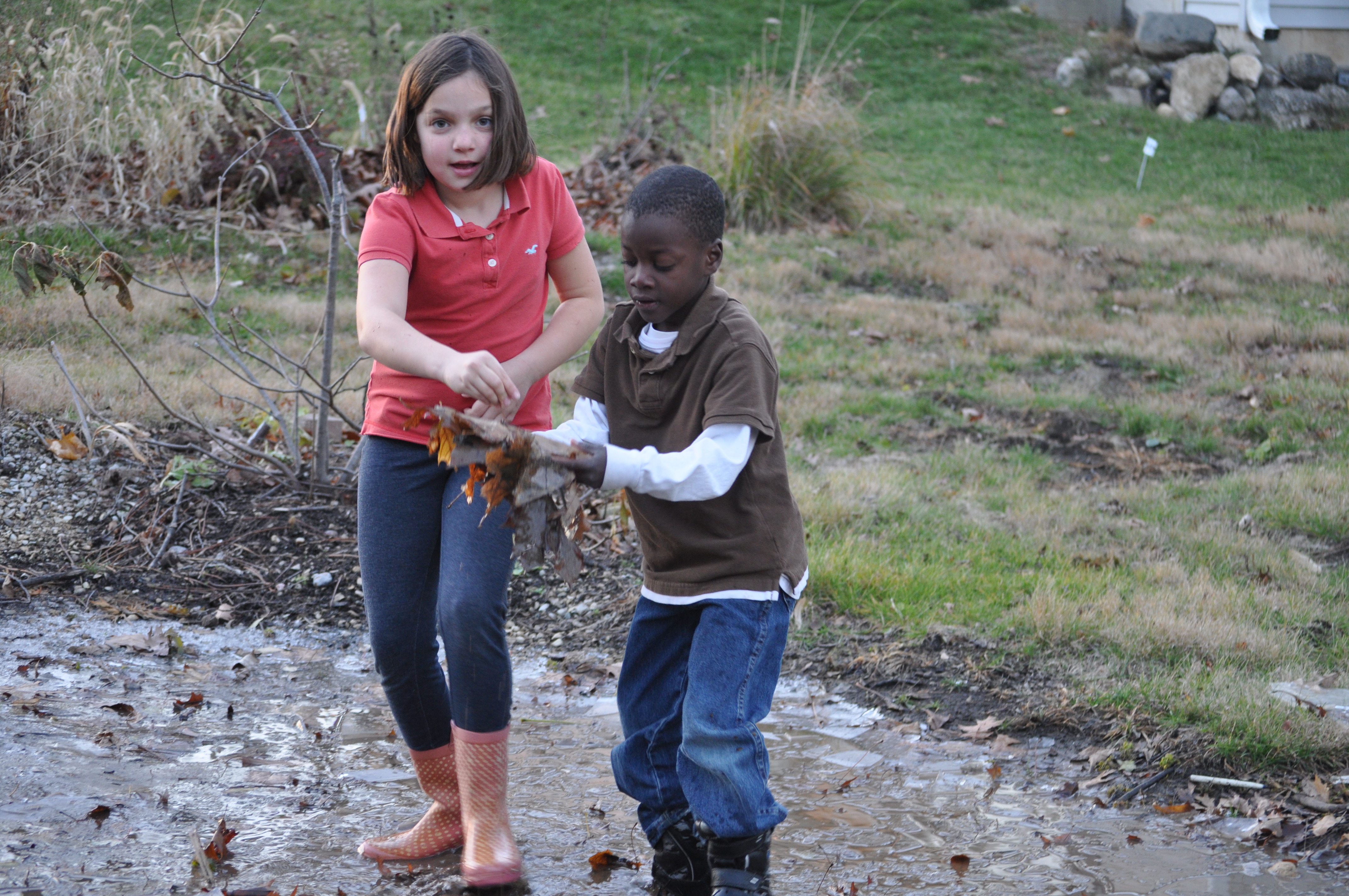
Jumping in leaves at Nana and Papa's house (my in-laws).

Jumping in leaves at Nana and Papa’s house (my in-laws).

For two mornings I have been disgruntled with my younger children.

Picked at faults, pointed out shortcomings. Ranted about the fact that—though I have made a bulletin board with pictures that “tell” them all they need to accomplish in the mornings before we get in the car (so even my beginning reader can understand)—we have experienced the “we’re going to be late” scrambling rush two days in a row.

After driving to school the second morning, I came home and sat in my sin for a bit. I tried to shut down the excuses and even the premature/slightly false confession and asked the Holy Spirit to help me simply listen.

DSC_0485The Spirit peeled back a few layers and I saw some of the roots of my sin.

Then, more painful, I saw what these sins are doing to my kids: in bearing down on my children with a harsh spirit, I am crushing them; I am cutting off communication with them; I am modeling for them the very things I tell them they shouldn’t do to each other (pointing out faults, not allowing for differences, assuming that everyone should regard their time/likes/dislikes as most important, being inflexible, losing their sense of humor and grace.)

DSC_0486In doing all these, I practice hypocrisy right in front of them.

I was all set to wallow in this (oh, how often I forget the second part of repentance: to turn TO God) when I remembered a conversation I had earlier this fall with my mother-in-law. She shared that one Sunday morning a few weeks before, she’d been disgruntled. She’d snapped at her husband and said harsh words to her granddaughter (who was staying with them at the time). Though she then apologized, she’d gone to church still bruised with guilt. Once there she remembered she was supposed to serve communion. She leaned over to her husband and whispered, “I don’t think I should serve communion this morning.”

DSC_0490When she told me this story, she paused at this point. Then she said, “A few minutes later, Dad passed me a note. He’d written Romans 8:1 out for me to read. “Therefore, there is now no condemnation for those who are in Christ Jesus.”

“I served communion,” she told me.

She served it—and took it—in the exact mindset in which we should always participate in communion: authentic gratitude.

The Holy Spirit brought this conversation to mind because I, too, was being invited into communion. In my state of guilt and hopelessness, my eyes were drawn to Christ, to His broken body and spilt blood that accomplished for me what I have no possibility of accomplishing for myself. I was invited, once again, to move from death to life, to receive grace.

Suddenly, I longed to have my children home from school. I looked forward to the moment when I could pull them close and say, “I’m sorry, truly sorry.”

From death to life, once again.

The blessing of communion.

 

Little woman with a Great Big God

More than 20 years ago, in our pre-kid days, Dave and I had a boxer dog named Barkley. Barkley was my running partner. At a park one day, stretching before I started my run, a woman walking by stopped to talk with me. “I’ve seen you before here,” she said. “I’ve always called you ‘the little woman with the big dog’ and thought I would finally learn your name.”

The little woman with the big dog. He was a good big dog. He made me feel safe and secure, even when we ran deserted trails at dusk. He was always looking out for me, and I knew he could sense danger that was completely unseen by me.

As he and I walked together on a sidewalk one day, a group of teenage boys came slouching toward us on the sidewalk. I didn’t sense any ill will on their part, but Barkley, generally a sweetheart of a dog, tensed up his back, pricked up his ears, and swelled his broad chest.

Still a few yards in front of us, the teenage boys stopped, eyed him cautiously, and then crossed to the other side of the street! As soon as they were past, Barkley visibly relaxed.

Needless to say, I never had any doubts that he would protect me. There was confidence in being a little woman with a big dog.

But even better is the truth that I am a “little woman with a great big GOD!”

Great Big!

But Loving and Tender!

Vast and Limitless!

But Personal and Intimate.

“I will give thanks to you, O Lord, among the peoples;
I will sing praises to you among the nations.

For your steadfast love is great to the heavens,
your faithfulness to the clouds.” Psalm 57:9-10

I may be small, just one little person in a huge, overwhelming world…

but I’ve got a GREAT BIG GOD!

From one generation to the next: advice from my mom

Long ago, when I was a middle-school student, I disliked a girl in my class.

“Krista” was sweet, kind, and genuine. She had a transparency to her that was unusual in my Southern “Christian” upbringing.

I think she revealed my own shortcomings to me. When I was around her, I didn’t seem so “nice and sweet.” She did.

And that was why I didn’t like her.

Though we had been friends, I suddenly found myself annoyed by all kinds of things I’d never before noticed. In my head I judged her clothes, the way she walked, even the way she looked. I could hear my inner voice making catty comments about her. I don’t ever remember saying any of this out loud, but my attitude manifested itself through my withdrawal. I answered her questions with one-word answers. I didn’t encourage conversation. I kept a blank face when we talked.

I knew what I was doing was wrong.

But I tried my hardest to shift blame.

I told myself that her sweetness was too “over the top” to be real, that my critical spirit was simply my ability to see through her.

I almost convinced myself.

But I didn’t fool my mom.

I was planning a party, and my mom noticed “Krista’s” name wasn’t on the list. “Why not?” she asked.

I said something like, “She’s just kind of annoying, Mom.”

She raised her eyebrows. I went on.

“Like, she doesn’t get anybody’s jokes.”

The eyebrows went higher.

“Well, you know how it is when some people…”

I don’t remember what all I said.

But my mother’s words are clear in my memory. “There’s no good reason for you not to like her, and I’m not going to listen to you talk about her. But I am going to give you some advice: Pray for her. It’s really hard to keep a hard spirit toward someone when you’re praying for them, especially when the problem is in you and not in them.”

That was all she said, but she might as well have delivered a sermon on the first part of Matthew 7.

A few weeks ago, one of my kids was trying to explain away a jealous attitude and mean behavior by pointing the finger at the other person. (I just “love” how I can see my own faults so clearly in my children!)

I interrupted the rather clever blame shifting.

“Sorry, kiddo. I think the problem here is in your own heart.” (I’m a little more blunt—and way less “Southern”—than my mother.)

My child’s eyes went round with shock at my lack of sympathy.

“It’s pretty easy for me to recognize it because I struggle with the same issue. I don’t want you to lie to yourself. Nothing will change until you admit the truth.”

The eyes narrowed then. “Other mothers would be nicer about it.”

I grinned then. “Well, God didn’t give you a different mother. He gave you me.” I suddenly remembered my own story. “Your Mama D told me the same thing once.” (Okay, maybe she was a little nicer about it, but it was kinda/sorta the same.)

That perked the interest, so I told about “Krista.”

And my mother’s words were just as wise and powerful now as they were then.

Thanks again, Mom.

Morning Glory

Friday morning, before the getting-ready-for-the-last-day-of-school rush, I biked, Chai dog by my side, to the dog park, where I tromped around, fast, trying to avoid the mosquitos. I reviewed the Scripture passage I’m memorizing, but not a whole lot of thinking was going on. As I swung back on my bike, ready to pedal home, I thought, “Oh, I should pray.”

That’s not a bad thing. But there was a hint to it of “I have to do the right thing. I have to go about this the right way. This is what will please the Lord.”

My mind immediately went to confession and prayer for others—because that’s more “godly prayer,” right? That’s what pleases God most—my attempts at being humble and others-centered.

Right?

God was having none of it.

But rather than a thunderbolt from the sky, He got my attention with JOY.

The trees waved their branches at me—hey,

Em likes to make--and then photograph--food creations! Yummy smoothie.

Em likes to make–and then photograph–food creations! Yummy smoothie.

look over here!—and the wind flowed over my collarbone like it was trying to tickle my neck. Happy dog on a leash at my side, green grass on left and right, hum of bike tires, and when I pulled up to my house, two ducks—a mama and a daddy!—perched on our chimney!

The bubble of joy burst and showered me with droplets, and I shut down confession/supplication and let myself BE in God.

Gratitude welled up to meet the joy raining down, and an old hymn rose.

Morning has broken, like the first morning.

Blackbird has spoken, like the first bird.

Praise for the singing, praise for the morning

Praise for the springing fresh from the Word.

Yes! Be in God. Let Him guide heart prayer into His glad fullness, His sheer joyful goodness, His eagerness to share Himself with me.

Romp in the revelation of right righteousness revealed. (Couldn’t resist the alliteration!)

Mine is the sunlight, mine is the morning,

Born of the one light Eden saw play.

Praise with elation, praise every morning;

God’s recreation of the new day.


“Morning Has Broken,” words by Eleanor Farjeon, 1931


wallow

Em took this picture. Love on every page.

Em took this picture. Love on every page.

When I was a kid, one of my favorite books was about a pig that had a special wallowing hole. The farmer’s wife thought the pig’s mudhole was messy, though, so she cleaned it up (vacuumed it up–I loved that picture), and the pig ran away in search of a new wallowing hole. He hitched a ride on a passing truck and ended up in the city. When he saw some fresh cement, he thought it looked like mud and dove right in. Of course, pretty soon, it hardened, and he was stuck. Being a children’s book, though, the farmer’s wife realized the error of her ways and went looking for the pig. She and the farmer broke him out of the cement and took him home to his restored mudhole.

And the pig lived happily ever after.

I thought of that book today because I was pondering the word “wallow.” In my last post, I confessed that I often wallow in guilt—sometimes shame, other times pride, insecurity, jealousy… We humans wallow in all kinds of things that end up holding us prisoner—like the pig in the cement.

But what if we wallowed in God’s love? It’s big enough. Scripture speaks of it having vast height and depth and width and length. We are told to be rooted deep and grounded in love. God’s love is called great and wonderful and intense (Eph. 2:4 and 3:17-19, Amplified). Whenever I read the verse about the height/depth/width/length, I think of the Olympic-sized swimming pool I took lessons at when I was a kid. I was little, so it seemed HUGE! I could go down, down, down till my ears popped, I could twirl in the water, I could splash and jump. I could float, buoyed by water molecules. I could dive in and not hit bottom. I could try as hard as anything to swim underwater from one end to the other on one breath and not ever succeed (that changed as I grew older).

Wallowing is essential for pigs. They can’t sweat, and the coating of mud keeps them from overheating.

God’s love is not only essential for me, too, but keeps me from “overheating as well.” When I am busy “wallowing” in His love for me, discovering greater depths and breadths of it, “exultingly glorying” in it (that’s from the Amplified version of Romans 5:11), it keeps me from getting “overheated” by stress or anxiety or troubles. It also decreases my desire to “wallow” in anything else.

I wondered if there were any other reasons pigs wallowed, so I Googled the question: “Why do pigs wallow in mud?” Of course, I got multiple answers about their lack of sweating, but some scientists suggest that they do it in part because they enjoy it. It makes them happy!

This is true for us in relation to God’s love: what is GOOD and necessary for us is also enjoyable!

So, applying this to God’s love, I could paraphrase Paul’s words in Ephesians: Dive into the mudbath of God’s love. Let it get all over you, head to toe, soothing any sores. Let it seep into your heart, filling every crack and crevice, every wounded part. Don’t clean it off. Give each other messy hugs, so that your mudbath spreads to someone else—and theirs spreads to you. Roll around in it regularly; don’t let it grow dry and hard. Better yet, stay in it!

Wallow!

I thought a pic of my mud buddies was appropriate for this post!

I thought a pic of my mud buddies was appropriate for this post!

Crimson berries, white snow

I took this today in our front yard. What an amazing blue sky!

I took this last fall. (It’s the same picture, just uncropped, that I used as my new header)

On the tree in the front yard hang the leftover berries from last fall. They were bright before frost, but now they look almost black against the snow. It brings to mind Isaiah 1:18. God says to the Israelites, “Though your sins are like scarlet, I will make them as white as snow. Though they are red like crimson, I will make them as white as wool.”

I think of scarlet and crimson as beautiful colors—like the berries before the frost—but God spends 16 verses describing the crimson and scarlet of the His peoples’ sins, and it’s ugly! “You’re rebellious,” He tells them. “I’ve loved you and cared for you, but you have rejected and ignored Me. All your ‘churchiness’ is nothing but show. You’re hypocrites, following an outward religion that has no goodness to it. In fact, you offer sacrifices to Me and then go out and live without love for others, abusing and neglecting the helpless” (my paraphrased summary)

“Do you think that’s what I, the GOOD GOD, want?”

The scarlet and crimson of verse 18, then, are NOT beautiful. These people are as far from the purity of white as they could be. The crimson and scarlet have set into the fabric of their souls, and they are irreparably stained.

We must remind ourselves that we are no different. OUR sins–collectively and individually–are scarlet and crimson. We, too, are irreparably stained.

This takes on deeper meaning when we see the terms “white as snow” and “white as wool” applied to Christ: Daniel 7:9 says, “…the Ancient One sat down to judge. His clothing was as white as snow, his hair like purest wool.” Revelation 1:14 describes Christ’s head and hair as “white like wool, as white as snow.”

Our crimson stains and Christ’s white purity are as unalike as possible. We drip with sin, as if we have been dipped in a vat of it, formed in it (Ps. 51:5). Now let’s look at what is in the vat. It is not simply liquid color—a straightforward red dye. No! To understand how God sees this crimson sin, we must go to another verse in Isaiah: “We have all become like one who is unclean, and all our righteous deeds are like a polluted garment” (Isaiah 64:6). The polluted garment is–to be as graphic as Scripture is–like the underclothes a woman would wear during her menstrual cycle. They would be permeated with a bodily fluid that stunk and stained.

THAT is the crimson, the scarlet.

God the Pure One cannot condone and “coexist” with our stench. He would cease to be perfect, sinless God if He said that our disregard for Him and our injustice toward our fellow man was “okay.” Though He longs to hold us in His arms, that is not possible as long as we are stained and dripping with this crimson.

We have tried, over and over through the centuries, to fix this problem ourselves. All religions are simply our efforts to make ourselves fit for communion with God, worthy of his approval. But we cannot do this, though we claim to. But any “god” we can reach through our own efforts must be a god of our own making–and therefore not truly Divine.

So we must be changed, somehow made pure. Some outside agent must be applied to go over our stain. That’s exactly what God did in Christ. Christ, unstained and pure, took on our human flesh, a body that was stained with the effects of sin, that would suffer and age, that had the same bodily functions ours do, with emotions and frailties. He was “in all points like we are…”

“Yet without sin.” That needs an exclamation mark! He had no inner stain and He kept Himself unstained!!! THAT enabled Him to do an amazing thing for us. His death allowed us to be covered with new garments–HIS complete, utter goodness, white as snow.

“Though your sins are like scarlet”–permeating to our very core, as much a part of us as dye becomes part of a garment when the garment is dipped in it–“I will make them as white as snow.”

With the covering of Christ’s purity, our stains—past, present and future (God is not bound by time)—are overwhelmed, and God the Good can draw us near to Himself. His Spirit enters our hearts like a bleaching agent, and begins transforming us from the inside out, a process that will end (oh, Heaven!) with us being LIKE Christ. Selfishness and pride will never again seep from our hearts. We will be pure not only in standing (with Christ’s covering) but in practical actuality.

I am thankful I opened my curtains yesterday and noticed the shriveled, darkened berries and the gleam of snow behind them. I am thankful for this reminder because my gratitude is in direct proportion to my realization of my need for Christ.

Same berries after the frost

Same bush after the frost

“For our sake He made Him to be sin who knew no sin, so that in Him we might become the righteousness of God” (2 Corinthians 5:21 ESV).

Flu perspective

I know several moms who LOVE the holidays, with their children all home from school. I tend to be more like the parents in “It’s Beginning to Look a Lot Like Christmas” who “can hardly wait for school to start again.”

There are WONDERFUL moments—like staying up late with Em last night and this morning when all three younger kids crawled in bed with us (Then the dog joined in, too, prompting Dave to say, “Well, would someone go wake up the older three and tell them to join us, too.” PJ took this for a literal question and was halfway off the bed before Dave stopped him.)

But there is also no quiet—which my introvert self craves. So I was already praying about this before Christmas break began, and Dave was already telling me to get away some each day, alone, without any children. And he was already bemoaning the fact that, although he tells me to do this all the time, I DON’T— because I believe the lie that “good moms don’t need time away from their children” (along with a host of other lies that perfectionistic people believe to make them feel better about themselves).

Anyway, we were a good eight days into it and I hadn’t gone away—as I’d promised I would.

So God allowed me to get sick.

Fever, chills, flat-on-the-back sick.

For two days.

I’ve decided it was a really good thing.

I got peace and quiet. I got lots of sweet affection—hands patting my back, hot tea from Em, backrubs from Dave… On the second day, when my brain was a little less foggy, I even got a rough draft of an article written (which was what I was supposed to be doing on my “times away.”)

And then, in the couple days following my time in the bed, when I was up and about but still woozy, I had a different perspective. I cared a lot less than I usually do about keeping the house tidy and accomplishing everything on my to-do list. I was too foggy to have a to-do list.

On Friday I went to the grocery store in this fuzzy state. I used the self-checkout line and made a mistake as I was processing my order. The clerk said something pretty snotty to me, but I didn’t even notice it, just nodded at her, thanked her, and walked away. It wasn’t until I was in the car that I realized that I SHOULD have felt snubbed, should have been offended.

A time of rest, a softer, gentler outlook, a break from my driven personality—and then, bonus, a chance to see how this lack of self-focus can positively impact my interactions with others: I’m actually–post chills and fever–grateful for the flu!

Consider Him

I consider weekends my heaviest work days. With all the kids home, there’s extra cooking, extra driving…

Extra.

Sunday afternoon, in the middle of cleaning for our church small group that we host on Sunday nights, with dinner prep still to do while one kid needed homework help and another needed nagging to get working on homework…

I got grumpy.

Self-centered.

Full of an inner rant about—

I’m not going to go into it. I’m assuming everyone pulls the martyr card sometimes, so you know what I mean.

And in my kitchen, bent over with a dustpan, God stopped me.

Look at the verse for the day.

It wasn’t audible, but I knew for certain that I was supposed to put down the dustpan, cross to the microwave, and flip the verse calendar that sits on it to that day’s verse.

“Consider him who endured such opposition from sinful men, so that you will not grow weary and lose heart.” Hebrews 12:3 (NIV ’84).

Seriously. That WAS the verse for that day.

Wow! You’re right, I prayed. How could I ever begin to compare my enduring to Christ’s? Help me to press on.

I did press on, but I still struggled with thoughts of self-pity, and this has continued off and on since Sunday (it would be better described as “on and off”). It’s been a recurring battle that I’ve either chosen to fight (with plenty of cries for help) or given into (yuck!).

On Sunday night, one of the women in our small group shared about a guilt battle that she has had to fight, over and over, in her head. It just won’t go away.

I’ve thought about her struggle as I’ve fought my own battle these last couple days. Why do some sin issues become recurring themes in our lives? Why aren’t they dealt with and done? Why do our cries for help for these sins grant release for only a short period before we have to do battle again?

But all my musings about the “why’s” haven’t helped me, either, even though I “know” some of the answers.

This morning I had to replace a burnt-out strand of lights on the Christmas tree. Even as I did this, my spirit continued to find all kinds of small things to gripe about. Tired of fighting the battle, I tried to shut my mind off. “Just stare at the lights,” I told myself. “They’re bright and beautiful.”

Look at the lights.

Somehow the phrase turned to Consider Him.

Consider Him, I thought. Consider Him.

“Oh, God!” I said in sudden realization, “Consider YOU!”

Not Your sufferings apart from You—like I’m trying to stack them up against my own petty “sufferings” and guilt myself into gratitude.

Consider YOU.

Because You are great and glorious and good. Because You are beautiful, bright light, and You long to shine into my darkness. And when I look at You, my darkness gets swallowed up.

When I look at You, I gain perspective. I see that, just as Your struggles had purpose, so do mine, even if I can’t see far enough to know what the purpose is. Just as You kept your eyes on the Joy of being reunited with Your Father Yourself and the Joy of reconciling many to Him, I can know there is an eternity ahead when I will know You in ways I can’t even imagine now.

When I consider Him, the rest of the Hebrews 12 passage gets worked out in my life.

I put up the lights, I wrote the above, and then I had to go to a dental appointment. The radio came on when I started the car, and the program was about women who are married to spouses who don’t follow Jesus. “Oh, that would be so hard,” I thought as I listened to the women’s stories of persistence and grace. “I’m so grateful for my marriage.”

Gratitude! For fellow believers—witnesses (Heb. 12:1)—who provide examples to me of turning to the Father again and again in their needs, and for the Father Himself, Who gives me exactly the right gifts—and exactly the right trials and discipline—to draw me closer to Him.

I’ve been far from gratitude these past few days. Most of my cheerfulness has been forced and false.

But considering Christ—Him alone—brought a real and genuine gratitude back and gave me sympathy for others.

Turn your eyes upon Jesus.

Look full in His wonderful face.

And the things of earth will grow strangely dim,

In the light of His glory and grace.*

Consider HIM.


*Turn Your Eyes Upon Jesus by Helen H. Lemmel, copyright 1922

That's Maddie under the paper-sack mask!

That’s Maddie under the paper-sack mask!

Chester and the Galaxies

The tree that dropped these leaves was so beautiful I had to stop the car to take pictures of it. Then I noticed the carpet of leaves on the sidewalk.

About an hour ago I took a break from the article I was writing and went to the kitchen to get a cup of coffee. Scurrying across the linoleum was a bug. Thinking it was a box elder beetle (Jake did a recent science project on these; they’re funny looking bugs), I got down for a closer look. It was a tiny cricket, smaller than Chester in Cricket in Time’s Square (I read this as a kid and then again to my kids last year–great book) but delicate, just as Chester looks in those beautiful drawings by Garth Williams (who also illustrated Charlotte’s Web and Stuart Little).

I pushed a crumb on the floor closer to the cricket, but it jumped. Up, up, up, a good six times higher than its own height, then landing on its feet. Amazing! I did it again. Then I just watched, as the cricket put out its incredibly thin, sensitive feelers to test before it took each step. Somehow its long, folded jumping legs moved in stride with its much shorter front legs, and a few seconds later, it had made its way under the stove and was out of sight. Smart cricket! I don’t remember the last time I swept under there!

“Chester” made me think of a conversation I had on Wednesday with one of the international students I tutor. “What do you want to work on today?” I asked her at the beginning of the session.

Her reply was immediate: “Bible.”

“Hard stuff again?” This would not be the first time we’ve discussed a Bible lesson. She is newer to the English language than many of the other international students in the class, so the discussions move too quickly for her, and on top of that she has no background in Christianity or the Bible.

“I don’t understand what we are talking about, and I have a test tomorrow.”

What they have been talking about is internal and external evidences, the canon, and plenary-verbal inspiration. Many of our non-Christian students WANT this. With educations steeped in the scientific, they want to sift through evidence; they want “proof” outside of experience.

But this student, though raised in the same kind of setting, is asking different questions. “How do YOU know?” she asked me a few weeks back. “What was a time God showed He was real to YOU?”

I’ve shared Patrick’s story; I’ve talked about moving to Japan and moving back. I’ve talked about comfort even in times that started out difficult and stayed difficult.

So this day I skipped the canon and started with general revelation.

And I got a little excited.

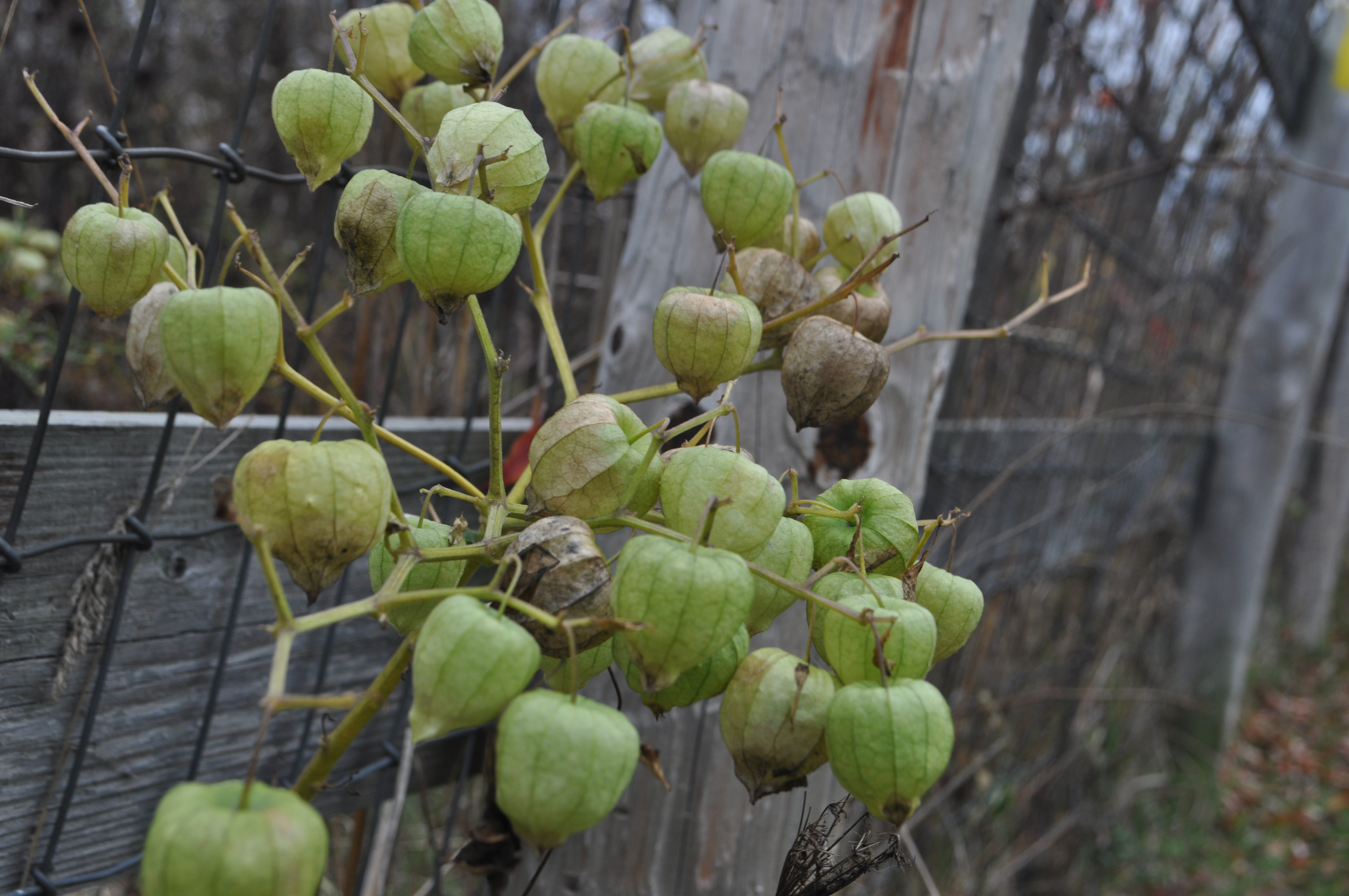
“When I took a walk yesterday,” I told her, “I noticed all the colors in the trees. Beautiful. And then I noticed these little plants—someone told me they are called ‘Chinese Lanterns.’ They’re amazing. And when I think that each winter these plants and trees cease operations, huddle into themselves during the cold months, and then are brought to life again in the spring, I am in awe!”

She was nodding, so I went on. I talked about the wonders of the human foot, that so small a base (and only two of them) could hold up a person as tall as the head of our international student program. She grinned.

“When I look at all of that, I think, ‘There must be a designer. This could not have come about by accident, by an explosion.” She’s shaking her head now, though I know she has learned nothing but evolution in her schooling. “I think that this must have come out of the mind of a Being far greater than I, Someone who was able to think of each tiny, tiny detail—down to the atoms and molecules—as well as the hugeness of planets and galaxies and how it all works together.”

I was breathless by now, and her eyes were shining. But I’m not finishing this post by saying that she made a decision that afternoon, though we moved from general revelation to special, from the stars to the Bright and Morning Star who came down for us to view him up close and personal and then died so we could really know Him (not that I used those words! J). No, this very special student is on her own journey, and I want the Holy Spirit of God to move her heart in that personal, beautiful way He has until it is her own decision and not one unduly influenced by me or anyone else.

But I finish this post with amazement at the general revelation He has given—from “Chester” currently hiding out under my stove to the galaxies and planets revealed to our weak eyes through the Hubble and Kepler telescopes. I finish with a sorrow-mixed awe at the power of storms like Sandy and what they tell us about our own incapacity and the mighty strength of the God who created wind patterns and waves that groan and heave with the weight of the Fall.

Take a walk today. Crouch low and notice the details. Look up high and watch the wind bend branches and trees as thick as our bodies. Google images of stars and planets (here’s a Web site I found today: http://www.spacetelescope.org/images/archive/top100/).

Get a bigger picture.

And let’s be amazed, awed, wowed together.

Here are some of those Chinese Lanterns–now I finally know what the red version in my yard is. They’re beautiful.

Unmindful

I’m thankful for Patrick, who rejoices so easily in the gift of life. I’m thankful, too, for Judy, who took this great picture.

Late one night last week I read an article by Thomas Lake in Sports Illustrated:“The Boy They Couldn’t Kill.” It tells of a grandmother, Saundra, caring for her daughter’s son, Chancellor. Chancellor has cerebral palsy because his father, a former NFL football player, shot his mother when she was pregnant with him. The baby lived; the mother died.

You can see why I stayed up to read it.

Both Chancellor and his grandmother have heroic forgiveness and courage because Saudra has lived out for Chancellor the faith she learned as a young child. Writer Thomas Lake describes how she was taught to trust (be prepared; it’s beautiful writing): “What she learned… was an overwhelming sense of gratitude for life. The sense that you don’t wake up unless God opens your eyes, don’t see the rising sun unless God pulls it from the horizon, don’t put food in your mouth unless God helps you hold the fork. And you do all these things and you rejoice.”

I fully suggest reading the entire article (publication info follows this entry), but I want to focus on that quote, because it brought to mind a verse I’ve been thinking about for weeks, ever since I finished Deuteronomy. Moses is speaking his last words—and a lot of them—to the Israelites. He sings a song that reviews their history as God’s people: how God has always been faithful and they have often strayed. He says this: “You were unmindful of the Rock that bore you, and you forgot the God who gave you birth.” (Deut. 32:18)

Unmindful.

What a word! It’s the opposite of Saundra Brown’s attitude. That convicts me! How often do I wake up unmindful? How often do I walk through a day unmindful?

“In Him we live and move and have our being.” Paul said this to the Athenians, introducing them to the God who was far more personal and near than the ones their own poets wrote about.

I lose sight of this, that without Him I have no existence. My very be-ing—and my self-awareness of it—is a gift from a Creator who is big enough to give me, His creation, a sense of autonomy and the choice to either live in acknowledgement of Him or pretend I am responsible for it myself. That’s HUGE—to allow the creations over which He has ultimate and complete control to turn their backs on Him. That’s unfathomable to humans because we’re not big enough to do that.

So I have this choice to be unmindful (though that choice alone should give me greater awe for Him), yet there are consequences to unmindful-ness. Yes, the air is still available, and the lungs take it in, and the heart beats its exactly right number of beats per minute, and the oxygen-bearing blood flows through veins and capillaries to pinky toes and brain cells alike and then, at just the right time, back through arteries to the heart. But even though all these miracles happen—and they happen even in unmindful-ness—this is not true life. This is not what Christ called “life eternal,” meaning the life which does not end with the dying of brain cells or the stagnation of blood, meaning the life that goes on and becomes even more glorious when the body dies.

In unmindful-ness we are, in effect, walking corpses. Years ago, on a mission trip, I asked a pastor friend to describe his fervor for the street evangelism I found so difficult. “I see dead people,” he answered—long before Sixth Sense hit the big screen. When life is not linked to the One who gave it, when it is not lived in gratitude to Him, with ever-increasing knowledge and acknowledgment of Him, we’re not alive. Zombies, that’s what we are.

The Amplified version of John 17:3 says it well: “And this is eternal life:  [it means] to know (to perceive, recognize, become acquainted with, and understand) You, the only true and real God, and [likewise] to know Him, Jesus [as the] Christ (the Anointed One, the Messiah), Whom You have sent.

Amen.


“The Boy They Couldn’t Kill” Thomas Lake, Sports Illustrated, September 17, 2012 issue