Mother’s Day–and the other 364 days

*Audio is at end of post.

On Mother’s Day, my motherhood is all clean and shiny; I get cards that tell me I’m very much appreciated for all the things I often feel go unnoticed, and my mom-failures don’t get mentioned.

But during the 364 other days in the year, I often feel like my motherhood needs some spit and elbow-grease polishing.

So, with the assumption that almost all other mothers feel the same, I’d like to share with you part of a message I listened to this past week. Dr. Crawford Loritts was speaking on Psalm 23, and his comments on one phrase in verse 6 spoke directly into my mothering.

“Surely goodness and mercy will follow me all the days of my life”.

“Why ‘follow’?” Loritts asked. “Why not ‘go ahead of’?”

He then shared how he and his wife, Karen, love it when their seven grandkids visit, but with all of them aged 8 and under, it doesn’t take long before the house looks like a disaster zone. Each night, though, after the children have gone to bed, Karen gets out the vacuum and the Magic Eraser sponge. And she cleans up after the kids.

“God does the same for us, following us with His goodness and mercy,” Loritts suggested.

I know this applies to every area of/relationship in our lives, but my mind jumped immediately to relationship with my kids. So many times I’ve prayed, “God, I just blew it with them. Please undo my damage. Heal any wounds. Establish them in You. Restore our relationship.” In situations when I’m not even sure if I’m messing up or not, I pray, “God, I have no idea if how I’m handling this situation is good or bad, wise or foolish. Please work good out of it in their lives.”

Vacuum cleaner and Magic Eraser.

But WAY better.

Goodness and Mercy!

God’s goodness to flood over the wounds I have inflicted and will inflict. God’s goodness to fill in the gaps I’m missing, that I’m blind to.

And God’s mercy, defined as lovingkindness and compassion, as the character quality of God that urges Him to form and pursue and repair relationships with those who not only don’t deserve it but sometimes don’t even want it.

His goodness and mercy have come behind me again and again with my kids. I’ve witnessed it in their supernatural capacity to forgive me. I’ve experienced it when the aftermath of my wrong and subsequent confession is a deeper, truer relationship. I’ve benefitted when they are more willing to admit their faults to me because I have been vulnerable with them.

And it will come behind when I experience heartache with my kids beyond anything we’ve gone through yet.

That’s one to hold onto.

Surely goodness and mercy shall follow us all the days of our lives…

Even when Mother’s Day seems very far away.


Lessons from my children

DSC_1377It was a Saturday morning after a late Friday night. Husband out of town. Schedule packed with kids’ activities and cleaning my messy house (I don’t mind laundry or dishes, but whole-house cleaning brings out my nasty).

I was still in bed but mentally working through my to-do list when I heard my younger three coming down the stairs. I hopped out of bed… and discovered I’d gotten up on the wrong side.

I was grumpy—from the get-go!

They came in with iPad in hand, a Youtube Disney music video blaring.

More grumpy. “Can’t you guys start off the day with a book or a game? Why do you have to go straight to screen time?”

“We’ll just watch this one video, and then we’ll be done, Mom.”

I grunted my assent and went upstairs to begin de-cluttering so I could then clean.

Five minutes.

iPad still going.

Ten minutes.

iPad still going.

Deeper grumpiness, and the homework-and-craft-covered dining room table wasn’t improving my mood.

I stomped downstairs. “I told you guys to stop watching videos after that first one.”

Wide, innocent eyes. “It’s the same video, Mom.”

I looked at the screen, and, yes, it was the same 36-minute long Youtube video.

“You knew I didn’t mean you could watch a video that’s more than a half hour long!”

Still wide-eyed.

“Seriously!”

Suddenly one of my sons was right in front of me. He put his arms around my neck and held his face up for a kiss.

And, honest to goodness, this is what came out of my mouth. “I don’t want a kiss right now. I’m trying to fuss at you and your brother and sister.”

Seriously!

More encouragement from one of my kids. Em hung these creations of hers on the fridge yesterday. Such good reminders.

More encouragement from one of my kids. Em hung these creations of hers on the fridge yesterday. Such good reminders.

That was when the Holy Spirit smacked me upside the head.

What I’d said sunk in, and I looked down into the face of the son who is getting a lot better at reading my moods—and who wants to fix me when I clearly display my brokenness.

“I’m sorry, sweetheart. You’re right. I do want a kiss.”*

I said my “sorry”s for my grumpiness, got my kids doing something more productive than watching videos (though they would certainly disagree with my evaluation), and went back to straightening.

But though I was more aware and cautious of my mood, I was still in it.

When I went upstairs to check on how Maddie was doing at cleaning her room, she asked me, “Mom, would you want to have devotions with me?”**

Another Holy Spirit moment: I answered, “Mads, that’s a great idea.”

We read it together on her bed.

Then we looked at each other. “That was exactly what I needed to hear,” I told her. “Thank you.”

She nodded wisely. “That happens a lot for me, too.”

In one morning I received the kiss of forgiveness and the olive branch of restoration.

Oh, the lessons I learn from my children.


*The reason I didn’t use a name for this child is that he is at the age when he doesn’t want too much affection in public (“Only side hugs, please, Mom.) and doesn’t want to be called “honey,” “sweetheart,” or “baby” unless it’s inside the walls of our home. So if you’re reading this and you actually know my family, don’t mention this story to any of my kids and please don’t repeat it to any kids they know. If you do, my days of hugging my son may be over for a really long time. 

**We gave Maddie the kids’ version of Jesus Calling for Easter. I highly recommend it for kids aged about 8 and up. I used it a couple years ago with high school students, and many of them still preferred the kid version over the adult one.

Joy, Resurrected

*The audio link of my reading is at the bottom.

How do you lose joy? She must have failed to hold onto it. Perhaps she’d forgotten it completely, left it in a corner, and it had wandered off, hoping to find a home where it wouldn’t be neglected. “I’ve lost my joy,” she tells her husband, and he nods.

Oh dear, it’s noticeable! she thinks.

Where do you begin looking for joy?

She tries singing as she does the tasks that annoy her most. She hums as she packs the children’s lunches, warbles in the car, belts it out when she de-clutters the living room.

Where are you, joy? she wonders, I can’t sing any louder. Can’t you hear me?

She tries putting on a show of it. Didn’t she hear a pastor say once that the outward action of love can kindle the feeling?

Or was that her college drama director talking about action and emotion?

She’s not sure, but she tries it.

Smile, she tells herself.

Smile bigger!

She shoves grumpiness down. She swats selfish thoughts like pesky gnats.

Joy, come back! Please.

She is sitting, alone at her desk, absorbed in work, when she senses a presence nearby.

Joy? Are you there? I caught a glimpse of you.

Man, I wish my knees still bent like that!

Man, I wish my knees still bent like that!

But when the house bustles again, when children’s squabbles break the quiet—joy recedes.

Oh, she realizes, I am allowing the noise to drive joy away. But joy doesn’t have to have peace and quiet. Joy doesn’t mind chaos, excitement.

I haven’t lost joy.

I’ve sent it away.

I am telling it when it can be present, and when it can’t.

How do I invite joy into my full life—all of it? How do I keep from shutting it out?

Still missing joy, she goes to the Good Friday service.

It is good to reflect, to be with others, all reflecting together.

They sing, they read, they listen.

But she is waiting, though she doesn’t know what she is waiting for.

There is something here for me tonight, she thinks. I’m not sure how I know this, but I do.

The sermon is finished. They have taken communion. Her shoulders slump. It was good, but…

The pastor speaks again. “Some of you have lost your joy,” he says. “You’ve lost the joy of your salvation, your redemption. Come to the cross.”

Her hands tremble.

Her body feels light.

She knows this is for her.

It may be for others as well, but it is clearly for her.

But she will have to get up, cross the room, walk in front of so many sets of eyes.

He is still speaking. “Come. We will pray for you, that here at the cross you will remember your source of joy.”

She gets up, quick.

Her husband, beside her, stands, too.

“Do you want me to come with you?”

She nods.

By the time they reach the cross, there are others.

I am not the only one, she thinks. We have all lost joy.

Pastors pray. She hears only snatches of their words over the music.

But that is all right, because it is the song she needs to hear.

“Behold the man upon the cross,

My sin upon his shoulders;

Ashamed, I hear my mocking voice

Call out among the scoffers.

It was my sin that held him there…”

Somehow, in the second of space before the next line of the song, she experiences guilt, sorrow, despair. I did send you there. It was my sin. It was my selfishness. Oh God, I love You, but I don’t know how to stop hurting You. I am unable to pull my thoughts away from myself, away from what I am feeling or not feeling.

All this in a God-stretched moment.

And then…

“Until it was accomplished;

His dying breath has brought me life—

I know that it is finished.”

Stop, she commands herself. See truth. Christ does not have to die again. He has done it! I AM redeemed. It is not the chaos that is driving joy away; it is my fear that when I sink into moodiness, into selfishness, that I have stepped out of redemption. But that can never be. He finished it.

“I will not boast in anything,

No gifts, no pow’r, no wisdom;

But I will boast in Jesus Christ,

His death and resurrection.

But this I know with all my heart,

His wounds have paid my ransom.”

Paid, accomplished, finished—in a transaction that is outside the scope of time. It is not undone when she grows grumpy yet again, not taken back when she fails or is petty. She looks up at the Christ figure on the cross. Through that finished work, she tellsherself, I am redeemed. My sin does not for one single moment make that untrue. It is present and ongoing, without conditions. Without resting at all on me. I can have joy IN my grumpiness. It is not limited only to when I am feeling peaceful and good but is a reality even when I am fully aware of my own sinful nature.

She feels her husband’s hands on her shoulders. They have been there all along. She just now senses their gentle weight.

“Behold the man upon a cross,

My sin upon His shoulders”

He took it from me—and He abolished it. Why do I try to carry what He has already taken?

The load rolls off.

And joy resurrects.


It’s the little things…

DSC_0697Dave was watching football while grading papers (a common Sunday afternoon for him). I stopped as I walked by because a commercial caught my eye.

Scene: a man sits at the foot of his immaculate bed at the end of his day. He slips off his work shoes and then his socks. He sits there, socks dangling from one hand. Voice over says, “Just as Phil is about to drop his socks on the floor, as he does every evening, something occurs to him for the very first time: The clothes hamper is only four feet away, straight across from him.” Phil then leans forward and tosses the socks in the hamper. The camera pans to a woman just about to walk into the bedroom. Voice over: “Proving to Phil’s wife that miracles really can happen.” Her jaw falls slack, the shot holds for another beat and then fades to an Illinois State Lottery logo.

I howled with laughter.

Howled.

Dave raised his eyebrows at me, with a look that said, “Please tell me you don’t identify with that woman because I am NOT a slob, and if you tell me I am, I will have to remind you that I—yes, I—cleaned up after YOU in the early days of our marriage.”

When I finally stopped laughing, I said, “It’s not because it’s the husband. I mean, they could easily do it from the opposite point of view, wife for husband. Plus, for me, this is not really about you. Just think of all the things the kids do that could have been used for this commercial. I mean, if I went in the kitchen and found that someone had actually put the clean pots and pans away, I would think our house had been broken into by someone who was trying to stock their kitchen!”

He laughed then, too, and we brainstormed a couple together, but I decided to journal a longer list that, were they to change, I might just consider that a miracle:

  1. I open the cereal cupboard to find not one but two (and sometimes three) open boxes of the same exact cereal. When I look into them, I see why. There’s a little bit of cereal at the bottom of one bag. Rather than finish it off and have to actually deal with the empty box, “whoever” just opened a new box.
  2. Use #1 above and apply it to the last bit of leftovers in the fridge, the final slosh of milk in the bottom of the gallon, etc.
  3. I open the under-sink cupboard to put trash in the kitchen can and find it is overflowing. No one besides my husband and I seem to ever think of actually emptying the overflowing kitchen trash can—or at least pushing down the debris. Rather they all try to balance trash on top so they don’t have to “touch it—eww!”
  4. Apply #3 to the recycling bin.
  5. I find empty toilet paper tubes on the holder—with a new roll half-unrolled on the floor next to the toilet. (To be honest, they’re getting better about this.)
  6. “Mo-om, where’s my…?” I walk into the room and discover it’s three feet to their left.
  7. I change the kids’ sheets (confession: I don’t do that very often!) and learn the bed has become a dresser. Missing socks underneath the covers, t-shirts between the pillow and headboard, jeans stuffed behind the mattress.
  8. The top rack of the dishwasher is stuffed full—while the bottom is nearly empty, EXCEPT for the first compartment in the silverware container—which is bristling with forks, spoons, and knives stuffed in all directions! Reason: it’s more effort to actually bend over to put things in the bottom rack, and—in the case of silverware, which obviously can’t go in the top—it’s easier to pull out the bottom rack just a little bit.
  9. In the transition time from summer to fall, when the temperature outside is suddenly colder than inside, I find open doors, open doors, open doors. “Close the door!” Don’t know how many times I holler that.
  10. 10. Clothes on the floor. Doesn’t matter how often I make my boys clean them up (and I fuss the whole time), they STILL simply drop their clothes onto the floor when they change.
  11. 11. I KNOW I did this when I was a kid (and I have to remind myself of this often), but why is it that kids can take something out of its accustomed spot and never, ever, ever think of putting it back there when they are finished with said item. Then, when they need it again, they go back to the accustomed spot and assume that it will be there. (What do they think it is, magic?)
  12. 12. Question: “Mom, where are my shoes?” Answer: “Where you left them.” Question: “Where did I leave them?” Answer: “How on earth would I know?” (But I usually do L).
  13. 13. Soggy cereal in the sink. Don’t know why—but a pet peeve and one of the few things that gross me out.
  14. 14. “What’s for dinner?” I think this question should be banned for anyone who isn’t planning on contributing in some way to the dinner.

Oh, kids! Gotta’ love ‘em! And we gotta’ laugh, right?

Got any of your own? Let’s share a chuckle!

When our stories stretch long

genregraphFor years I taught the short story plot graph to middle and high school students. You first encounter the exposition—where you meet everyone and discover the setting. Then a conflict is introduced—things get exciting. The action rises (called “rising action”—surprise!) and culminates in the climax! (Trust me—I know that high school boys get the innuendo.) Then there is falling action and the resolution. Some stories have a denouement (a French term I was never sure I pronounced correctly), which is like an afterward—the “____ years later” addition to stories. (I love denouements).

Last fall my good friend Susanna visited. She’s in her first job, working as a third-shift ER nurse, and we talked about how she often leaves so many “stories” unfinished when her shift ends at 11 in the morning, before the doctors or social workers or psychiatrists see the patients admitted during the wee hours of the morning. “Often, all I’ve done is stabilize them,” she told me. “I never hear what happens with them unless they come in again.”

We talked about what that does to our souls when we continually leave stories (the real ones that people live) unfinished. Susanna doesn’t like doing this with her patients, and the stress of constantly living in the rising action of her patients’ hospital stories often makes her weary and numb.

But we also talked about the human tendency to exit stories before the ending or to dream about entering other, more exciting stories.

Susanna and I both have this tendency. We like traveling to needy places, and we’re constantly intrigued by the thought of going someplace new/doing something new.

Part of that desire is driven by the instinct to live only the more exciting half of the story, to move on when the action is no longer rising, when a climax is not around every turn.

To live out full stories, though—through the falling action, into the resolution, even past the denouement—requires determination and commitment.

I think of child-rearing—particularly when the child has a special need or illness or trauma;

Nursing older parents—especially when the years of diminishing ability or memory stretch long;

Marriage past the honeymoon stage;

Keeping the same job when the promotion offers begin passing us by.

These long-term stories sometimes seem short on excitement and long on the daily grind.

Until trauma hits! Then we remember the daily grind with nostalgia. “Oh, if I could only have that again,” we think. “I wouldn’t complain about …”

But when we are in the doldrums of our long stories, excitement beckons. We get weary. We long for … something. We forget that God has put us right in the middle of these stories for a reason. We forget that every daily grind moment has purpose and how we live these times affects the Story-at-Large. We may never know the hows or the whys or the specific effects, but we can know these times have meaning.

Oh, Lord, help us to remember this.

All is not well

My youngest child had academic testing yesterday. He and I arrived at an office in the morning, and I was ushered into a room and handed three inventories to complete. One had 86 questions; one had 275; the last had 160. Needless to say, they were thorough.

I answered “true” or “yes” to quite a few questions, most of them related to high energy levels and difficulty focusing, and there were others about which I thought, “Well, that doesn’t relate to Patrick but it’s true for Jake”—or Maddie—or Emily—or me! I recognized each of my four children—and myself—in some of the items.

But most of the statements brought me both perspective and gratitude. For every “false” or “no” I checked, that was another issue we were not facing.

I texted some of these to Dave, my husband.

“My child has very low self esteem.”

Um, no.

“My child is painfully shy around new people.”

Definitely not.

Then one of the statements simply made me stop.

#53: “I’m afraid my child is going insane.”

True or False.

And I felt a little sick.

Because, obviously, there must be parents who have to mark “true.”

We each have troubles we can talk about, things like frustrations with our children or our parents, illnesses and actual losses.

But there is also a list of unmentionables we generally keep hidden: addiction, mental illness, rage issues, money troubles, marital conflict…

Our voices literally hush, softened with shame, when we speak of those. If we speak of those.

When the testing finished for the day, Patrick and I put on coats, hats, and gloves to brave the deep cold. Our drive home took us past the middle-class suburban neighborhoods I drive through nearly every day. One after another, the homes presented neat, tidy fronts. Trim siding and smoke from the chimneys proclaimed “All is well!” but I wondered about the unmentionable topics hid away inside. If I slipped an inventory under each door, which ones would come back with “true” marked for #53? Which ones would affirm “I’m afraid in my own home,” “My child is a real threat to himself or others,” or “One of the child’s parents continually threatens abandonment”?

No adults shoveled driveways; no children played in the snow. The cold had driven everyone inside.

Where secrets can be kept, and unmentionables are lived out.

All is not well.

Oh come, Lord Jesus, come.

And in the meantime, help your people to see and speak.

From death to life: the blessing of communion

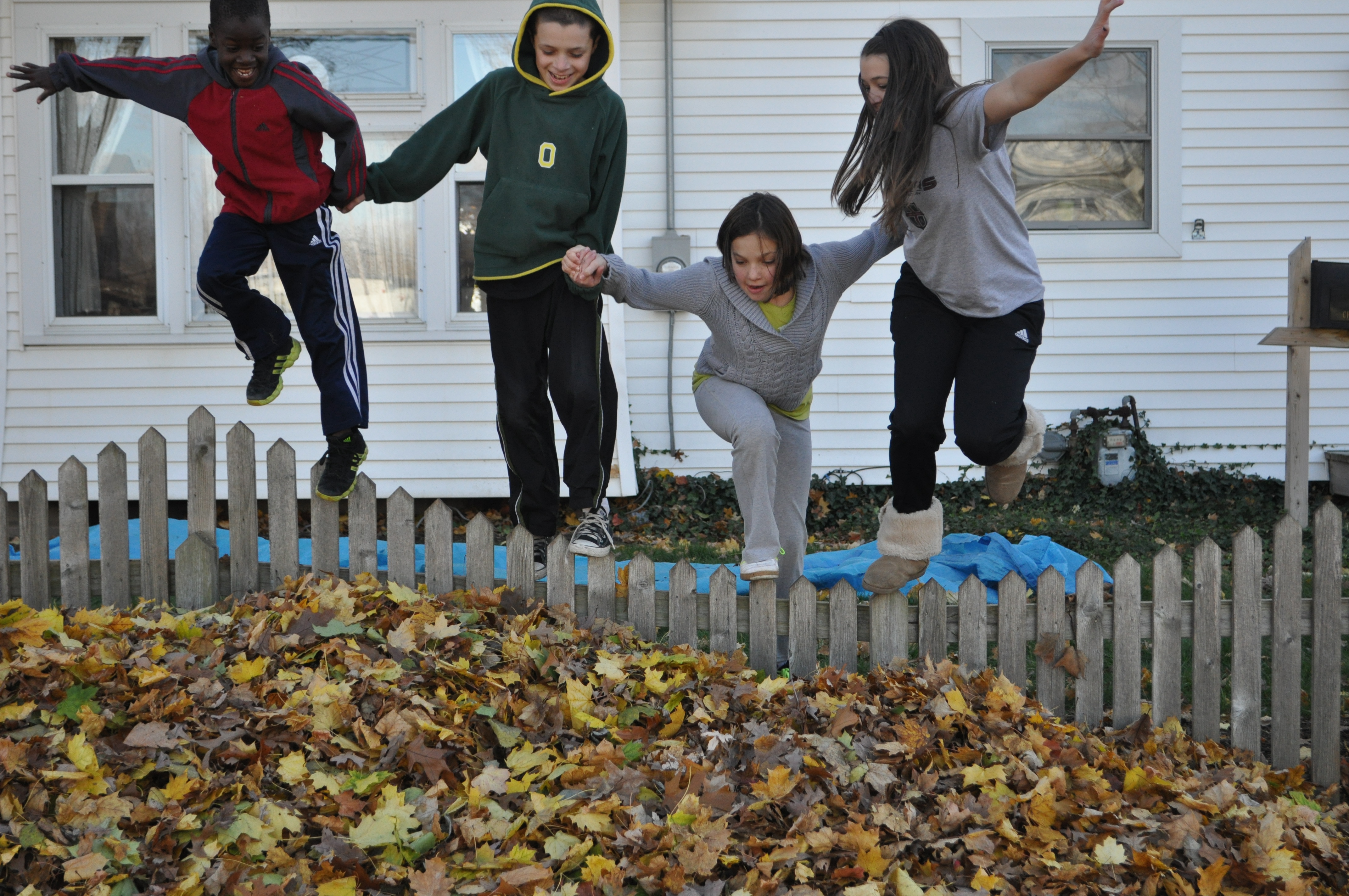
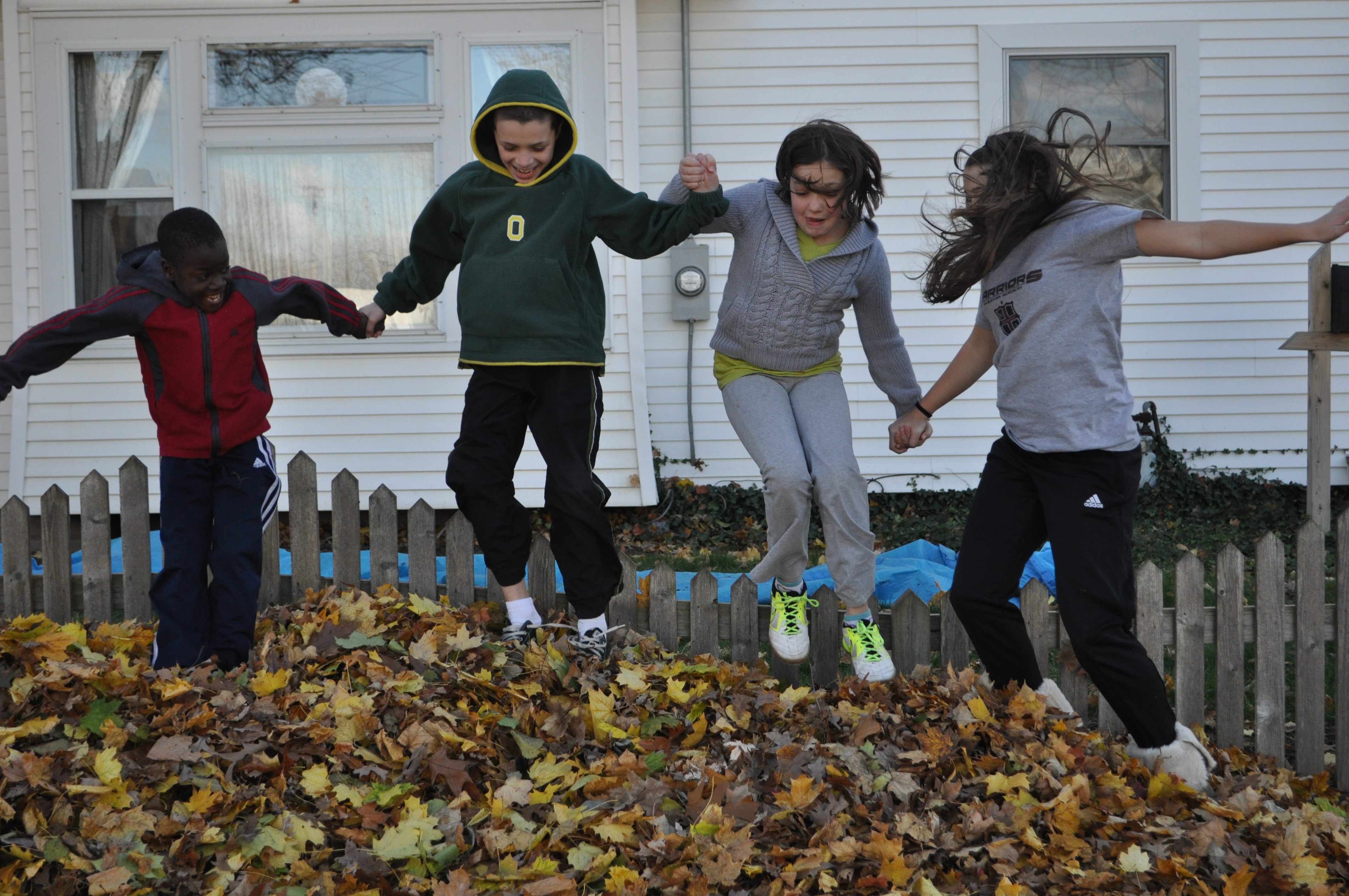
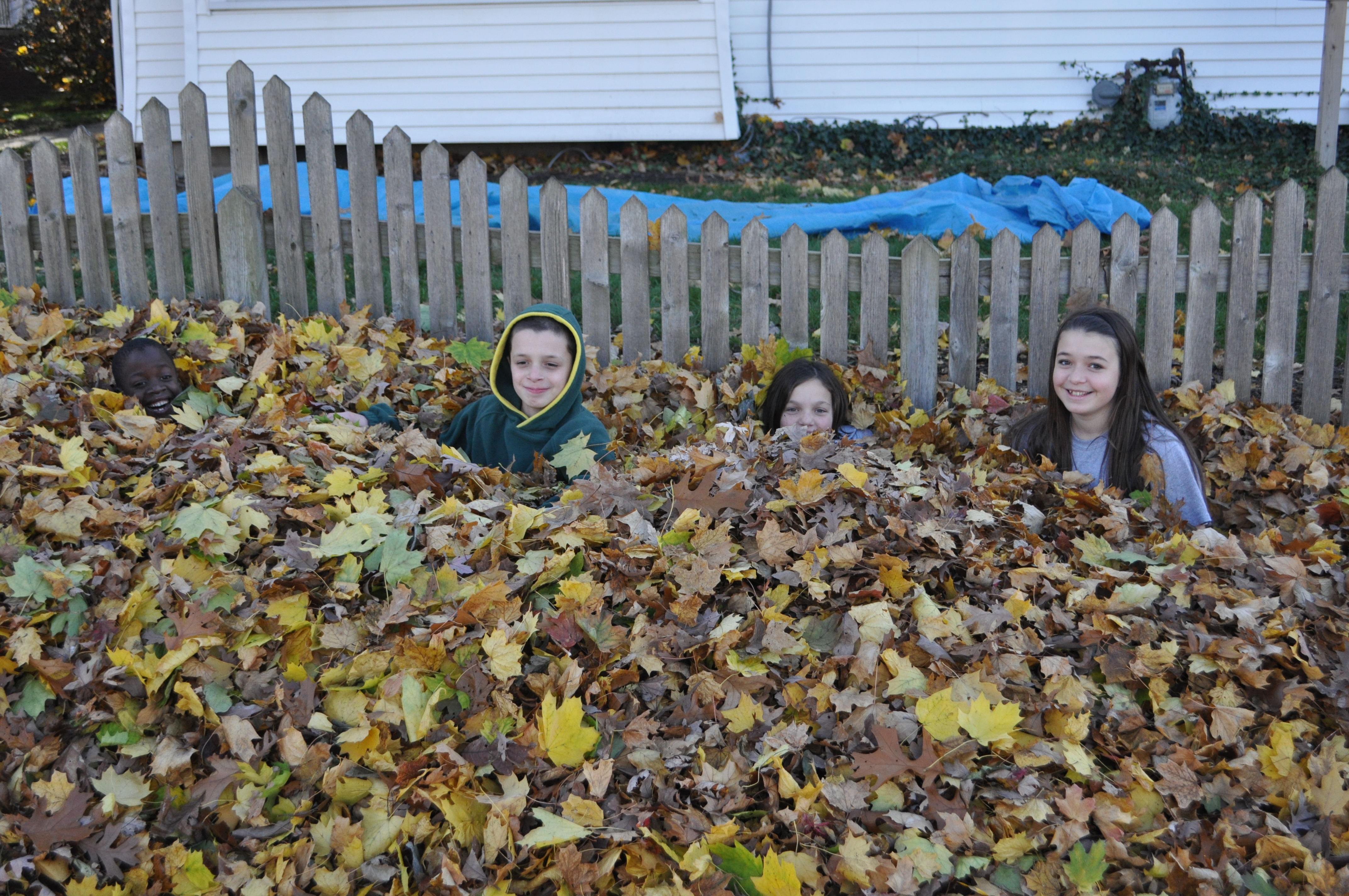
Jumping in leaves at Nana and Papa's house (my in-laws).

Jumping in leaves at Nana and Papa’s house (my in-laws).

For two mornings I have been disgruntled with my younger children.

Picked at faults, pointed out shortcomings. Ranted about the fact that—though I have made a bulletin board with pictures that “tell” them all they need to accomplish in the mornings before we get in the car (so even my beginning reader can understand)—we have experienced the “we’re going to be late” scrambling rush two days in a row.

After driving to school the second morning, I came home and sat in my sin for a bit. I tried to shut down the excuses and even the premature/slightly false confession and asked the Holy Spirit to help me simply listen.

DSC_0485The Spirit peeled back a few layers and I saw some of the roots of my sin.

Then, more painful, I saw what these sins are doing to my kids: in bearing down on my children with a harsh spirit, I am crushing them; I am cutting off communication with them; I am modeling for them the very things I tell them they shouldn’t do to each other (pointing out faults, not allowing for differences, assuming that everyone should regard their time/likes/dislikes as most important, being inflexible, losing their sense of humor and grace.)

DSC_0486In doing all these, I practice hypocrisy right in front of them.

I was all set to wallow in this (oh, how often I forget the second part of repentance: to turn TO God) when I remembered a conversation I had earlier this fall with my mother-in-law. She shared that one Sunday morning a few weeks before, she’d been disgruntled. She’d snapped at her husband and said harsh words to her granddaughter (who was staying with them at the time). Though she then apologized, she’d gone to church still bruised with guilt. Once there she remembered she was supposed to serve communion. She leaned over to her husband and whispered, “I don’t think I should serve communion this morning.”

DSC_0490When she told me this story, she paused at this point. Then she said, “A few minutes later, Dad passed me a note. He’d written Romans 8:1 out for me to read. “Therefore, there is now no condemnation for those who are in Christ Jesus.”

“I served communion,” she told me.

She served it—and took it—in the exact mindset in which we should always participate in communion: authentic gratitude.

The Holy Spirit brought this conversation to mind because I, too, was being invited into communion. In my state of guilt and hopelessness, my eyes were drawn to Christ, to His broken body and spilt blood that accomplished for me what I have no possibility of accomplishing for myself. I was invited, once again, to move from death to life, to receive grace.

Suddenly, I longed to have my children home from school. I looked forward to the moment when I could pull them close and say, “I’m sorry, truly sorry.”

From death to life, once again.

The blessing of communion.


Parenting and Growth–both neverending

This past Sunday, in the second service at church, we talked about guilt and grace in parenting. One of the reflection questions was, “What’s something you feel guilty about in regards to your parenting?”

My answer was this: Not wanting to be a parent sometimes.

I know that’s terrible (see, there’s the guilt!), but it’s true. Sometimes I don’t want to be a mom. There are times I want to run away and simply be me (whatever that means!).

I’m struggling with this off-and-on right now. I could pretend I’m not, but I’m hoping that writing about it will help (it usually does) and that maybe some other mom who’s feeling the same guilt will read this and say, “Oh, I’m not the only one.” (And some other woman who is struggling with infertility or loss will hate me.

I’m thankful our God is big enough for all of it!)

I think it’s the never-ending nature of parenthood that wears me down. I remember a conversation I had with a fellow teacher when my own children were still toddlers and her boys were nearly grown. She had just lamented that they were still leaving dishes in the sink for her to wash. “Plus,” she added, “at this age they’re facing choices that could have really long-term consequences. I pray harder for them now than I ever have.” She shook her head. “Parenting is never finished!”

I was horrified.

“Never, Lynnette?” I asked her. “Come on—give me something to hold onto here.”

I like teaching my kids; I love laughing with them; I enjoy going for walks and watching them discover things; I treasure our deep conversations.

But it doesn’t end there. A parent’s responsibility list is endless. There is no task for which a parent can legitimately say, “Well, I’ll let someone else deal with that—not my job.”

So in infancy we do it ALL! (At least they’re really, really cute!)

But as they grow older, the tug-of-war begins. We know that at some point they will need to take care of themselves, and we can’t just dump them at age 18 on some college’s or workplace’s doorstep and say, “I’ve delivered them safe and sound; now you teach them to work and clean and cook and manage their money and be generally responsible adults who contribute to society.”

So we must, bit by bit, make them responsible for those things as they grow.

They don’t like that!

At least my kids don’t. They resist my efforts to saw through the umbilical cord. They would be perfectly happy if I continued to cook every meal for them, clean up every mess, wash all their clothes and put them neatly away, help them with homework, etc. (That should be capitalized: ETCETERA.)

Yesterday a friend in her early thirties told me she and her husband are praying about having children. “I’m ready to stop working for awhile,” she said, and then she laughed at the irony (which she doesn’t entirely get yet—but that’s a good thing because quite a few of us would NEVER have embarked on parenthood had we known in advance how hard it actually is.)

Anyway, she asked me how old I was when I had my kids (30 and 34 [twins]—and then 38 when Patrick came home) and how I would compare my pre-kids stage to my post-.

“It’s the hardest thing I’ve ever done,” I told her. I didn’t want to discourage her, despite my current wrestlings, so I added, “but, boy, have I learned a lot about myself. I didn’t realize I was impatient until I had children—and I was a middle-school teacher! God has revealed so much to me about the depth of my need and the greatness of His sufficiency through my being a mom.”

Then I looked at her face—a little shocked—and realized my addition hadn’t exactly been encouraging.

“It’s a good thing,” I said. “It really is.”

But it’s a lot of growth, too.

And maybe I’m not so unlike my kids in this respect: They don’t like it when I shove them into greater responsibility; I don’t like it when God does the same with me.

Yet it’s so, so good!

I don’t have a whole lot of parental wisdom. Much of the time I’m doing it in desperation, in blind hope.

Not so God. He parents me with purpose, inexhaustible sufficiency, and vast knowledge of who I am and who He knows I will/can be.

He does the same for my children.

And when I wrestle through my desire to run away and then through the guilt that follows, He comes alongside me, and I grow more–in trust and in perseverance.

So, somehow my bumbling efforts at parenting are used for growth in my children AND in me!

What a miracle!


Here are a few verses I’ve thought about during this latest bout of wrestling, because, really, my frustrations ARE light and momentary, though they don’t feel like it in the moment. These verses remind me to keep the long view in mind.

2 Corinthians 4:16-18 So we do not lose heart. Though our outer self is wasting away, our inner self is being renewed day by day. For this light momentary affliction is preparing for us an eternal weight of glory beyond all comparison, as we look not to the things that are seen but to the things that are unseen. For the things that are seen are transient, but the things that are unseen are eternal.

Mommy Magic (another journal written during my small-children stage)

They were younger even than this when I wrote this post--but they were still a lot younger than they are now! I cannot believe I have an 8th grader! (But I sure don't miss pairing up all those teeny-tiny little socks!)

They were younger even than this when I wrote this post–but in this picture they are still a lot younger than they are now! I cannot believe I have an 8th grader! (But I sure don’t miss pairing up all those teeny-tiny little socks!)

Mommy Magic.

I don’t mean the warm, fuzzy feeling I get when my 2 ½ year old twins look adorable in their footy pajamas or the way my heart melts when my 6-year-old sings a solo at the school Mother’s Day program. I’m not referring to the magic in motherhood—no— I’m referring to—

The magic that mothers provide.

In my household it works something like this. My children strip off clothing as they’re running through the house to the bathtub till I could follow the trail like I was a bird behind Hansel and Gretel. No matter how muddy or food-slopped that clothing was, it appears, clean, unstained, and folded, in the dresser drawer a few days after being dripped all across the house. And my children don’t give it a second thought. In fact, sometimes they complain that favorite shirts aren’t in pristine condition and back in the drawer the morning after being worn.

More examples: the last morsel of cereal is poured from the box, and another box gets produced from the storage pantry—or something edible appears. Toothpaste sprouts on toothbrushes on frantic mornings; lunchboxes, forgotten on the kitchen counter, are delivered to the school office by noon; the favorite bowl, plate, and spoon set—with the bunny or truck or princess or superhero on it—appears, filled with food, every dinnertime. Lost shoes and homework and action figures are found, and hats, coats, and gloves pop on just before the plunge into the cold outdoors.

No wonder my children have no trouble believing Cinderella had a fairy godmother and the man in the yellow hat can fix every problem for George the curious monkey. After all, they’ve got a magic to top them both.

Too bad for me that it’s—

Me!

My kids watched Mary Poppins not too long ago. They were most impressed with jumping into chalk drawings and riding carousel horses across animated landscapes. The scene they were least interested in was the one that fascinates me most. Mary Poppins regards the littered nursery with disdain. Click! She snaps her fingers at it, and—presto! The toy soldiers march into the box. Click! The bed makes itself. Click! The clothes fly to their places in the closet. I paused in my search for miniature plastic people under the couch to gaze in awe. “Oh, if only,” I thought, and tried snapping at the dishes by the sink. Nothing happened until I grabbed a sponge and scrubbed at them. And then—it was like…

Magic!

I may not like it, but I understood even before I became a parent that mommy magic is part of the job description. After all, my own mother provided me with plenty of magic while I was growing up. When my brother and I both invited friends to dinner—without phoning ahead—we assumed the meal, prepared for four, would magically stretch to feed six, and it always did. When I needed three costumes for my part in the low-budget school rendition of Cheaper by the Dozen, somehow my mother prepared them—and they looked like they arrived straight from the 1920’s. Mom equaled magician, but I didn’t know until well after I gave birth myself how much work this magic actually was.

What I also didn’t know was that the magic would spread. Several months after my first child Emily was born, the dog began searching the house for me—specifically me—whenever he wanted food or to go out. Often he walked right past the man sitting at the kitchen table or in front of the TV in the living room (the man is my husband, and prior to parenthood he was an equal partner in pet care) to find me in the upstairs bathroom. Suddenly I became the only one privileged enough to freeze my tush waiting for the dog to do his business.

Then I realized other children—not my own—had recognized the mommy magic in me. Before becoming a mom, I could have stood in the middle of a playground all day and been used for little more than a center for ring-around-the-rosie or a base for kickball. Now, however, little kids come up to me. “You’re Emily’s mom, right?”

I hesitate before answering. I’m learning. “Ye-es,” I say.

“Well, my little brother just puked on the slide.”

The expectation, of course, is that I will do something about it.

And I will. “Okay,” I sigh. “I’ll be right over.”

The kid nods, not impressed—I just did what was expected—and then stops, his eyes riveted on my huge purse.

“You got any snacks in there?”

Laundry, snacks, cleaning, organization…

I need some Mommy Magic for ME!

From one generation to the next: advice from my mom

Long ago, when I was a middle-school student, I disliked a girl in my class.

“Krista” was sweet, kind, and genuine. She had a transparency to her that was unusual in my Southern “Christian” upbringing.

I think she revealed my own shortcomings to me. When I was around her, I didn’t seem so “nice and sweet.” She did.

And that was why I didn’t like her.

Though we had been friends, I suddenly found myself annoyed by all kinds of things I’d never before noticed. In my head I judged her clothes, the way she walked, even the way she looked. I could hear my inner voice making catty comments about her. I don’t ever remember saying any of this out loud, but my attitude manifested itself through my withdrawal. I answered her questions with one-word answers. I didn’t encourage conversation. I kept a blank face when we talked.

I knew what I was doing was wrong.

But I tried my hardest to shift blame.

I told myself that her sweetness was too “over the top” to be real, that my critical spirit was simply my ability to see through her.

I almost convinced myself.

But I didn’t fool my mom.

I was planning a party, and my mom noticed “Krista’s” name wasn’t on the list. “Why not?” she asked.

I said something like, “She’s just kind of annoying, Mom.”

She raised her eyebrows. I went on.

“Like, she doesn’t get anybody’s jokes.”

The eyebrows went higher.

“Well, you know how it is when some people…”

I don’t remember what all I said.

But my mother’s words are clear in my memory. “There’s no good reason for you not to like her, and I’m not going to listen to you talk about her. But I am going to give you some advice: Pray for her. It’s really hard to keep a hard spirit toward someone when you’re praying for them, especially when the problem is in you and not in them.”

That was all she said, but she might as well have delivered a sermon on the first part of Matthew 7.

A few weeks ago, one of my kids was trying to explain away a jealous attitude and mean behavior by pointing the finger at the other person. (I just “love” how I can see my own faults so clearly in my children!)

I interrupted the rather clever blame shifting.

“Sorry, kiddo. I think the problem here is in your own heart.” (I’m a little more blunt—and way less “Southern”—than my mother.)

My child’s eyes went round with shock at my lack of sympathy.

“It’s pretty easy for me to recognize it because I struggle with the same issue. I don’t want you to lie to yourself. Nothing will change until you admit the truth.”

The eyes narrowed then. “Other mothers would be nicer about it.”

I grinned then. “Well, God didn’t give you a different mother. He gave you me.” I suddenly remembered my own story. “Your Mama D told me the same thing once.” (Okay, maybe she was a little nicer about it, but it was kinda/sorta the same.)

That perked the interest, so I told about “Krista.”

And my mother’s words were just as wise and powerful now as they were then.

Thanks again, Mom.