Empathy through Reading: Take My Hand

As one of the 5% white persons in a neighborhood that is 19% Latino/a and 73% African American (based on a 2022 community data snapshot (https://www.cmap.illinois.gov/wp-content/uploads/dlm_uploads/Austin.pdf ), I regularly connect with neighbors who have a significantly different experience from my own. My work as a chaplain/spiritual care provider in a large hospital in downtown Chicago provides me with even more intense connections with people whose experiences are significantly different from mine. Each day I meet with people in vulnerable times in their lives, and I am the member of their team asking how they are doing emotionally and spiritually in the midst of it. I am the one asking what in their lives gives them strength and hope and can it be used in this present moment. I meet with persons who name themselves as agnostic, Jewish, Muslim, Hindu, Catholic, Buddhist, Protestant, Pagan, Evangelical, atheist, spiritual-but-not-religious…, who come from many different ethnic and cultural backgrounds and varying socioeconomic statuses, and who may bear a number of identities that are different than my own. 

Each interaction gives me a little glimpse into the heart and the story of the individual in front of me. I know it is not anything close to their full story, but it is an important glimpse they are granting me. I bear deep gratitude and responsibility for the ways in which they trust me.  

My work in these interactions is that of practicing informed, embodied empathy. There is more to it, of course, but that idea of “informed, embodied empathy” is foundational to my view of chaplaincy, which I see as not only a vocation but also as a way of living. I want empathy to inform my entire be-ing, how I view and interact with my family, my friends, my community, my world, and myself. Though I know that, due to my personality type and my past work, I may have come to the work of chaplaincy with a fairly high level of empathy, I have also come to see empathy as a skill that can be fostered in a variety of ways. I now see my empathy less as a character trait and more as an active mindset that I can engage with. It takes work, and it always will. 

When I look back at my childhood, I see a fairly shy, introverted child who could be quite happy spending entire days reading (one of my favorite Christmas memories was when my mother gave me an entire box of books with a bag of York peppermint patties tucked in at the top and full permission to spend the two days after Christmas reading for hours on end). 

How did that child begin to learn empathy for others? 

In large part she learned it through those books. Not all of them, of course. Some of them were formulaic, supporting a single way of looking at the world as the “right way” rather than simply one particular way among many others. Some, though good stories and less rigid, were not very broad in their scope of characters and places. 

But others introduced her to characters outside her narrow world (or in her world but wearing a different skin or living in a different neighborhood). These books taught her about universal emotions, about the difficulties faced when people either feel or are made to feel different or lesser than those around them. These books allowed her a glimpse into others’ worlds and a chance to feel their emotions. They expanded her ability to imagine what it might feel like to have a different life, to experience both the joys and the challenges of it. 

Those books were a part of her empathy education, which stood her/me in good stead as a teacher and certainly now as a hospital chaplain. 

As I wrote above, I continue to build my empathy through every encounter with every other person—and I also continue to foster it through my reading. Some of my reading is purely professional and some is just for brain break, but much of the time, I challenge myself to read books (both fiction and nonfiction) by and about people who have significantly different stories, backgrounds, and identities than my own. 

So I’ve decided that I am occasionally going to post here about books that have stretched and informed my empathy and that continue to do so. Some will be books I read in the past; others will be more recent. 

Take My Hand is a book I read very recently. I want to highlight and amplify the voices of the authors, so here is the link to the website of Dolen Perkins-Valdez, who wrote Take My Hand: https://dolenperkinsvaldez.com/books/take-my-hand/ 

This book made me want to read others by the same author. I appreciate that she presents the nuances of people’s emotions and views. I appreciate that she explores the desire to “help others” and when that “helping” minimizes or even obstructs the choice of the person being “helped.” One of my core values in chaplaincy is the upholding of the autonomy and choices of the person I am meeting with, and Perkins-Valdez lays out the complicated nature of this as well as several other challenging topics. 

I don’t want to say more; I hope you check out the website above and possibly read the book. I listened to the audio version through my local library (and I highly recommend the audio version).

Empathy begins with understanding life from another person’s perspective. Nobody has an objective experience of reality. It’s all through our own individual prisms. ~Sterling K. Brown
Housekeeping Notes

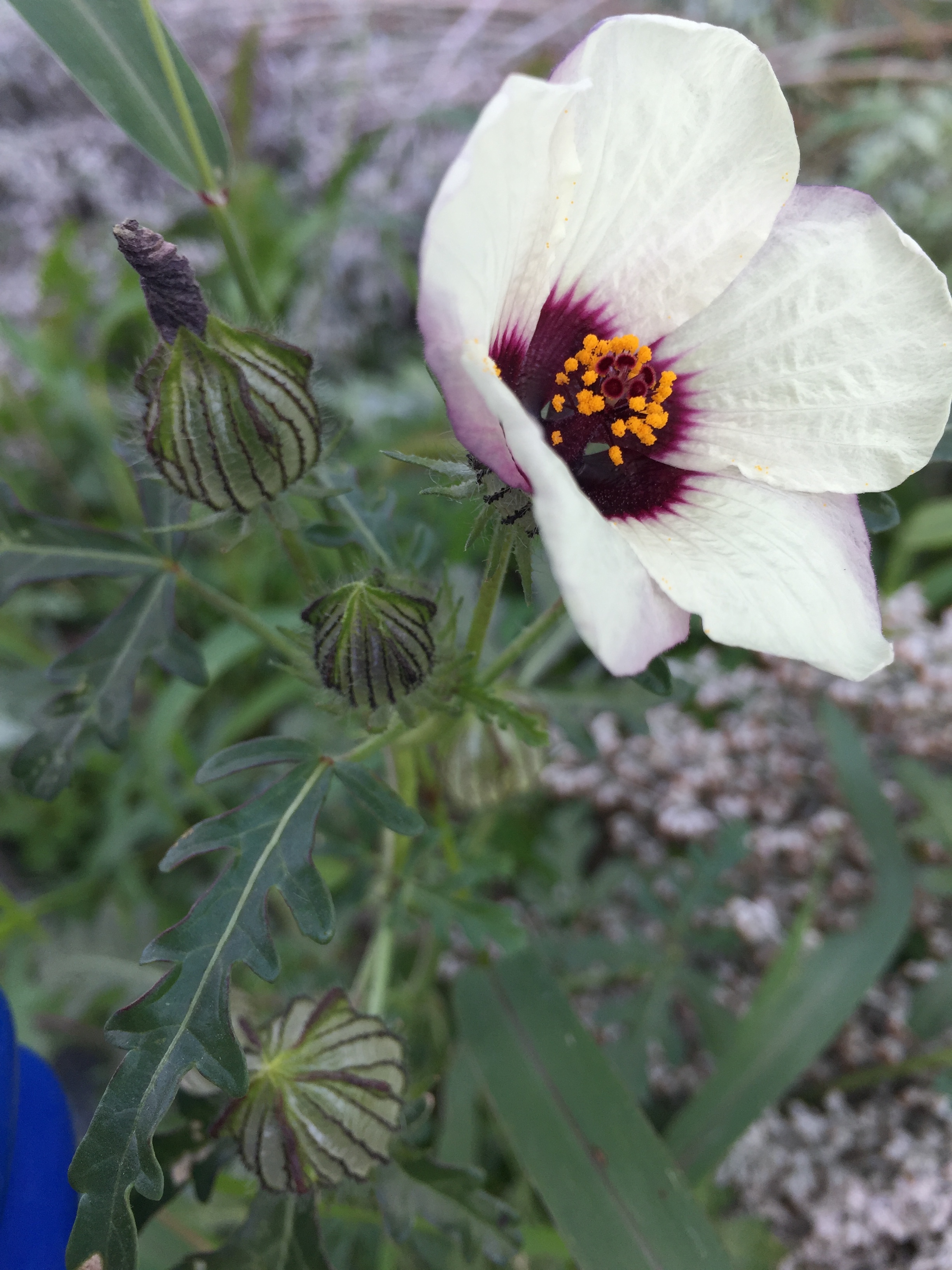
flower-side*I have a couple of blog/writing-related notes at the end of this post. Thanks for reading!

Earlier this year, trapped in a quiet waiting room while one of my children was doing academic testing, I picked up a book from a shelf and flipped through it. It was a book about Christian missionaries ministering to Muslim women, and it was compiled from the experiences and wisdom of women missionaries who’d served in Muslim countries for many years. I loved reading the accounts, but oddly enough, now there is only one I can recall with any clarity. It was from a woman missionary who felt amazed she’d been asked to contribute to the conversation. She, her husband, and their two daughters had been sent, years before, to a strict society, one in which she had very little freedom even as a Western woman, one in which her daughters had even less freedom.  She said something like this: “I have spent most of my time ministering to only two young women, our daughters. I have been their teacher, their spiritual mentor, and their mother. That has been my ministry. I do not know what wisdom I will be able to share.”

And yet, I remember clearly, she had much wisdom, the kind that comes from humility, quietness, watching, waiting, praying.

I wonder if I have been called to just such a season. My husband’s work is most definitely ministry, and it requires deep attention. It is good, good work, and we know he is impacting young men and women who desperately need good education and good male role models. Many of them need father figures. He is being used.

My children are in the middle of good work as well. They go to schools where they are the racial minority (except for my youngest, of course); they go to an after-school program with kids from our neighborhood; they befriend the three young boys who end up at our house many afternoons.

And I? I get them all out the door to do these works. I do the laundry and fix the meals and help with homework and encourage and remind and pray with and, when belonging seems far away, cry with. I homeschool the oldest child part-time, and my paid work is writing, which most of the time is done in quiet. Most days, I do not feel as if I am doing much of anything that is related to what we feel we’ve been called to here, to the work of being integrated, to the work of equality and justice and being/showing Jesus.

I recently wrote an article on the documentary film made about Lilias Trotter, one of the pioneer missionaries to Algeria in the late 1800s (look for a blog post in the next week or so about this). In the research process, I read this quote from her:

Surrender – stillness – a ready welcoming of all stripping, all loss, all that brings us low, low into the Lord’s path of humility  – a cherishing of every whisper of the Spirit’s voice, every touch of the prompting that comes to quicken the hidden life within: that is the way God’s human seed-vessels ripen and Christ becomes “magnified” even through the things that seem against us.
– 
Parables of the Christ Life

This, too, I am reminded, is good.

This, too, is God’s good work—in me, through me.

~~~

NOTE 1: If you’ve never visited my “freelance writing” page (follow the link here or scroll to the top of the page and click on the link there just under the header picture), check it out. If you have any writing or editing needs, please feel free to contact me. I love to help people get their ideas out of their heads and onto paper in clear and lovely ways. No job is too small!

NOTE 2: I added a donate button to my blog (well, actually it reads “Buy Now,” simply because I can’t get the formatting right for it to say “Donate”–oops!). Please do not feel any obligation to donate; I just wanted to give readers the option of contributing to the work of this blog and, through it, to the pro bono work I do for non-profits and churches.


Not an Agent

I took this shot the other night when the kids were doing sparklers.

I took this shot the other night when the kids were doing sparklers.

I am in the process of getting my young adult (YA) novel ready for submission to an agent. I’ve created an entire file full of synopses and “back of the book” blurbs of different lengths, character descriptions, chapter summaries, market analyses, etc,–all the elements different agents want in the proposals writers send to them.

In the middle of writing all these documents, I realized I must also trim the novel itself because right now its word count—which is often required on the first page of the proposal—is long enough that many agents won’t even read all those other carefully crafted pieces—or the manuscript itself.

When I told my husband this, he protested (sweet man). “What if it needs to be that long? What if it actually decreases its quality to shorten it?”

Years of cutting news and magazine articles down to word count specifications make me doubtful of that. A good cutting generally clears the fluff so the essential and good stand out more clearly.

Besides, the question of quality is moot. I read my husband this quote from Chuck Sambuchino at Writer’s Digest:

“Agents have so many queries that they are looking for reasons to say no. They are looking for mistakes, chinks in the armor, to cut their query stack down by one. And if you adopt the mentality that your book has to be long, then you are giving them ammunition to reject you.”

I transition here to the real point of this blog post.

As I was cutting last week, feeling a bit overwhelmed and very uncertain, I thought, “Oh, God, I am so thankful you are not like an agent!”

It’s true! God is not looking for reasons to turn us away, to narrow the field.

He is longing, in fact, to accept us, all of us, with open arms. He calls for us.

But as I thought about this more, I realized I/we act as though God were an agent.

Following his quote above, Chuck Sambuchino went on to say that writers can, of course, assume that all the fine points of their manuscript will outweigh the flaws, that agents will be so amazed by them, they will overlook the too-long word count or editing errors or…

We do the same with God. We come speaking of our tidy editing, acceptable word counts, stunning plot, or brilliant characters; we spread chapter summaries, 35- 50- and 75-word summaries, a 2-page synopsis, character descriptions, and a back-of-book blurb out on the table.

We pretend God is an agent we must impress.

We pretend we can impress Him.

Agents’ requirements remind me of the Old Testament Law, which Hebrews tells us could never make us perfect and Galatians calls “our guardian until Christ came.”

When we continue to live under the Law, coming to God with hands full of our offerings, our work, He will not accept any of it; He rejects it because every bit of it is flawed.

But here is an incredible difference: He hopes we will agree with His assessment.

Because that is the one thing, the only thing, that will gain us entrance with God: our acknowledgment that we need His provision (Christ), that we are incapable of producing anything acceptable.

He wants us to cry out in desperation for Him.

When we do, He crushes us in His arms.

Because though He can’t accept our work, doesn’t want our work…

He does want us.

Dry Wells

A reading of this post is at its end.

I really DO like dandelions--and wild violets.

I really DO like dandelions–and wild violets.

The well has run dry. At first it was simply, “I have to push off writing a blog post until I meet other writing deadlines.” Then, during a weekend when I spent MUCH time in the car running errands, I noticed an emptiness. No strings of thoughts connected in my head. Phrases popped up, but a blog post generally requires more than my observations on the nude dandelion stems I noticed when stopped at a red light. (Trying to put together a line that sounded like poetry, I played with ideas like “a tangle of hollow stems, wound round each other, trying to hide their nakedness” and “look-at-me blossoms withered to fluff. Now even that has blown away”).

But not only did that seem very negative toward dandelions–which I like–it was as far as I got. The thought trail ended, and my mind jumped next to “what to fix for dinner.”

Still, there wasn’t time to actually write, so the vague feeling of emptiness was easily shoved aside.

But this afternoon, the deadlines aren’t as pressing, so I’m writing a blog post.

And nothing is coming!

Usually panic would already be fluttering (“Will I ever be able to write again? Am I done?”), but today I’ve been able to pin its wings and tell it to “Settle down” in a firm voice.

It has.

That’s Grace.

Grace in painful kindness lets my well get bone dry so I stop looking at it and stop trying to sponge up the droplets. Grace helps me to see the cracks in my cistern and, oddly, to be at peace about my own brokenness.

Then Grace turns me to the spring that never runs dry.

Sometimes this Source is like a waterfall, spilling over me with power. Today, though, it is a gently bubbling brook, smooth, with no undercurrent. I will eventually wade, will plunge in, but for right now I am content to stretch out in the quiet shallows.

Grace knows exactly what I need.

I am very grateful for this, not only for the trust I am able to rest in today in regards to my writing, but for the understanding that this applies to my motherhood, to my marriage, to my friendships, to my running of a busy household.

My wells run dry—much of the time.

Making way for Grace.

And that’s good.

NOTE: I wrote this yesterday afternoon. This morning, at my church’s women’s Bible study, we sang “You’ll Come” by Hillsong United. These words jumped out at me: “You’ll come, let Your glory fall/As You respond to us/Spirit rain/Flood into our thirsty hearts again/You’ll come, You’ll come.” Here’s a link to the entire song performed by Hillsong: “You’ll Come.”

NOTE 2: I had already discovered some beautiful verses in Isaiah 58 that are incredibly inspiring (who doesn’t want to be known as a “repairer” and “restorer” of things/people who are broken!?). Then, also in the Bible study, I was reminded of the following verses in John 7. Enjoy–and thanks for reading.

John 7:37-39a (click on the link to read the entire chapter)

On the last and greatest day of the festival, Jesus stood and said in a loud voice, “Let anyone who is thirsty come to me and drink. 38 Whoever believes in me, as Scripture has said, rivers of living water will flow from within them.”[c] 39 By this he meant the Spirit,whom those who believed in him were later to receive.

Isaiah 58:10-12 (click on the link to read the entire chapter)

“If you do away with the yoke of oppression,
with the pointing finger and malicious talk,
10 and if you spend yourselves in behalf of the hungry
and satisfy the needs of the oppressed,
then your light will rise in the darkness,
and your night will become like the noonday.
11 The Lord will guide you always;
he will satisfy your needs in a sun-scorched land
and will strengthen your frame.
You will be like a well-watered garden,
like a spring whose waters never fail.
12 Your people will rebuild the ancient ruins
and will raise up the age-old foundations;
you will be called Repairer of Broken Walls,
Restorer of Streets with Dwellings.

Redeemed. Redeemed…

redeemedThe writing I do in my head is beautiful! As I walk at the dog park or fold laundry in the basement, words, lines, and ideas float through my mind and I am awed at their perfection.

First chance, I grab pen and paper and fix down the words that hang like masterpieces in my brain.

This fixing destroys them, or, rather, it unveils them. What I imagined as a Renoir is nothing more than a child’s cartoon drawing. “What happened?” I wonder. “Did I remember it wrong? Was it not really that beautiful to begin with?”

I am not alone in this, not as a writer, nor even as a person. We all long for perfection. We plan perfect dinners, evenings, vacations, outfits. Those are small imaginings. Bigger are our dreams of ideal families, marriages, lives, homes.

This fascinates me. Why do we have this obsession with perfection when we have never, not ever, experienced it?

And isn’t it ironic that though we long for perfection, our very natures seem bent to ruin any good we do encounter?

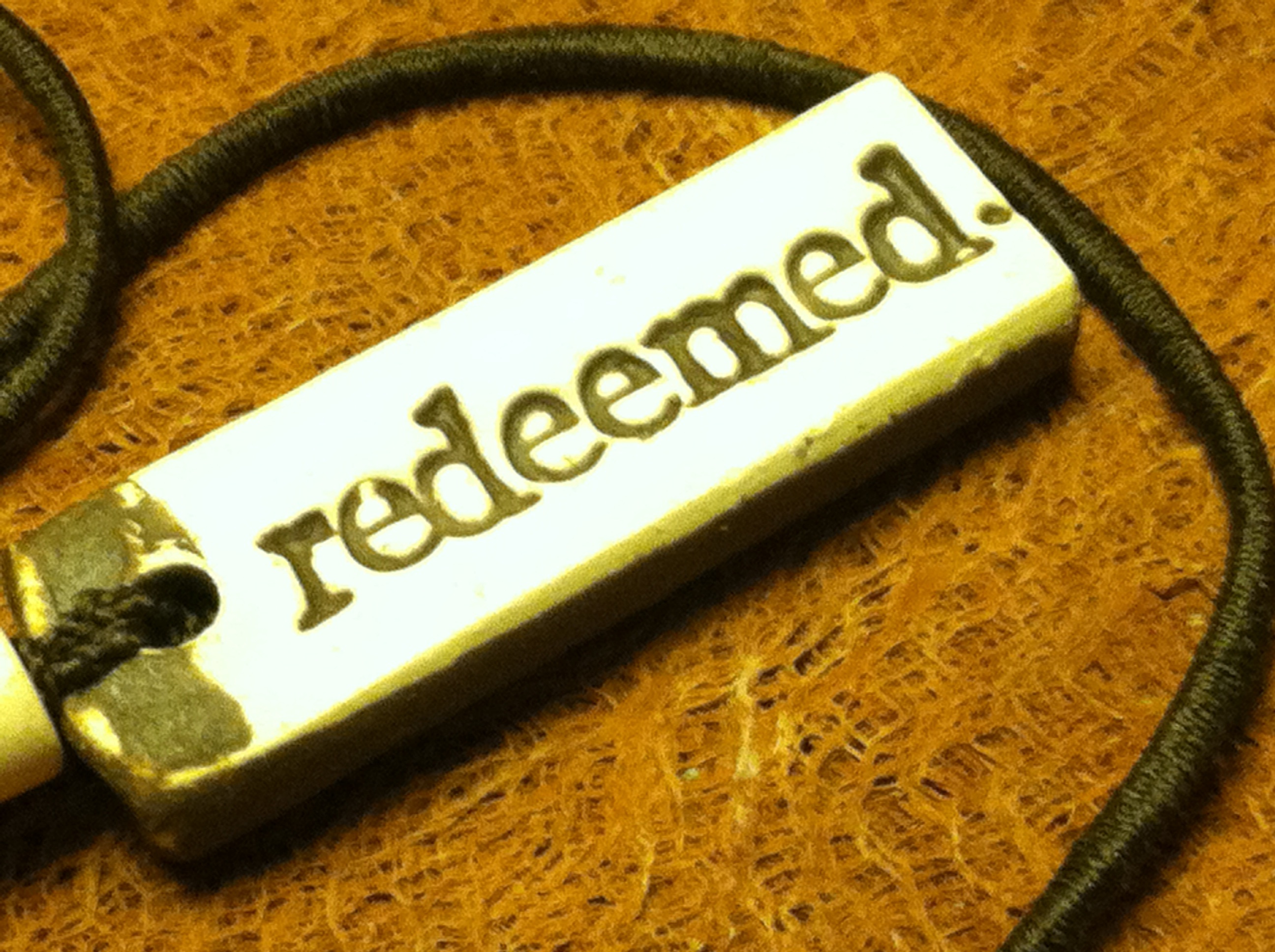
A few days ago I bought myself a new MudLOVE necklace (http://www.mudlove.com/index.htm). It says “Redeemed.” I picked this one over others that read “Blessed,” “Believe,” “Hope.” I picked it even over the “Set Free” necklace, which I bought last year but then gave away to a young man in Africa this past summer.

Redeemed.

MudLOVE does not have a necklace that reads “Perfect” or even “Perfected.”

That’s not surprising. Few of us are that egotistical, at least outwardly.

Perfection implies there is no need for any kind of change, no need for redemption. If something is perfect, it simply is. There are no marks of fixed flaws, no evidence of past issues.

Yet Christ told us to “be perfect, even as the Heavenly Father is perfect.” (http://www.biblegateway.com/passage/?search=Matthew+5:48&version=ESV)

Impossible—which was pretty much the point.

Which brings me back to redemption.

I look at my reference tools and find the definition of “redemption” that fits the Biblical idea of the word: “the buying back of something.” But when I switch to the thesaurus, it’s the synonyms that catch my attention: “recovery, renovation, reclamation (I like that one), restoration, revitalization.”

Yes, I think. This is what I do with my writing. I tinker, trying to reclaim a bit of the perfection the words seemed to have when they floated through my head.

But our perfection is more than a puff of smoke in our Creator’s mind. There once was perfection, when our actuality matched His design. Now, however, there can be no more perfection. We’ve been marred. So there must be “the buying back,” accomplished by the unmarred Christ, whose Perfection stepped in for us. (http://www.biblegateway.com/passage/?search=Hebrews+10:14&version=ESV)

So the positional perfection, the positional redemption has been accomplished. But what about all the synonyms? I don’t continually feel or act restored, recovered, revitalized.

I look at my necklace again. “redeemed.” There is a period after the word.

Hmm.

Bought back—past tense, completed? Yes.

Still being revitalized, reclaimed, restored?

Yes.

Redeemed. AND Redeemed…

A weekend away–with a purpose

He has been urging me to do this for, quite literally, years!

On Monday night I was evidently ready. So when my husband said, “Go away for the weekend. It will be good for you,” I did not sigh and say, “You’re right. I should, but now…?”

This time I nodded. “Ok.”

So Friday afternoon I checked into a hotel he’d booked for me (he feared I would back out when I was faced with the reality of spending money on myself) and carried my bags up to a room that had no human presence in it other than my own.

It was unnerving.

But good.

I had a specific job for the evening. About a week ago I was accepted into the Redbud Writers’ Guild (www.redbudwritersguild.com) and I received a request from a member of its Board of Directors for a whole list of things, one of which was a one/two-sentence description of my reason for writing.

My reason for writing.

Hmm.

I knew my usual answer—that I can’t seem to NOT write—wasn’t what I wanted to have next to my name. That’s not really a reason; it’s a negative statement.

I decided to look at some of the other writers’ descriptors. I read nearly all of them. Then I visited many of their Websites and blogs. I cried over the tough things some of them are going through and rejoiced at the amazing ways God is using them and their writing gifts.

While I enjoyed all their sites and writing, I identified with only some of their reasons for writing. Many have a particular “niche.” I don’t. Many have writing that flows out of a particular ministry. Mine doesn’t.

In between all this I looked up verses (in three different translations) that have the words “write” or “writing” in them.

I read and thought and prayed and jotted down notes.

And I was reminded of what I learned a long time ago.

I love story.

I love it because I have this deep-down-in-my-gut belief that every story, no matter how small, no matter how terrible, is somehow part of God’s big, grand, beautiful story. In this STORY, God, as Joseph puts it so well, turns all things meant for evil into good. Not a single part of anyone’s story is wasted. Each one plays a vital part in God’s sweeping epic.

Years ago, in an inservice at work, I took a Strengthsfinder test. Top on my list of strengths was “input,” which was described as “a craving to know more,” a desire “to collect and archive all kinds of information.”

What? I thought—but then I read the bigger description at the back of the book. In the long list of the kinds of things “Input” people like to collect is this: STORIES.

Teaching was my main career focus at that point. There wasn’t much time leftover for writing, but when I read that, something in my heart hummed.

It’s true. “Story” is the theme that links all the writing work I do.

By the end of my first night away, I had three possibilities, all related. I’ve since added a fourth. They’re below. If you have a minute to vote, I would appreciate your feedback.

If you have any suggestions and you don’t mind sending me a comment, I would appreciate that, too.

Thanks for reading,

Jen

More and Less: the Usefulness of an Impure Pen

“He must become more.

I must become less.”

John the Baptist’s followers were amazed by their leader’s statement about Christ’s increasing popularity and John’s decreasing fame. “What’s wrong with him?” they wondered. “Doesn’t he realize this is bad for him?”

Deep down, their concern was about themselves, not John. “What about us?” they might have been thinking. “This is not good for US. We were disciples of the popular guy. We were up and coming, well-known. But this guy is cornering in on our market, and our résumés are suffering.”

Confession: I am so very guilty of this. Every time I submit a magazine/Web article or post a blog, there is at least a hint of selfishness. Underneath the good desires (I hope others are encouraged by my journey; I hope my work honors God) are seedier ones. Will people like it? Will this make me better known? Will this lead to bigger writing assignments and opportunities?

Ugh!

I long for completely pure motives, but I know that on earth I’m simply not capable of them. My old nature will always taint my motives, and I have to constantly face this truth. I recognize the selfish motive, acknowledge it to God in confession, ask for His help, and move on–until selfishness creeps in again. It’s a never-ending battle.

At times I get tired of it, sometimes so tired I want to give up: I want to stop submitting, stop posting.

But I feel called to persist, and John the Baptist’s words encourage me to keep fighting. John said, “He must increase, but I must decrease.” He didn’t say, “He’s great; I’m not. That’s it.” A process is implied in his statement. The Amplified version adds these words: “He must grow more prominent; I must grow less so.”

Now I know John the Baptist was a prophet. I know there is a prophetic sense to these words: they are referring to Jesus being lifted up as the Savior of the world and of John being seen as Christ’s servant, His herald. Perhaps John wasn’t speaking about a heart process at all but merely the actual events that were about to take place. He may very well have been so in tune with God’s plan that he wasn’t referring to his own selfishness at all.

But when I say them, that’s exactly what I’m referring to. I’m a lot more like John’s followers than I am like John. Though I know and understand more and more the overwhelming majesty and greatness of Christ, the reality is that I lose that viewpoint all the time; I feel that I should be the center of attention. THAT’S my battle, and the process hinted at in John’s statement encourages me to keep fighting it: “Christ must grow more prominent. I must grow less so.”

So I can GROW in decreasing (that’s a cool paradox). Exalting Christ can become greater and greater in my motivations. I can become less and less. Like Paul learned contentment, I can learn this.

I have a personal teacher who helps me with this very difficult lesson. In Colossians 1, Paul tells the believers at Colossae he continually prays that God will fill them with the knowledge of His will through the wisdom and understanding the Spirit gives so (they) may live lives worthy of the Lord, please Him in every way, and bear fruit.

I know God’s will for me as a writer; it is for HIM to be exalted through my writing.

And the Spirit, my teacher, is not only able to sanctify my motives, the Spirit is also fully capable of using my writing to exalt God at the same time!

The Spirit will enable me to please God with my pen and keyboard, to bear fruit through my words,

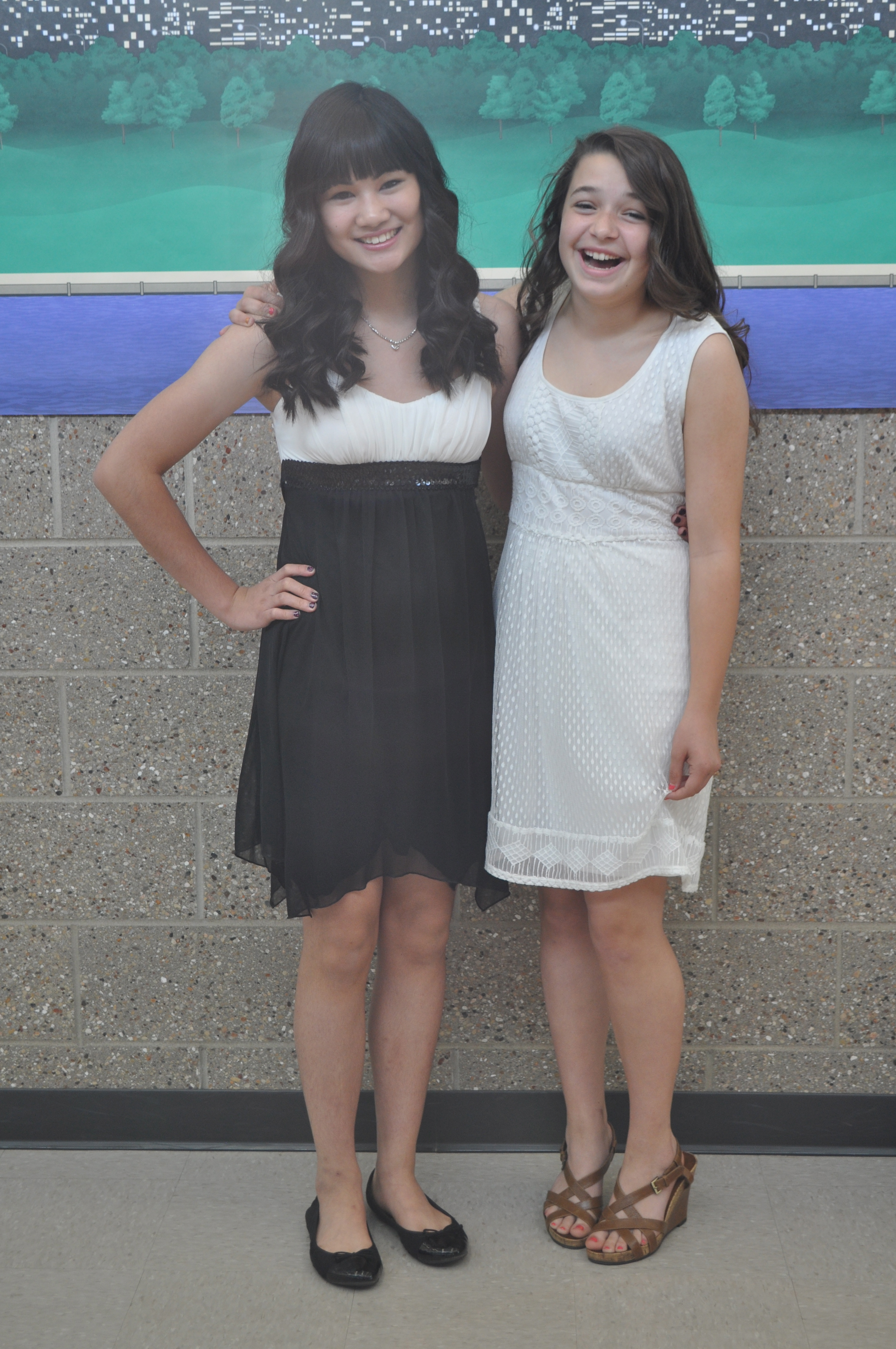
Kelly and Em at the junior high gala last night. Two beautiful girls! I must admit, though, my thought all night was, "But how did the time go so fast?"

Kelly and Em at the junior high gala last night. Two beautiful girls! I must admit, though, my thought all night was, “But how did the time go so fast?”

AND to “live worthy” as a writer.

Now THAT is Good News!


*Here are a couple of stanzas from the hymn “Holy Spirit, Truth Divine” by Samuel Longfellow (brother of the famous Henry Wadsworth Longfellow) that perfectly express the ideas in this post (and in far fewer words—oh, to be a poet).

Holy Spirit, Truth divine,

Dawn upon this soul of mine;

Word of God and inward light,

Wake my spirit, clear my sight.


Holy Spirit, Love divine,

Glow within this heart of mine;

Kindle every high desire;

Perish self in thy pure fire.

Let my words be few

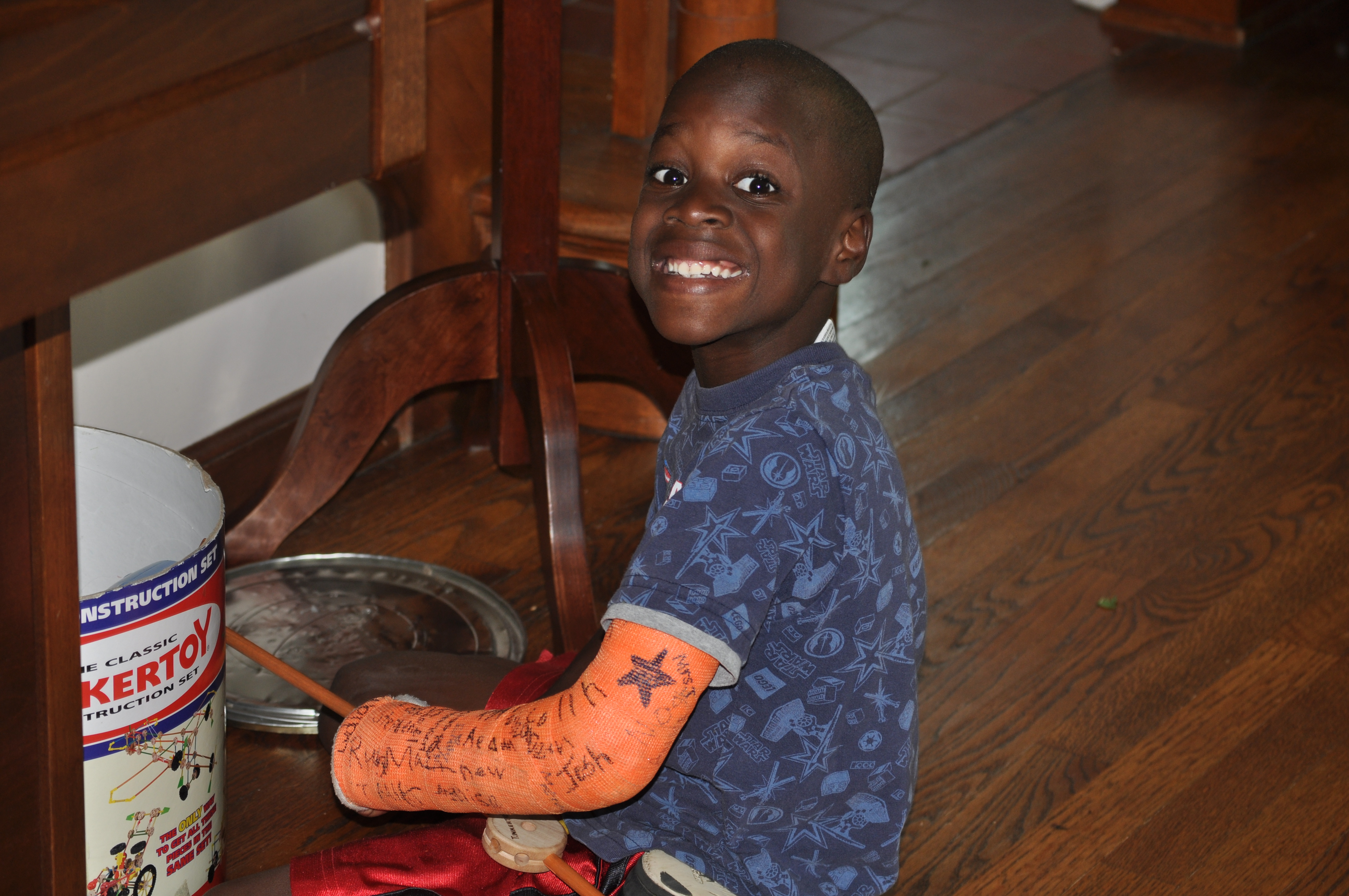
The plan--hatched between PJ and Dad--was for him to pick red--for the Chicago Bulls, of course. But PJ saw the BRIGHT orange and was hooked.  So Dave drew a Bears symbol on instead!

The plan–hatched between PJ and Dad–was for him to pick red–for the Chicago Bulls, of course. But PJ saw the BRIGHT orange and was hooked.
So Dave drew a Bears symbol on instead!

I was lecturing–again. I don’t even remember which child it was, but behind him or her, Dave was signaling “STOP”: running his forefinger cutthroat along his neck; then putting his hands up, palms facing me; finally using the choir director’s sign for “and end.”

I got the hint, finally, and said, “Okay, I’m done.” I looked at the child. “Do you understand? Really?” Dave began the cycle of motions again.

The child left, and my shoulders sagged. “Suggestions?” I asked Dave. “I feel like I say the same things over and over and over.”

“And you say them well,” he said. “Too well. You say it, and then you add an illustration, and then you think of another way to say it, and then their eyes are glazing over. Must be the writer in you. Try fewer words.”

Funny how my mouth hasn’t caught up with the lessons my fingers have had to learn.

I used to hate writing word counts. I remember the first time an editor told me a piece had to be drastically reduced in length. There’s no way, I thought. That will ruin it!

It didn’t. In fact, it made it tighter, cleaner. Now I consider word counts a challenge and, eventually–when the cutting is complete, a real blessing to the overall piece.

It’s harder with the words we say, though. With writing, I can let it all out and then cut it before anyone else reads it. We can’t, however, rewind the words we say. Any revision, editing, or cutting has to be done BEFORE they leave our mouths.

“Let your words be few,” Solomon says in Ecclesiastes 5:2. He’s referring to prayer, but I think it’s a good mantra for us whenever we find ourselves with a runaway tongue. 

So many sins are related to what we say–and it’s usually because we talk too MUCH, not too little. Sometimes we have diarrhea of the mouth–completely unfiltered and unchecked (this makes me think of the illustration in James 3 of the tongue as a raging fire). Sometimes we are like a dripping faucet, nagging incessantly. Other times we may not be guilty of unkindness with our words, but we certainly can’t be accused of thoughtfulness either. Like a shallow stream our words gush on and on without much substance.

Proverbs 18:4 says, “Wise words are like deep waters; wisdom flows from the wise like a bubbling brook.” This contrasts what Job said about his very talkative friends. “You’re like unseasonable brooks that dry up in hot weather,” he told them.

Our words should come from a well of wisdom dug by the Holy Spirit. They should come forth, not in a gush but in a gentle flow. I get the impression that deep thought has taken place in the well BEFORE there is any output. The result is that the words are refreshing and helpful. Even reproof comes out of this wisdom, and encouragement is its underlying motivation.

Thought before speech; a gentle flow rather than a flood.

In other words, I need to think about my word count in my speech just as I do in my writing.

This makes sense, doesn’t it! How on earth will my children remember a lesson expressed in a torrent of words, no matter how well it is expressed. But simple directives or statements–like the Proverbs–have a better chance of sticking.

Our household rule for words is pretty simple: “If it won’t do good, don’t say it. If it WILL, DO.” I say this rule to my kids often enough that they tend to recite it with me when I start it. Sometimes THEY start it.

It’s a good rule for me to follow too.

Except I need to add “And then STOP!” at the end of it!


A few more verses about words:

Set a guard, O LORD, over my mouth; Keep watch over the door of my lips. Psalm 141:3

In the multitude of words sin is not lacking, But he who restrains his lips is wise. Proverbs 10:19

A word aptly spoken is like apples of gold in settings of silver. Proverbs 25:11

Whoever has no rule over his own spirit is like a city broken down, without walls. Proverbs 25:28

When she speaks, her words are wise, and she gives instructions with kindness. Proverbs 31:26

May the words of my mouth and the meditation of my heart be pleasing in your sight, O LORD, my Rock and my Redeemer. Psalm 19:41

Then Judas and Silas, both being prophets, spoke at length to the believers, encouraging and strengthening their faith. Acts 15:32

Even a fool is counted wise when he holds his peace; When he shuts his lips, he is considered perceptive.  Proverbs 17:28


Check this out! please!

Hi everyone,

I am TOO busy right now to do what I just did.

But I couldn’t help it.

For one of the articles I’m currently working on, I interviewed a man whose daughter died of cancer a little over two years ago. She was just a few years older than I am. He mentioned that she blogged and that, in his opinion, she was a wonderful writer and was still helping people go through difficult times through her blog.

So, being a good researcher (ha ha), I checked it out.

And I can’t stop reading it!

Laurie Jane is a wonderful writer! I feel like I know her through her blog, and I am definitely looking this woman up when I get to heaven!

So I wanted to pass it on. Here’s the link to the latest post, which, I’m just warning you, made me cry, because it’s written by one of her friends announcing Laurie Jane’s homegoing: http://beautyliesinthetruestory.blogspot.com/

But if you want to start at the beginning and read how this funny, sassy, deep woman dealt with terrible, terrible pain and trials and how she drew closer to Jesus through it, here’s the link to the very first page of blog entries: http://beautyliesinthetruestory.blogspot.com/search?updated-min=2009-01-01T00:00:00-08:00&updated-max=2009-06-15T16:09:00-07:00&max-results=50&start=98&by-date=false

I’m hoping this helps someone–besides me–today.

Thanks for reading,

Jen

Suggestions, please

I am working on another book proposal for the story of Patrick’s adoption. For this latest version, I need a 75-word summary. What I have written below (in italics) is not really a summary, but the guidelines said to think of this as what might go on the back cover of the book, so I am assuming it needs to actually grab attention. If you have a few minutes to read it and then have a suggestion for me, please message me or leave a comment. Thanks so much. Jen

Patrick playing in the snow this past winter. What a dude!

Amazing to think he was once that sick!

A mother dies of AIDS in Uganda, and her 9-pound, 16-month-old son is taken to an orphanage. A teenage girl from Chicago arrives there only days later, takes him in, and nurses him to health. A friend from the States visits and falls in love with the baby, and the friend’s husband, back at home with their three kids, begins praying about adopting this little boy he’s never met. 

The journey to adopt Patrick begins.