Needing and finding

Speaking of Chai (she's mentioned late in this post), here's a shot of her lounging on the only piece of furniture she's "supposed" to get on.

Speaking of Chai (she’s mentioned late in this post), here’s a shot of her lounging on the only piece of furniture she’s “supposed” to get on.

This morning* I crushed the spirit of one my children.

At least that’s what it felt like.

It was over an organizational issue we’ve been wrestling with ever since school started (well, actually, for years). It’s also an issue that this child refuses to really face as a problem. I hear “I’ve got this” and “No big deal” often enough that it makes me want to scream.

And this morning I did.

“When are you going to see this as a problem?”

“When are you going to admit you need help?”

“When are you going to stop telling me ‘I got this’ and start listening to what I and so many others are telling you?”

Oh, there was more—though God, in His grace, stopped me from saying at least some of the destructive things that were on the tip of my tongue.

But I went on and on. Not a dripping faucet, oh, no, a full-open tap.

And my child cried.

And I felt like, pardon my French, shit.

During it, following it, twinges of it even now.

After the tears, after my anger, I pulled my child aside in the kitchen, held this precious one close and said, “I can’t let you go to school without you understanding that my frustration doesn’t mean I don’t love you just the way you are.”

(And at the same time I said that, I thought, but that’s not what my earlier words and anger communicated!)

I affirmed this child’s wonderful qualities of kindness and generosity and oblivion to differences in other people and unawareness of standards that others set. This child is individual and easygoing and full of so much love.

“But you’re running into some things that are showing you that you have some areas of weakness, too—just like we all do—and until you admit them, you can’t grow in these areas. Do you understand that?” I asked.

My child nodded.

“I’m so sorry for the way I said it, though. There may have been things that needed to be said, but they shouldn’t have been said in anger, and I know I blew it and hurt you. I was wrong.”

My child nodded—but I knew that my apology, which also included “something to work on,“ was a lot for a kid to process.

We got lunches packed. We drove to school.

This child was the last to get out of the car “It’s really okay for you to be mad at me,” I said. “I did you wrong this morning.”

My child paused. Then said, “I love you, Mom.”

I was thankful there wasn’t an immediate statement of forgiveness. I was thankful this child was taking the time and the right to process.

But I barely made it down the carpool lane and around the corner before I began sobbing.

Oh, God, please heal the hurt I caused, I cried. Please come behind me with love and grace and mercy.

Heart churning, I tried to remember all I’d said, tried to sort out the good, the bad, the ugly. Some things felt as if they needed to be said—but in that way?

Then I simply quit, stopped my sorting and picking. “You’ll have to show me, Holy Spirit,” I whispered. “Reveal to me what You want me to see, help me to simply acknowledge my wrong, and then show me how to communicate that to my child. And, please, oh, please, draw this child close to Your heart.”

Home again, I cried more, on my knees, next to my bed.

It wasn’t completely about this morning any more. I’d just had a glimpse of how very fragile we all are, how easily relationships are damaged, how easily I could have said (and maybe did) something my child will carry through the rest of life.

And here's a much better pic of her, taken, of course, by my daughter Em

And here’s a much better pic of her, taken, of course, by my daughter Em

The dog heard me and came into my room. She pushed her way between me and the side of the bed and nuzzled my ear, and I was grateful for this warm-bodied creature sent by God Himself to comfort.

I found myself suddenly singing, the song itself a gift:

Lord, I come, I confess,

Bowing here, I find my rest

Without You, I fall apart

You’re the One that guides my heart.

Lord, I need you, oh, I need You,

Every hour I need you.

My one defense, my righteousness,

Oh God, how I need You.

What followed was a day of living into that song, cycling through needing and finding again and again.

Finding rest and rightness with God, and later, blessed reconciliation with my child.

And then, at the close of the day, another gift.

From the bathroom, where my child was getting ready for bed, I heard singing.

When the door opened, I heard it clear.

“Lord, I need You, oh, I need You/Every hour I need You.”

“Hon, why are you singing that song?” I asked.

A smile. A shrug. “Don’t know. Just came to mind.”

We have a Lord who guides—and heals—our hearts.

Oh God, how we need You.

*I wrote this yesterday–about yesterday.

Local opportunity to learn more about anti-trafficking

Click on the link at the bottom of the post to visit Naomi's House website.

Click on the link at the bottom of the post to visit Naomi’s House website.

Tuesday, September 30

6:30 – 7:45 pm

Missions Place by TEAM

370 W. Front Street, Wheaton, IL 


Schedule of Monthly Meetings: 

6:30 pm — All are welcome to a time of prayer as we focus on those suffering and those fighting modern day slavery in our communities and around the world. 

7:00 pm — Intros, check in and sharing. All are welcome to introduce themselves and their church or organization and log for the Coalition what they or their communities are doing in the fight against human trafficking. These will be compiled in ongoing lists to facilitate engagement and involvement opportunities for all coalition participants and our community. 
 
7:20 pm — Each meeting one individual, project, initiative, organization, etc, will present to the group. This is a time of giving information, receiving feedback, and open discussion with the purpose of deepening our understanding of the issue and how it impacts our community. 
 
7:45 pm — Meeting ends promptly at 7:45 pm. 
 
This Month: Naomi’s House  

This ministry of Moody Church will offer a safe, nurturing home and comprehensive care in our area for sexual trauma survivors in Chicagoland. Learn more and watch the video at the Moody Church website.


Not so “ordinary”

There is no such thing as ordinary.
The daily grind, whatever it is for each of us, becomes “ordinary,” but it is anything but. In reality, what we consider “ordinary” is supernatural, filled with the common grace of God.
I remember an idea from a Tim Keller sermon (he’s been a favorite of late): Does someone in your life love you? Is there someone to hold your hand? Does someone ask you how your day is going and sometimes even listen when it’s not going so well?
Grace—it’s all grace. You didn’t do anything to deserve any of that, and without Grace, you wouldn’t experience any of it.
I remember a comment I heard a family counselor make on a radio show. “We humans are not hard-wired for real relationship. Deep down, if we are truthful, we have a “what’s in it for me?” expectation about every single relationship we are in—even the parent-to-child relationship. The only reason I can see for any human relationship retaining even a trace of goodness is completely the grace of God.”
Thinking of these two comments, I try to imagine “ordinary” with all common grace removed. The first images that pop up are from Cormac McCarthy’s post-apocalyptic book The Road, in which lawlessness prevails; the strong prey upon any weaker than they, with no pity; and no “human decency” remains. The one relationship readers would call “normal”—that of a father and son who care for each other—is in stark contrast to everyone else. For the sake of food and shelter, people will do anything, even kill and eat their own children.
For those who have not read The Road, just imagine “ordinary” without common grace as the worst moments of the Holocaust or the Rwandan genocide, as the inside of a brothel; as the continual torture inflicted upon prisoners of war.
In this kind of “ordinary,” there is no such thing as a mother’s and father’s natural love for children, no sense of morality or “right,” no conscience at all. There is no such thing as respect and concern for one’s fellow man.
This is hard to fathom in my “ordinary” world. Common grace is so, well, common. But if God withdrew His active goodness–which is present in this world without us giving Him a single reason to give it—the result would be hellish, brutal.
This should transform my idea of “ordinary”—which I far too often think of as a burden. It should enable me to see my ordinary—with its daily grind and up-and-down relationships and disappointments and boredom and longing for “something more”—as truly a miracle.
When I think of my family and friends as miraculous gifts, then all the daily grind related to relationship with them can be transformed as well: meal prep, grocery shopping, carpooling, laundry, maybe even cleaning (though I’m not sure if that one fits in my “ordinary” category—extraordinary perhaps?).
We humans often want a change IN our ordinary. We often covet the “ordinary” of other people. “If only…” we think. But, in truth, a change in mindset, not a change in circumstances, is what transforms our ordinary.
And that, God reminds us, is a job the He is eager to do for and with us.
Hallelujah!
Verses for study:
Romans 12:2– The Amplified has so much richness, but the New Living lays it out plain and clear. The link above takes you to a page with both translations side by side.
Romans 8:6– This link, too, takes you to both the Amp and the NLT side by side.

A prayer for Sex Slaves, written by Scott Sauls

Last night I went to a video screening sponsored by the West Chicagoland Anti-Trafficking Coalition (WCATC). The video was Call + Response, a combination documentary/musical benefit shedding light on the issue of modern-day slavery. I’ve put more information about the film near the bottom of the post, but what I really want to share is the prayer, written by Scott Sauls, that WCATC co-founder Terri Kraus prayed at the close of the event. Please join me in this prayer today.

Lord Jesus, no one knows suffering, oppression, and abuse like you do. As we come together on such a weighty subject as human slavery and trafficking, we pause to remember that you were sold for money by a scoundrel, so that other scoundrels could have their way with you. You were made a slave…pierced, crushed, and punished, even though you had done no wrong. You had your innocence violated as you were led to a dark back alley. You were stripped naked and abused—pierced for our transgressions, crushed for our iniquities. You sympathize with human suffering. And in time, you are committed to end it…to renew the world until there is no more death, no more mourning, no more crying, no more pain. In the meantime, Father, you give solidarity to victims, and support to those who protect and defend them. We do not know what we would do if you were not a defender of the weak, a lover of justice, and full of grace and compassion toward those who hurt.

It is because you love justice and are full of compassion that certain things anger you, Father, just like they anger us. You get angry when vulnerable people, created in your image, are threatened, exploited, degraded, and used. The victims in whose honor and for whose protection and rescue we gather today, are most certainly among these people.

We are grieved and sickened by the way that shame, fear, manipulation, exploitation, injustice and abuse destroy the lives and crush the spirits of slaves around the world and also slaves in our own state, towns, and neighborhoods. We are comforted to know that you are sickened too—and that you, Lord, hold the power and the will to change things. You are the King of heaven’s armies. And so, Father, we ask, please…

Put an end to this wicked and ridiculous industry. Bring justice. Crush evil under your feet.

Save those who are trafficked and exploited. Give them a chance to be physically, spiritually, relationally, and emotionally whole.

Protect all children, youth and adults who are the targets of abusers and human traffickers. Oh God, guard their lives and hold their hearts.

For the traffickers, for those who facilitate slavery, and for those who buy their illicit services…would you frustrate their efforts. Bring them down and take them out. Bring them to justice. Change their hearts so they will forsake their ways, we pray.

And for those like ourselves who have the power to help, because it is often through ordinary people that you choose to bring about extraordinary change—faith communities, potential donors of money and wisdom and time—please stir our consciences, enflame our hearts, call us to action. Show us what it means to do justly, to love mercy, and to walk humbly with you. Show us what it means to respond compassionately and decisively on behalf of those who need help and rescue. Show us what it means to freely give love away, just as we have ourselves freely received love from Jesus, the One who was exploited and handled and sold to his oppressors for thirty pieces of silver so that we could be saved from everything that’s wrong with us, and also from everything that’s wrong with the world—Jesus, by whose stripes we are healed. It is in his powerful name that we pray. Amen.

I did some research today and found several other prayer guides and devotionals specifically related to justice issues. The links are below:

She is Priceless Devotional

Salvation Army Prayer Guide (really, really good!)

The A21 Campaign prayer guide (also has some action steps and a great list of verses)

72 Daily Prayer Points


NOTES ON THE CALL + RESPONSE FILM (PLUS LINKS):

The film featured activists such as Gary Haugen of the International Justice Mission, David Batstone of Not for Sale, Dr. Kevin Bales of Free the Slaves; public figures such as Madeleine Albright, Dr. Cornel West, and Ambassador John Miller; author Nicholas Kristof (Half the Sky); celebrity activists such as Julia Ormond, Ashley Judd, and Daryl Hanna; and musicians Cold War Kids, Switchfoot, Moby, Talib Kweli, Natasha Bedingfield (among many others).

The film is now eight years old, but it is still very relevant. The number of slaves at its making–27 million slaves–is no less today, and the call for an abolitionist movement is needed. There is plenty of commentary on this documentary, so I don’t necessarily want to comment on it, other than to say that if you get the chance to view it, you should.

There were, of course, parts of the video that horrified me yet again with facts I already knew but often try to forget. Reading that children as young as seven are used as sex slaves is far different than seeing a video of a little girl tell about what she has to do on a daily basis.

The activists and celebrities in the film were passionate and articulate. Here are a few quotes that jumped out at me:

Ambassador John Miller spoke about the fact that the abolitionists in England were fighting against a slave trade that was not only legal but was considered moral by many of the ruling class. He then said: “We need a 21st century abolitionist movement” with the same courage and outrage.

Ashley Judd, on moving on from indignation–which she said almost all of us feel when we hear about this terrible issue: “Every person has the spiritual responsibility of cultivating that indignation till it creates action.”

Ashley Judd, speaking about the labor slavery that is often used to produce our clothes, our technology, etc.: “I don’t want to wear someone’s despair.”


Communion: a refresher course in the Gospel

The past three Januarys, I've taught a breadmaking class to Wheaton Academy students. This is one of their jelly rolls (not quite Communion bread but perhaps symbolic of the sweetness and goodness of Christ's sacrifice for us).

The past three Januarys, I’ve taught a breadmaking class to Wheaton Academy students. This is one of their jelly rolls (not quite Communion bread but perhaps symbolic of the sweetness and goodness of Christ’s sacrifice for us).

Communion during my childhood felt like the bridge challenge my brother and I gave ourselves whenever we were on road trips. We’d see a bridge a little ways ahead, breathe fast in-out, in-out, and then, as soon as the car was out over space rather than earth, try to hold our breath till we made it to the other side. Our faces turned pink with the effort; we stared at each other with wide eyes, daring the other to hold on just a little longer; and we sucked in fresh lungsful of air as soon as we were back on solid ground.

Communion in the churches I attended as a child and teen popped up like those bridges. On rare and random Sundays the silver towers of tiny crackers and grape-juice-filled cups betrayed its inclusion in the service.
And I would hold my breath—because “do not take communion in an unworthy manner” had been presented to me as a flagrant sin, and I was terrified of committing it.
First came the searching for past sins. I began at perhaps a week before and scoured my actions and thoughts up to that present moment. Discover-confess; discover-confess.
Then I held on. My main thought—prayer?—was “Don’t do anything. Please, God, don’t let me commit any new sins. Blank mind, blank mind. Don’t look at anyone.”
I simply had to make it till the two silver trays made their way past and the pastor said, “Do this in remembrance of Me.” Then the wafer was popped in the mouth. Hold it; try to be thankful in that moment—Remember, this is Christ’s sacrifice. A lot of pain went into my forgiveness!—don’t sin, don’t sin —then the juice—and a feeling of guilt at my enjoyment of the sweet taste.
Finally, the release of breath, the feeling that, if I were to sin at that point or thereafter, it wouldn’t be quite as big a deal.
Communion was not celebration; it was ordeal.
Not now.
First, Communion is no longer random—we participate in the Eucharist every Sunday at Church of the Resurrection—and, second, it no longer terrifies me.
This transformation began long before our change in churches. As I began to understand the Gospel more deeply, I understood there is no such thing as being “worthy to take communion,” just as there is no worthiness required or possible to receive salvation. My youthful fear of taking communion lightly actually pushed me into another unworthy way of taking it: as if I could earn it.
Communion at Rez (as attendees affectionately refer to our church) has fleshed this concept out even more. I cannot deny it was a shock to my fundamentally-brought-up soul to see tiny children taking the bread and cup my first Sunday. But week after week, as I watched little ones joyfully bounce up to accept the gifts, something began to resonate within me.
This, this, I wanted to shout one week, is the way to accept it. No pride, no self-awareness, in complete weakness, presenting nothing, simply ACCEPTING.
One Sunday this revelation became even more personal. I was processing a grudge during the sermon, and communion “popped up” for me like an unseen bridge. Suddenly the person next to me stood, and I realized it was our row’s turn to stand and go forward. A bit of the old panic struck. I’d done no preparation at all! How had this crept up on me?
But when I stepped up and the bread was pressed into my open palms, I understood it in yet another new, fresh way! Communion is like a refresher course in the Gospel: God saying, “Remember how helpless you were. Look at what I did to rescue you! You couldn’t prepare for it then. You can’t earn it now. Keep living in that truth! This is what leads to true gratitude and celebration!”
Like the children, I have nothing to offer, nothing to exchange, and I never will. I come forward, again and again, with a confidence that is based solely in Christ.
I simply accept the Gift.

Sharing a site

I’ve been following “Leaf and Twig” for nearly a year now, and it just struck me that I’ve never passed it on as a suggestion. Each day Catherine Arcolio, the artist behind “Leaf and Twig,” posts an incredible nature photo and a short poem to go with it. I’ve found it a wonderful way to celebrate God’s beauty found in both creation and word. The link above takes you to the entire site, but the links below take you to a couple of my favorites from months past.

“Steeple”

“Seeing Through”

“Unexpected Blooms”

Dave, running for a reason on October 12

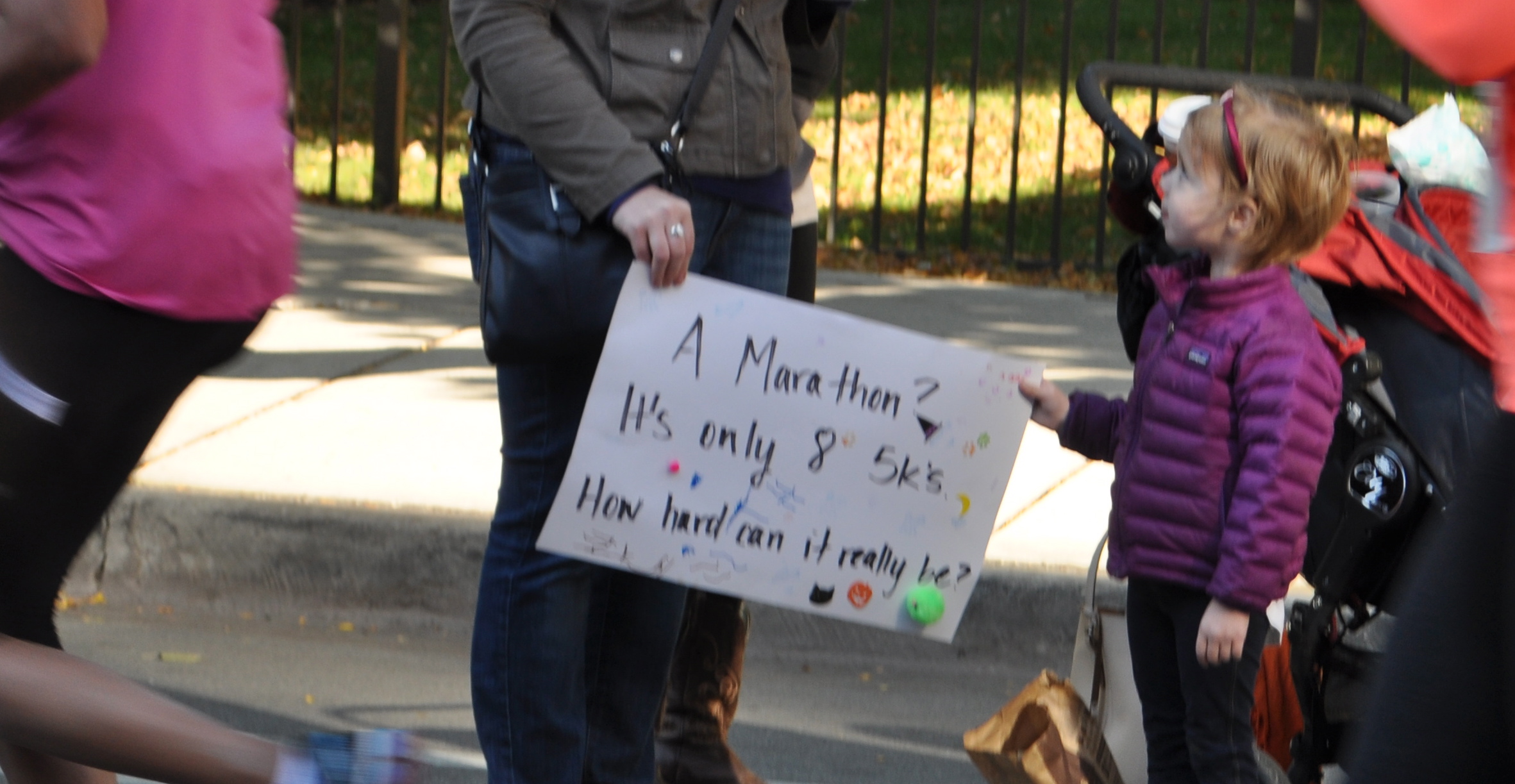
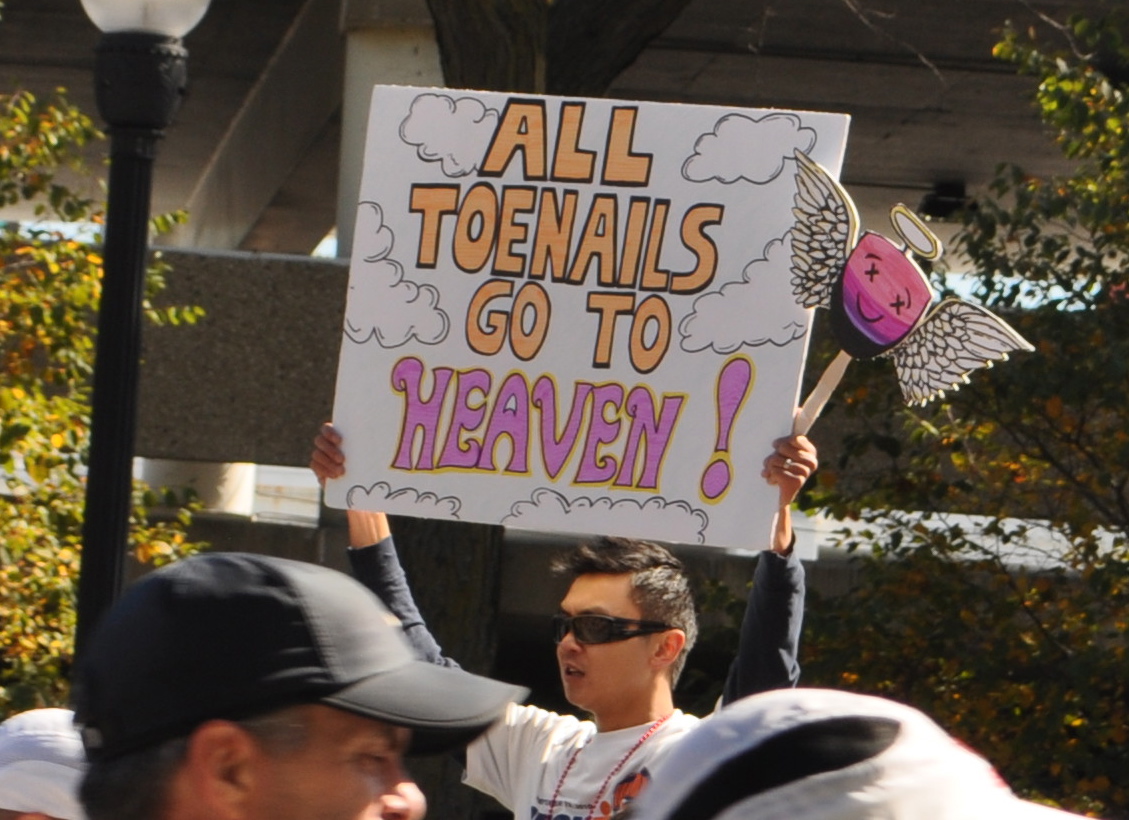
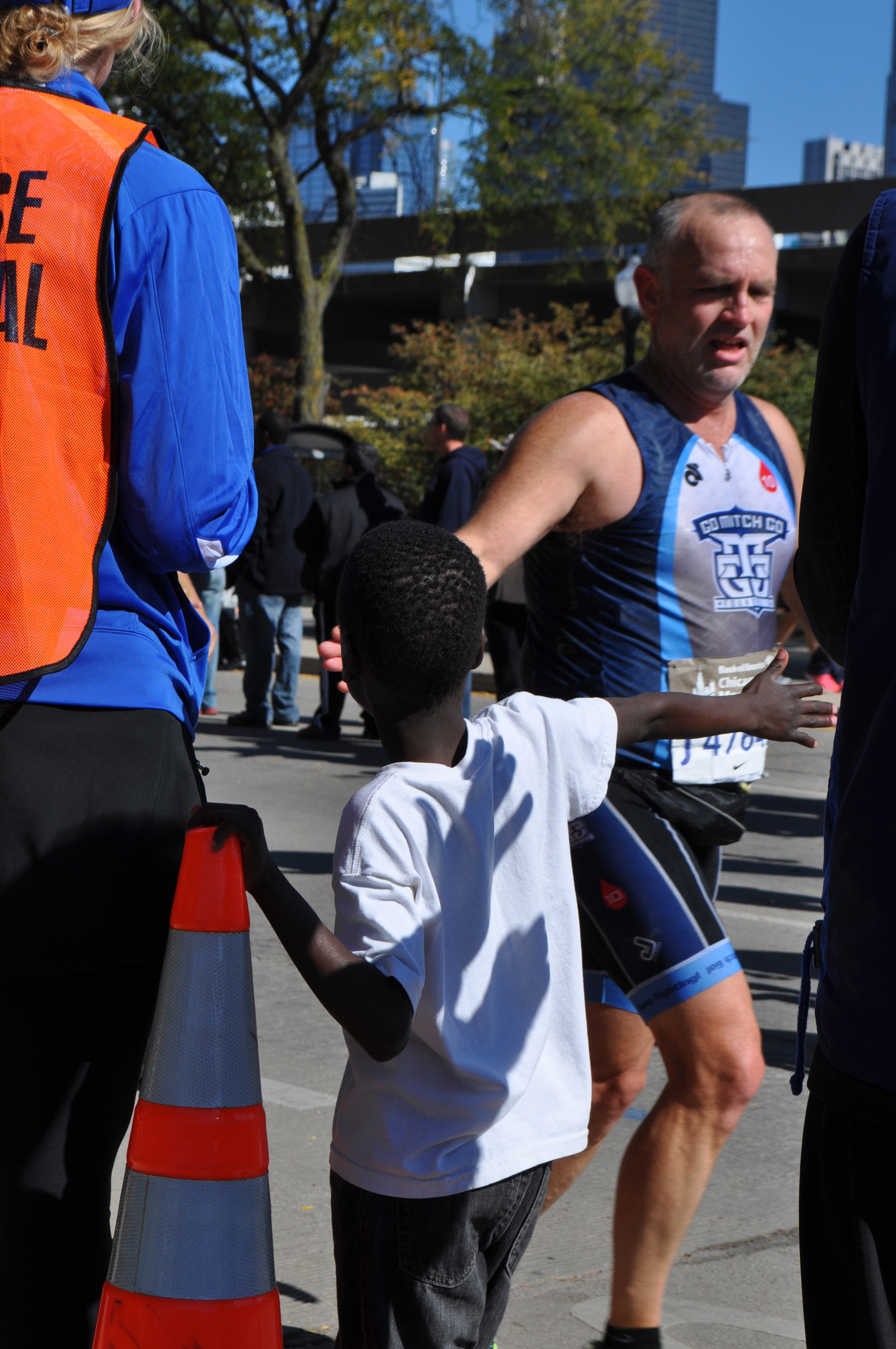
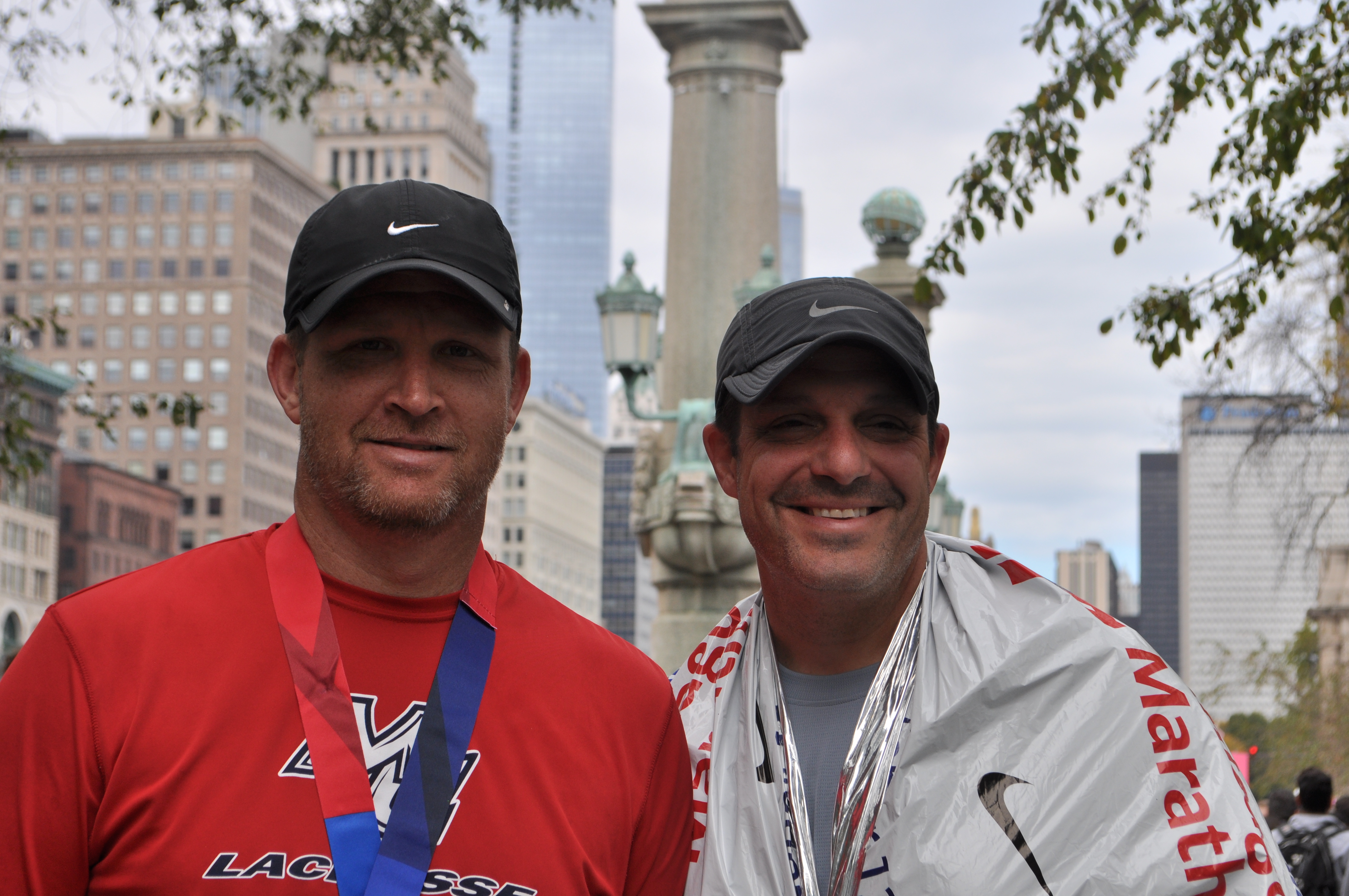
In four weeks, on October 12, my husband, Dave, will run the Chicago Marathon as a Run for a Reason participant.

His reason? To raise funds for a Refuge for Women safe house to be opened in the western suburbs.

What’s that? Refuge for Women, based in Kentucky, is an after-care home for women rescued from the sex trade industry, and it works with New Name, a ministry right here in the western suburbs that reaches out to women—right here in the western suburbs—who are trapped in the sex trade. New Name sends teams of women into strip clubs, massage parlors, and adult bars to form relationships with the women working or trapped in them; it also has a call center that contacts women—and even pimps—and offers to pray for them; and it bathes everything in prayer with both weekly meetings and teams that pray during the visitation and call center hours.

How did Dave find out about Refuge for Women? This is a long story that actually starts with me. I could skip it and cut to the chase, but I am always amazed at how God interweaves our stories and connects us with others, and then we can look back and see His hand in all of it.

So I’m telling the long version.

Two years ago Moody Radio kept running a promo bit on The White Umbrella, a book about the booming sex trade industry in Atlanta, Georgia, and an after-care home there named Wellspring Living. I read the book and thought, “I have to do something, but what?” Everything in the book was focused on the problem in Atlanta, but when I researched the issue in Chicago, I found it was alive and rampant here as well. I contacted the publisher (Moody) and said, “What do I do?” An editor at Moody invited me to a symposium Moody was hosting on this topic, and I listened to the leader of the Salvation Army’s Promise program (Partnership to Rescue Our Minors from Sexual Exploitation) as he shared how bad the issue is in Chicago and what Promise is doing about it.

I still felt helpless, but one of the messages I kept hearing at the symposium was that people needed to spread the word about this issue. I could blog on it, I thought.

So I did, enough that, a year later, when I joined the Redbud Writers Guild and met with Terri Kraus, one of its leaders, we talked about the topic of human trafficking as something I often wrote on.

“Well,” said Terri, “did you know that I’m one of the co-founders of the West Chicagoland Anti-Trafficking Coalition?”

I didn’t know such a thing even existed, but I began going to meetings and getting involved in a small way, and through the WCATC, I found out about New Name and got connected with Anne, its director.

When Dave wanted someone to speak to his Culture and Theology class last spring about sex trafficking in this area, I contacted Anne, and she agreed to come in.

She blew away any misconceptions the students may have had about women choosing to stay in the lifestyle of prostitution. “Almost all of these girls have horrific backgrounds,” she said, “with the kinds of sexual/physical/emotional abuse that makes you wonder how anyone even thought of it—really evil and horrific.”

One girl, Darcy*, was raped and then trafficked by her own mother. Another girl’s mother is a drug addict who began selling her daughter when she was young to pay for her drugs. Now the girl is trapped in the lifestyle. She doesn’t know any other.

New Name has connections with the Chicago FBI and calls the Bureau when a girl wants to leave the industry or simply is frightened. But the FBI doesn’t provide places for the girls following their rescue, so New Name partnered with Refuge for Women in Kentucky. Four girls rescued by New Name, including Darcy, have now gone to Refuge for Women and been involved in its 12-month, 24/7 program where sobriety, healing from trauma, rebuilding trust, and developing a relationship with Jesus are all essential elements.

Not long after Anne spoke in Dave’s class, I learned that Refuge for Women was raising funds for an after-care home here in the western suburbs, and then I learned it was part of the Run for a Reason program at the Chicago Marathon. When I told Dave, he signed up to be a Refuge runner.

So, my part was to do all the connecting.

Dave’s part is to run 26.2 miles (I like my part better).

Do you want to have a part?

Would you be willing to join us in this effort to bring healing to women?

First, please pray, for the ministries of New Name and Refuge for Women, for the fundraising for a local after-care home, and for Dave as he trains and runs the marathon on October 12.

Second, if you feel led to give to a Refuge for Women safe house in this area, you can do so in a couple of ways:

  1. You can donate online at refugeforwomen.org. Click on the “take action” button at the top of the home page and then choose “Donate-Chicago” at the bottom of the page that opens. When you review your donation, type “I am donating this in support of Team Refuge runner Dave Underwood” in the “add special instructions to the seller” box.
  1. You can write a check and send it to the address below. Please write “Dave Underwood” on the memo line of the check so they can keep track of his fundraising amount.

Refuge for Women

Attn: Run for a Reason

342 Waller Ave, Ste D

Lexington, KY 40504

Thanks so much for reading this. If you have any questions, please feel to leave a comment, and I’ll respond. I’ve also put lots of links in the post, so be sure to follow them to find out more about these ministries.

Jen

*I think Anne was already using a pseudonym, but I’m changing it again just to be completely safe.


Story Sharing

See the note at the bottom of the post for more information about Cafe K'Tizo.

See the note at the bottom of the post for more information about Cafe K’Tizo.

This morning I interviewed Kertes, a Wheaton Academy (WA) alumna who is now a student at Wheaton College, for a story I’m writing about WA’s international students (Kertes was one). I picked her up from her dorm and we drove to Café K’Tizo, where we enjoyed coconut matchas (Kertes’s suggestion) and she answered all my questions.
One of them was about her journey to faith in Christ. She began her answer by going back to her sophomore year, her first year at the Academy. She recounted how all the talk about Jesus that she heard in her Bible class and chapel and at church was new to her. “I didn’t know the deep meaning behind it,” she said. “I just thought it was something people did.” Her initial surprise and interest soon gave way to questions. She became defensive and confused by the gap she often saw between what Christians said they should do and actually did.
Her difficulties grew during her junior year, a tough year filled with pressures from a rigorous class load, college decisions, and troubles in her living situation. By the end of it, she was more than ready for summer break. “It will all be better when I get home,” she thought. And it was—but not quite. She did enjoy the deep relationship she has with her parents and good connections with friends, but somehow these weren’t enough. The very things she had thought would make her happy again, didn’t. “Something was still missing,” she said, and she found herself watching the non-Christians who surrounded her. She saw that they, too, were experiencing a deep emptiness.
When she returned to the States for her senior year, she went to church and a miracle happened. Christianity suddenly made sense to her. “I realized nothing else would ever fulfill me, only Jesus. All the knowledge I’d learned came back to me, and I was overwhelmed. I cried that morning in church and then took communion. That was when I came to the Lord. I realized I still didn’t understand everything about Christianity, but I believed it.”
Her life still had its pressures, but as she took those to God in prayer, she experienced His comfort. “My relationship with Christ gave me peace, and it changed me. I began looking at others’ needs rather than just my own.”
When she told her parents of her decision to become a Christian, her father shared with her that his own father, whom he never met, had been one, too. “That made me feel amazed,” Kertes said, “about how God had been working in my life.”
Our time was up then, and when we stood to go, Kertes thanked me. “No,” I said,” “Thank you. I love getting to hear testimonies of how God draws people to Himself.”
She smiled. “But it was also encouraging to me, to get to tell it and remember God’s work all over again.”
I dropped her off at the College and then drove home, her words running through my head. I was reminded of a conversation I had last spring during a meeting at church. Each person attending had shared a short testimony of seeing God’s faithfulness, and after the meeting, the young man sitting next to me turned to me and said, “I need this. When I’m in my everyday, individual life, I struggle with doubts and fears. Sometimes I wonder if Christianity is really true. What I’m experiencing individually doesn’t seem like it’s enough. But when we come together, proclaiming the faith and sharing all our stories of God working in us, it affirms reality. I am encouraged by others’ stories and reminded of God’s work past and present.”
An image jumped into my mind. “It’s like the stones the Israelites dropped in the river Jordan as they crossed into the Promised Land. One stone dropped in would barely make a ripple, but one after another, all together, the pile of them disrupted the flow of the river. My own stone of remembering God’s work for me is often not enough to disrupt the flow of my doubts and fears. But when you drop your stone on top of mine, and then another person does, and another, my doubts get disrupted, and the Truth is evident.”
In Paul’s letter to the church in Rome, he wrote, “For I am yearning to see you, that I may impart and share with you some spiritual gift to strengthen and establish you; that is, that we may be mutually strengthened and encouraged and comforted by each other’s faith, both yours and mine.” Paul, the great apostle, understood that his own faith benefited when he heard others’ testimonies.
Let’s share stones of remembrance with each other today.

*I’m plugging here for Café K’Tizo, which is owned and operated by Judy and Bruce Duncan, who love Jesus and love people of all cultures and have combined their loves [including tea, of course] in this absolutely wonderful café/teashop. If you’re in the Wheaton area, check it out; if not, you can order K’Tizo teas online.

sermon suggestion

I’ve been listening to a lot of Tim Keller’s sermons lately. He’s senior pastor at Redeemer Presbyterian in NYC. I wanted to share this one: The Basis of Prayer: “Our Father.” 

It’s a reminder of the heart of the Gospel, but it also goes deep, so as I listened to it, I was drawn back to my own helplessness and God’s provision for it but was also wowed with some new insights into this great mystery.

Keller says that the words “Our Father” remind us that God does not want His children coming to Him in pride (“You owe me, God, because of all I’ve done”) OR in shame (“I don’t measure up. I keep trying, but I just can’t.”) Both attitudes come from thinking of our relationship with God as a “business relationship,”  one in which both parties must perform. The only basis on which followers of Christ can approach God is in a child-to-parent relationship. Keller expounds on this with some wonderful insights and gives descriptors of ways we may have slipped into thinking of our relationship with God as business rather than family.

I especially recommend this sermon (35 minutes in length) if you are struggling or have struggled with feeling you must “measure up” for God.

Longing for the Presence

Elisabeth Elliot wrote that a clam glorifies God better than we do because the clam is doing what it was created to do, and we are not. I thought of that quote when I saw this picture I took of a dragonfly, basking in the sunlight--just as we were meant to rejoice in the presence of God.

Elisabeth Elliot wrote that a clam glorifies God better than we do because the clam is doing what it was created to do, and we are not. I thought of that quote when I saw this picture I took of a dragonfly, basking in the sunlight–just as we were meant to rejoice in the presence of God.

“If your Presence does not go with us, do not send us up from here.”

Moses said that. It’s recorded in Exodus 33, just after the Israelites rebelled against God by worshipping the golden calf. Despite this flagrant sin, God extends mercy. He tells them He will still send them to the “land flowing with milk and honey” with angels clearing the way ahead of them, “But I will not go with you,” He says, “because you are a stiff-necked people and I might destroy you on the way.”

Moses has been experiencing the presence of God, though, in some incredible ways. God’s presence was a visible cloud by day and a fire by night. Moses went into the tent of meeting, and the Lord spoke with him there “face to face, as one speaks to a friend.” Moses has gotten a taste of God in His reality, and he doesn’t want to give it up.

So he pushes back against God’s pronouncement. He says, ““You have been telling me, ‘Lead these people,’ but you have not let me know whom you will send with me. You have said, ‘I know you by name and you have found favor with me.’ If you are pleased with me, teach me your ways so I may know you and continue to find favor with you. Remember that this nation is your people.”

The Lord replied, “My Presence will go with you, and I will give you rest.”

Then Moses said to him, “If your Presence does not go with us, do not send us up from here.  How will anyone know that you are pleased with me and with your people unless you go with us? What else will distinguish me and your people from all the other people on the face of the earth?”

“If your Presence does not go with us, do not send us up from here.”

Moses refused to live without the presence of God in his everyday life.

That sentence has stuck in my mind for months, and I’ve wondered what it would be like to walk through my days in the presence of God.

Then, just a few weeks ago, I was reading the Amplified version of Hebrews, and I got to the section where the writer expounds on Christ’s qualifications to be our High Priest, our go-between, the one who offers the worthy sacrifice as well as being the sacrifice Himself. Christ’s petition as High Priest was heard, it says in Heb. 5:7, “because of His reverence toward God.” Then the Amplified adds this explanatory phrase: “in that He shrank from the horrors of separation from the bright presence of the Father.”

I immediately thought of Moses’ protest.

Moses experienced just a taste of God’s presence, and he couldn’t live without it. In fact, it made him want more. Further on in Exodus 33, he begs to see God’s glory, and God reminds him that while he is in his earthly, death-bound body, he can’t see all of it.

But God covers him with His hand and passes behind him and still, despite the “protection,” Moses’ face shines so much the Israelites are afraid of him.

Christ, as God Himself, and as a human in complete fellowship with God the Father, had experienced far more than Moses. He knew the fullness of God’s bright presence, and “life” without it was a “horror.” No independence (like that offered to Christ by Satan during His temptation) was worth that horror.

Yet we live with this horror every day. We chose this horror in the garden, when humanity turned away from the presence of God and sought independence from His presence. We’ve been doing the same ever since, and the longing for and joy we were meant to experience in God’s presence has been turned to fear and hiding and even loathing. You might say we were given what we asked for.

Yet, through Christ, the perfect High Priest who longed to stay in God’s presence continually—and did, we have the opportunity, like Moses, to long for God’s presence again, to even boldly ask for it! F. B. Meyer, in his book Moses, the Servant of God, wrote, “The apostle Paul expressly refers to this incident when he says that we all may, with unveiled faces, behold the glory of the Lord, and be transformed (II Cor. 3:13-18). That blessed vision, which of old was given only to the great leader of Israel, is now within reach of each individual believer. The Gospel has no fences to keep the crowd off the mount of vision; the lowliest and most unworthy of its children may pass upward where the shining glory is to be seen. ‘We all… are changed.’”

Through Christ we can long for God again. We can understand that our deepest desperation is not a need for independence or personal significance but is in actuality a desire for the living Presence of God.

And through Christ we have the opportunity to enter that Presence.

Let’s take it.