Wisdom

“Homecoming is special because we’re all home-going—and this allows us to check in along the way.”

We just finished homecoming week at Wheaton Academy, and that quote (said by Greg Cox) summed this one up for me. For the first time I experienced the Academy’s homecoming as a writer rather than as a teacher. I still chaperoned at the square dance/hoedown Saturday night (fun), but I also interviewed a 1947 grad who spoke on bioet

Photo by Judy Wen

hics in the advanced biology class; I talked for more than an hour with the two alumni of the year; and I met, face-to-face, all the former teachers I interviewed this summer while preparing for a different article. I also had the privilege of going to the alumni worship service Sunday morning. While some of the alum there were around my age, most graduated in the 40s and 50s. I could have listened to them talk all day long.

One former teacher (I actually taught with her) told me about her struggles following retirement. “I felt like I’d lost purpose. I asked myself, ‘What am I doing?’ Then I learned this truth: I still have the same job, to serve Jesus. That didn’t change. The only thing that changed was how I did it.”

I met a woman who cares for a very ill husband. Her days are spent dispensing medicines and aiding him in getting around. But she had a smile on her face. The hardest thing, she says, “is watching him suffer,” but she’s seeing how God is being glorified through it, and that helps.

Another former teacher (I taught with her as well) just had to place her husband in assisted living. But rather than talk about that, she wanted to spend our time together encouraging me.

They’re going home. They’re not there yet—this is not it. That recognition changes everything. It gives them purpose. These are forward-gazing people. They have looked back and seen the hand of God in their lives. Through heart attacks and strokes, through lost loved ones and errant children, through financial highs and very low lows, they have learned that God is a constant companion. He never fails, He never forsakes. He always keeps His promises.

And when they “check in” with each other on their home-going way, these are the things they remind each other of. These are the things they reminded ME of. “Hang on. He’s faithful. Call out to Him. He’s there. We’ve seen it. We’ve lived it.”

“Even to your old age I am He, and even to hair white with age will I carry you. I have made, and I will bear; yes, I will carry and will save you.” Isaiah 46:4 (Amplified)

Soli deo Gloria!

Remember, remember, remember

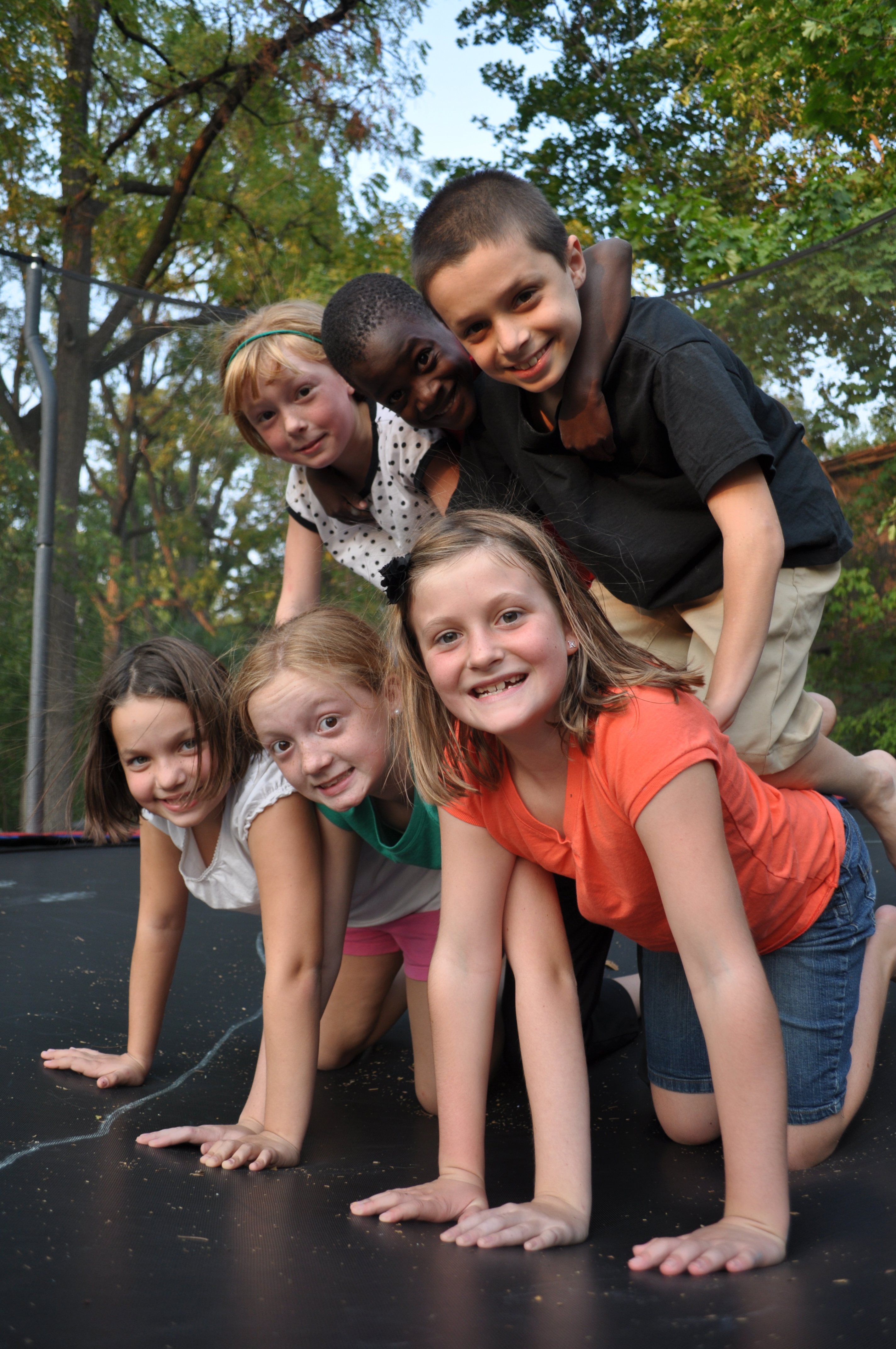
Another guest photo! Since Judy is taking a media arts class, she’s been using the camera to take some very fun shots, like this one of our kids plus a couple extra enjoying the trampoline.

The entire Old Testament can be summed up as a recurring cycle of creation, fall, redemption. It starts with the capital-C Creation: the first, tragic fall, and then the redemption promised by God in chapter 3. The cycle is repeated on big levels—the creation of the nation Israel, its refusal to enter the Promised Land, God’s raising up Joshua as a triumphant leader—and on individual levels–Abraham receives the promise of a son, he lacks trust and has Ishmael by Hagar, Isaac is miraculously conceived and born.

When you read large chunks of the OT at a time, you get the feel that God is constantly having to remind His people of His faithfulness. He recounts their history to them time and time again, through songs, through the speeches of prophets, through annual celebrations and feasts, through rituals and sacrifices. Over and over they are reminded that they failed, God disciplined, they cried out, and God redeemed. The message is this: trust Him so the cycle does not repeat.

Things change in the New Testament, as the biggest redemption story of all is told. Through Christ’s work on the cross, those trusting Him are redeemed for all time. No further sacrifice is needed.

Yet, on a smale scale, I still see the OT cycle in my own life. God creates new work in me, yet I become complacent or proud or angry or distant, and God must draw me near again.

Just like the Old Testament Israelites, I need constant reminders of God’s faithfulness so I don’t continue to repeat this cycle. Recently I read Psalm 78, one of those lo-o-o-ng reminder Psalms that reviews Israel’s history from Jacob to David, and it gave me the idea of reviewing my own history with God. I don’t have as much to look back on as the Israelites—or as much as the 70 and 80-something saints I’ve been interviewing lately for Wheaton Academy publications—but at age 42 I’ve had a good 25-plus years of walking with God, and He’s revealed Himself to me again and again.

So here’s the beginning of my own Psalm 78, starting when I was 16:

-When I was 16 I led a kids’ Sunday School class in a downtown federal housing project. One of the older kids from the project—his name was Peanut—was my guide, taking me safely through the project, telling me which sections not to enter as I gathered children each week. I remember praying as I walked, for my own safety and for the wellbeing of the kids who lived there. I knew the presence of God as I walked there.

-I was 17 when I first experienced a time when the Lord gave direct leading. I just knew I was supposed to go to Grace College, 11 hours from home, sight unseen, without knowing a single other person going there.

-Near the end of my junior year in college, Dave and I, engaged at the time, broke up after dating for 2 ½ years. I set my ring aside, spent a lot of time alone (he did, too), and came to a point at which I could truly say, “Lord, I love You first. To marry this guy or stay single—I’m waiting to hear from You.” Though that was a difficult time, it was truly a sweet time—maybe the first time I can remember losing a sense of time and place with the joy of fellowshipping with God.

-My first teaching job at a public middle school in Warsaw, Indiana, the tiny, misfit youth group Dave and I started during those years, the mission trip we took together to Argentina—there are so many ways I remember God leading and directing and teaching me during these years.

-In 1998 we knew we were supposed to go—somewhere. I remember filling out the application for overseas teaching and looking at this question: Are you willing to go anywhere God wants you to go? Well, what do you say to that? I originally wanted to go to a Spanish-speaking country, but God made it very clear we were supposed to go to Okinawa, Japan.

-When I went to the doctor in Okinawa to confirm my first pregnancy, he looked at the ultrasound and counseled Dave and I to expect a miscarriage. Separately we were both given the same verse to hold onto—“You keep him in perfect peace whose mind is stayed on you, because he trusts you”—and we went back to the next doctor visit sure that, no matter what the outcome of the visit, God would give us peace and comfort. Emily is the result of that pregnancy!

-We returned in 2000 and went through a difficult time of doubting that we were supposed to be back in the States. God reassured me so abundantly of His love during that time that I began to rethink how I viewed God, comparing my thoughts of Him with the way He is revealed throughout Scripture and in the person of Christ, learning to think “rightly” of Him.

I’ll pause here so the blog entry doesn’t run too long—maybe part two will be my next entry. Writing this has been a wonderful reminder to me that God has revealed Himself to me over and over—and these are just the “big” ways; there are too many small things to include in between all the “big.” Maybe you want to write your own Psalm 78—or if you don’t feel that you can, ask God to help you see the ways He is working in your life.

Thanks for reading—hope it was helpful.

Jen

the value of a hank

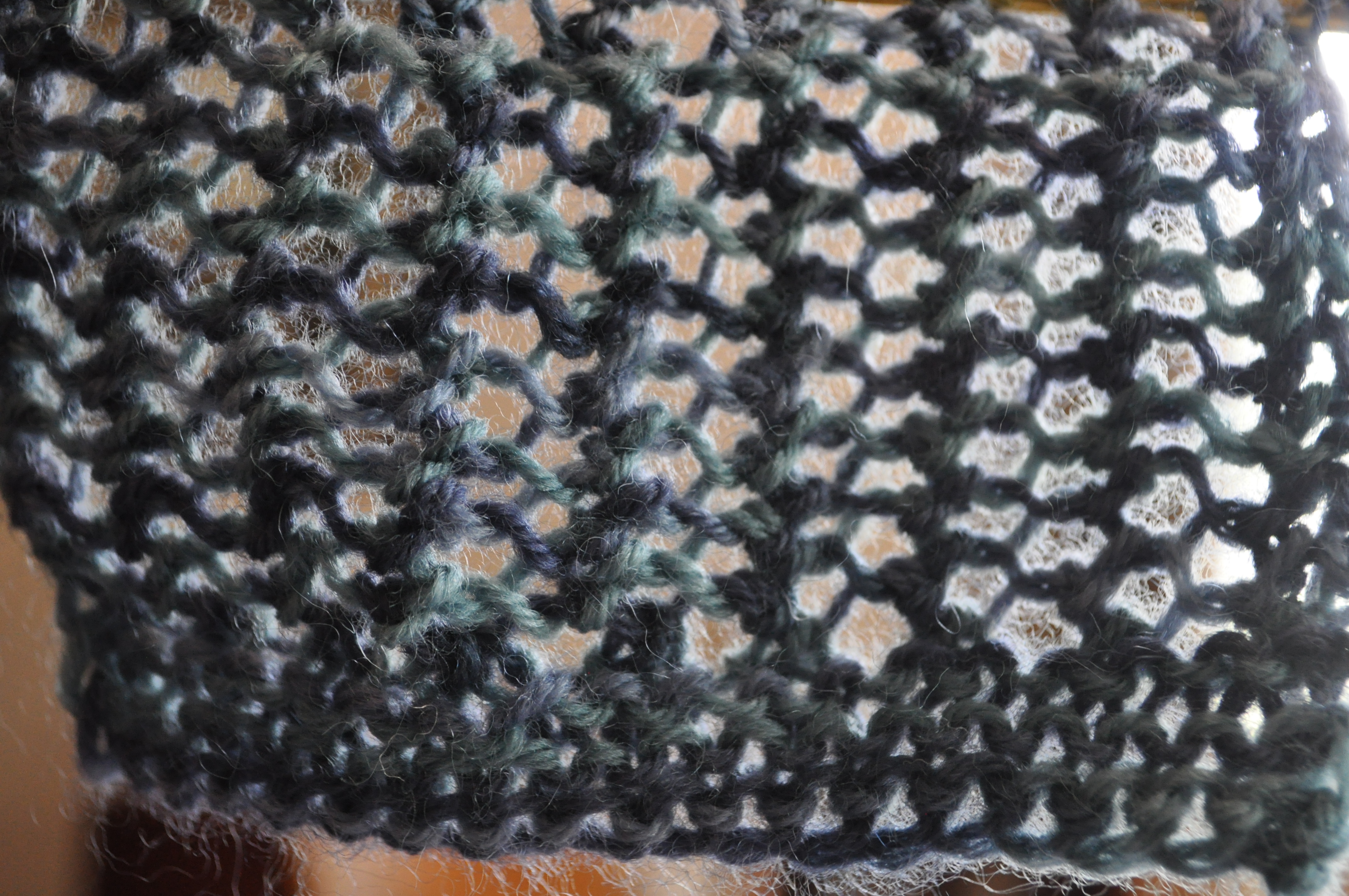
I spotted the beautiful blue and green variegated yarn on the sales table at a local yarn shop a few weeks ago. One hundred percent Andes wool, the loosely wound hank of yarn lay twisted in a figure-eight pattern. I couldn’t resist.

Yesterday, tired and feeling frustrated by writer’s block, I opted to knit rather than walk or work while I hung out at the younger three’s soccer practice. I pulled out the hank of wool, removed the small pieces of yarn tied to keep it in its figure eight, and unwound it into a large loop.

But I still couldn’t knit from it. The wool stuck to itself and tangled.  Every time I pulled, it snarled.

I remembered the last sentences from my devotions that morning: “You inhabit a fallen, disjointed world, where things are constantly unraveling around the edges. Only a vibrant relationship with Me can keep you from being unraveled too” (Sarah Young, Jesus Calling).

I continued unwinding the yarn, thinking about that quote as I formed the end into a tiny wad and wrapped round and round it, rotating the emerging ball so it stayed balanced. Still the hank resisted my efforts. Eventually I hung it around my neck and lifted it one loop at a time as I wound.

I could identify with what Young wrote about unraveling. It has been a consistent prayer during my motherhood/teaching years. Last year, when we first took in two international students and with PJ still home part-time, it progressed at times to a fear. I am coming undone, I would cry, and then I would see, time and again, God holding me together.

But He is unraveling me now. The kids are all in full-day school, and I am not teaching. Though I have writing deadlines, I have large chunks of alone time in which to manage them. I am not frantically rushing from one school to another. I have quiet hours in which I don’t hear “Mom” or “Mrs. Underwood” at all. It is an oddly unsettling feeling. It is strangely lonely.

Late one night last week, Dave prayed—in what I think was Holy-Spirit-guided words—that I would find my value only in Christ.

Sometimes God must do some unraveling to make us see ourselves first and foremost as His. We have our roles set; we are comfortable in them (oddly enough, we CAN get comfortable with frantic schedules and too-long to-do lists!); we find our value in them; we may even brag about them. We have reputations. And God says, “I can’t knit with that hank of wool you have arranged just so. I have a finished product in mind for you, and you will have to be unwound for Me to work with you.”

There are some drastic examples of this in Scripture: Joseph: goodbye, pretty coat and favored-son status; Moses: adios, palace; Esther: hello, palace; Abraham: welcome to the tent of wandering! God unmakes in order to create and fashion and teach.

It took me a long time to wind that ball of yarn, but when I was finished with it, it seemed small—compressed, not as pretty. I wouldn’t have bought it if it had looked like that, I thought.

But its value now is not in how it looks at all.

Its value is that it can be used.

And the end result will be beautiful!

Philippians 1:6 “…I am sure of this, that he who began a good work in you will bring it to completion at the day of Jesus Christ.”

A dusty morning

I wrote this post yesterday, but I’m getting the same look today–right away! And I’m not even in the house yet!

I read this quote from Jesus Calling this morning: “Living in My presence means living in two realms simultaneously: the visible world and unseen, eternal reality. I have equipped you to stay conscious of Me while walking along dusty, earthbound paths.”

So far, today has been decidedly dusty.

More accurately, I should write that I am dusty today. It’s a “free” day for me, which in actuality means it’s anything but. It means that I return from taking the kids to school and stare at the hundreds of things that need to be done in my house (both general maintenance/cleaning and the still-moving-in tasks that never were accomplished during this crazy summer—seriously, I still have pictures leaning against the walls of the living room and boxes of stuff in the garage). I have no appointments and no writing deadlines that are due TODAY and, and the fact that I had a big deadline yesterday means that I have left even more things undone (because I would ALWAYS rather write than do housework, no matter how tedious the writing task is).

So today my brain is frazzled. I flit: clean the half bath, fill the soap dispenser, think, “would the sheer curtains make the front room less gloomy feeling?” I try them. Nope, they don’t even fit on the rods—and I like the rods. I get suddenly depressed about decorating my house. I just want it done—and that reminds me of the 8th grade teacher I taught with years ago who drilled her students so diligently on the difference between “done” and “finished” (chicken is “done,” tasks are “finished) that when her students came to my classroom they corrected me.

Em and I had a bit of a grumpy morning, so thoughts about that are also swirling. I’m tossing around the pros and cons of taking on a longer-term writing job possibility. Bits of prayer surface. “Lord, I am so unequal to any of these tasks. I’m not even sure what to do today, much less tomorrow or long term.” But praying and listening get swallowed up.

I am not just dust-y. I AM dust, floating, mis-directed by any small puff of air. I imagine Satan blowing me this way and that, aided by my own un-captured thoughts.

The dog begins following me around, reminding me with soulful eyes that I promised her a trip to the dog park where I have planned to have some quiet time and Bible study.

I put her off for awhile, find more tasks to do, more distractions. Finally, though, the look becomes pitiful, and I succumb, as much to the Holy Spirit as to the dog.

So here I am, sitting, letting it all out, hopefully silencing the talk in my own head and listening, be-ing.

I’ve got to walk in the dust, scuff my feet in it even, but I don’t have to BE it.

I’m posting this and checking e-mails and she’s hoping to be outside very soon! I need this kind of focus!

Incredibly worth it

The four girls: from left, Kelly, Maddie, Judy, and Em. Judy and Kelly are sisters from China who are living with our family this year. We’re having SUCH a good time with them.

“The greatest problem in my country is that so few people know Christ, and it is hard for people to hear of Him. We are getting more and more self-centered as a culture, and our growing lack of concern for others is all related to that.”

I was reading the exit essays of our students at the Summer English Institute (a month-long academic camp for international students who are going into American high schools) that I taught at this summer. They had been asked to write about the “most important problem” their country faces, and I had read about overpopulation, pollution, unhealthy food, and lack of worldwide communication. But this essay, by a young man I’m calling “Isaiah,” made me catch my breath. It wasn’t just words. His heart was exposed on the page.

Later in the day I conducted his exit interview. Isaiah’s spoken English is not impressive. He still has to think carefully to find the right words, and his thoughtful nature makes him seem less fluent in speech than he actually is. But his answers to my questions were worth the wait. When I asked, “How would you improve SEI?” he suggested playing worship music during the students’ free time. “It would be good for our hearts,” he said.

“How are you feeling about going to your American school?”

“Excited,” he answered, but in his face there was something else.

“Do you miss home?”

He nodded, slowly. “I miss my father,” he said, in his deliberate way. “When I come home from school each day, he is waiting for me. He opens his arms,” and here Isaiah spread his own arms wide, “and he hugs me and tells me he loves me. Then we sit down and I tell him about my day.”

He looked down, at his hands that were now resting in his lap, and I was glad because tears were brimming in my eyes. Still looking down, he added, “My father is a good man.”

I got it together and finished the conversation, but, obviously, I haven’t forgotten his words.

He didn’t say what his father did for a living. He didn’t say what work accomplishments he’d made, or where he’d traveled, or how many languages he spoke.

He just said, “He is a good man,” and gave his reasons for that belief: that his father made time for him each day, that his dad said “I love you” every afternoon.

For Isaiah, THAT was enough.

And as I looked at Isaiah, I would say it was enough, too. If I ever meet his father this side of heaven, I would say, “You must be a good man, because the evidence in your son is so strong, and what he says about you is beautiful.”

I often fail to see this connection for myself, though. I get tired of the mundane of food prep and cleaning and organizing and the afternoon grind of driving here and ferrying there, and I want accolades and accomplishments instead.

Not long after I finished SEI, I took my four kids and one of our international daughters (the older one was at a school function) to volunteer at Feed My Starving Children (http://www.fmsc.org/). It’s a ministry that creates food packets (called Manna Packs) for third-world mission groups to pass out, and it uses volunteers to fill the packets. Before we began working, we watched a video that showed children growing strong with regular, nutritious food intake and mothers feeding spoons of rice mixture to their toddlers. It’s the kind of video that makes me get a bit romantic about wanting to be overseas or working more with relief efforts here, that makes me wonder what good I am actually doing right now (I know that is not the intent of the video-makers; it’s my own issue).

I wasn’t overwhelmed by these thoughts, but they simmered as all the volunteers were split into teams and trained to create the Manna Packs with chicken bullion, dried vegetables, soy nuggets, and rice. Jake (my 8-year-old) and I were put on a team with several strangers, and Jake was put in charge of soy (I nicknamed him “Soy Boy”). My job was to weigh the final product, adding or subtracting rice to get the right weight. We chanted a list to keep the kids in the group focused: “Chicken, veggies, soy, and rice; chicken, veggies, soy, and rice!” and I checked Jake’s face occasionally. About an hour into it, I could tell his blood sugar was dropping.  His attention strayed, and I had to remind him a few times: “Hey, soy boy, it’s your turn. Keep it up. You’re doing great!”

I, on the other hand, was uber-focused—remember, I was fueled by the video! At one point I even thought, “I could do this every day. It’s so worthwhile.” (Does anyone else have these ridiculously sappy, thoughts, or is it just me?). Thankfully, God gave me the grace in the same instant to actually recognize it and think, “You’re such a dork, Jen,” but then He brought an image into my mind. It was the picture of Isaiah at SEI, sitting across the table from me, holding up his arms as he talked about his father’s love for him.

And I looked over at “Soy Boy,” concentrating so hard on filling up his cup just exactly at the line with those soy nuggets, and I stole a glance at Patrick, busy, busy at the table just behind me, and I found Em and Maddie across the room, and Kelly on my right…

If they can say what Isaiah said, if they can know without a doubt that I love them because I myself am loved, if they blaze with love for Jesus themselves and carry it as a torch that shines to others—

Isn’t that incredibly worth all amounts of mundane effort?

Wouldn’t that alone be the “well done” from Jesus that I so long to hear?

Isaiah, I pray for you today, that this year spent away from your father would not weaken but would actually strengthen your relationship with him. I pray that your heart for your people would blaze, fueled by an ever-increasing understanding of Christ’s love for you.

And I thank you for reminding me how worthwhile the mundane truly is.

First day of school! Judy had already left with Dave for the Academy, but here are the five I take every day to the Grammar school. (I still can’t believe that they ALL go to school ALL day! 🙂 )

A good home-GOING

This post is dedicated to my father-in-law, EJ Underwood, who has spent the last several years taking very loving care of Jenna Mae. In this picture he’s helping PJ. It’s a constant habit with this man.

My dad has always said that one of the great proofs to him of Christianity is the way believers in Christ die. As a family doctor for more than 50 years, he’s seen plenty of deaths. The ones who have been walking with Jesus, he says, look like they’re just taking the next step. There’s often a smile and a brightness of the face, like they caught a glimpse of Him with their heavenly eyes while they were still in their earthly bodies. Dave’s 98-year-old grandma, Jenna Mae, who went home on Tuesday, got just such a glimpse.

“Boys, I’m going home today.” That’s what she told the two pastors who visited her that afternoon. They’d come every day. She hadn’t said that before. “You are?” one of them said. She nodded and then asked if he could sing “In the Garden.” He started to, but couldn’t remember the words. “You sing it, Jenna.”

“And He walks with me, and He talks with me, and He tells me I am His own, and the joy we share as we tarry there, none other has ever known.”

She didn’t get all the way through it. Tired, her memory slipping, she requested “Face to Face.”

“Face to face with Christ my Saviour, face to face—what will it be—when with rapture I behold Him, Jesus Christ who died for me?”

EJ was supported by our Nana (Peggy). Here she is–also with PJ!

A few minutes later Jenna Mae had her answer.

It was a good homegoing.

Image really IS everything

*I’m spending the month of July at Indiana Wesleyan University teaching at an English-immersion camp for international students. Mondays through Fridays I’m staying in a townhouse-dorm with two other teachers and eating my meals in the cafeteria with our international students (primarily from China) and whatever other groups happen to be on campus. This week that included an FCA (Fellowship of Christian Athletes) group and the FCC (Fellowship of Christian Cheerleaders). The following story REALLY happened the other night.

Isn’t this an awesome picture! I can say that b/c I did NOT take it. Christi Dithrich, a former student, is starting her own photography business and took some shots of our family. If you’re in the Chicagoland area and looking for a photographer who’s all about getting relaxed, fun, REAL shots of your family–and giving you a good time in the process–you should check her out on Facebook at “Christi Lee’s Photography”: http://www.facebook.com/media/set/?set=a.3740296663377.2150041.1154970204&type=1

I had just dropped my bags at the table and was about to cross the cafeteria to get a tray when an entire group of middle school cheerleaders sitting nearby stood in unison and began to clap and chant. “Beaver one, beaver all; let’s all do the beaver crawl!” they shouted, following it up with an awful “anh, anh, anh, anh” chorus that was supposed to—I guess—sound like beaver teeth chainsawing through wood.

The faces of the college students in front of me—most of them athletes—were priceless, and I had to fight back giggles as I made my way behind the bow-topped, pony-tailed crew still chanting: “Beaver four, beaver five, let’s all do the beaver jive!”

I was just past their table when I saw the cafeteria manager coming, fast, down the aisle toward me. He stopped directly in front, blocking my way. “We’ve had this conversation,” he said. “They are not allowed to do this in the cafeteria. The other diners don’t like it.”

At first I was so confused I thought he was apologizing to me, like “so sorry, I’ve already talked to them, but they obviously don’t get it. What a nuisance.”

But no!

“Seriously, they are not allowed to do this when other people are eating.”

I “got” it then.

“Um, I’m not with them!”

Instant change! “Oh, I’m so sorry. I thought you were in charge of…”

“It’s okay. Really, it’s okay.”

I went on to get my food, and he hunted down the REAL cheerleading chaperone. I had just filled my plate when he found me again. “I’m really sorry,” he said again.
I laughed. “No problem.”

But THEN he continued, “You can understand why I would think that, right?. I mean, you fit the profile. You know. Expressive face,” Then he waved his hand toward my shoulder, “and your…” His voice trailed off then, either because he was about to say something he probably shouldn’t or because my “expressive face” was sending him a pretty clear message.

I got the face under control, reassured him, chuckled (when what I wanted to do was burst into laughter) and then went back to my table and told the other teachers what had happened.

They did plenty of laughing for me.

Then—I’m being honest—we had a conversation about the gigantic bows that many cheerleaders are currently wearing. When big bows died at the end of the 80s, I thought they should never, ever come back. But they have, bigger than ever. Even college cheerleaders are sporting huge loops of ribbon on their heads.

It wasn’t the kindest conversation, and it finally ended when one teacher accused another (not me) of being “cheerleader phobic.”

And I’ve been thinking about that ever since.

Not about being phobic of cheerleaders, though I can still remember being teased as a 3rd grader by a cheerleader-type girl. I sported waterfall-long ponytails in those days, and for some reason my mother positioned them just above my ears and pulled them so tight they stuck straight out like handles—which is probably why the boys grabbed them so much. I look incredibly unhappy in my 3rd grade school picture, and it’s probably a combination of those ponytails, the boys, and little Suzy cheerleader (not her real name 🙂 ) who told me that her “rah-rah” shoes were much cooler than the sturdy, “well made” Buster Browns and Kangaroo shoes that my mother bought me. The “rah-rah” shoes WERE cooler—and Suzy Cheerleader’s cute, single, blonde ponytail was, too, and I knew, somehow, all of that and what it meant regarding my “place” in Suzy’s view of the world.

But, “all that” aside, I haven’t been thinking about cheerleaders or childhood hurts, but instead about my “image” now, and the ridiculous fixation that I STILL have on it.

This topic is really the title and heart of my blog: Who is the real me? And why am I concerned with trying to “be” a particular someone in order to please other people—or to feel good about myself.

Usually my identity struggle is that I’m so busy doing the jobs of mom and wife and teacher that I think of myself as a sum of actions—as in, “well, I do this and this and this, so that’s who I am,” but the struggle is a little different right now.

It’s kind of like I’ve gone off to summer camp, and I’m trying to “find my place.”

Okay, that’s an exaggeration. I’m living with two incredibly grounded, godly—and funny—women, and I don’t even think about my image with them.

But in regards to the camp as a whole, in my interactions with the students and the staff, there is a little bit of the old “rank and file” going on. My thoughts start with, “Where do I fit in? What is my role?” and move eventually to “Oh, my word, I feel OLD! A teacher past her time of relevance! No longer ‘cool,’ no longer ‘hip’!”

Okay, I never was, but at least I was one of the YOUNG teachers.

Not now! Our teaching team includes two professionals young enough to be my children! Six of the teaching assistants—whom we address as “Mr. Aulie” and “Ms. Pivarones—are former students of mine. They’re energetic and full of plans—while

I’m just trying to make it through the month without crashing. Even the students seem younger than ever. When little Phoebe gets six inches from my face because she’s fascinated with my blue eyes, all I can think of is how clearly she’s seeing my crow’s feet and mouth wrinkles!

These are silly, ridiculous thoughts. Worthless thoughts.

God’s made that pretty clear to me as I’ve been studying the life of Jacob yet again this year (that’s what happens when you get too behind on your “read through the Bible in a year” plan and decide to start over; “Hello again, Genesis!”)

Jacob, like me, was a guy who had a hard time figuring out who he was! And every time it seemed like he had learned his lesson, he forgot and relapsed into self-centered, self-promoting ways of acting and thinking.

And I might be tempted to say, “Jacob, that’s ridiculous; you just experienced God’s amazing power—and now you’re doing what?” except that I see the exact same tendency in my life.

So when I read about God’s patience with Jacob’s identity struggles, I am reassured for myself.

Because of Jacob’s story and other promises in Scripture, I can know God will always guide me—even if that involves some wrestling—to a continually clearer, brighter knowledge of who I am IN HIM!

And He WON’T quit on my in this journey! I will become freer and freer from the lies that my value is determined by what I do or what others think of me. I will care less and less about how I “fit in.” I won’t be consumed with any “image” other than that of Christ, and the beauty of thatwill overshadow all else.

Here’s another one by Christi. Love this!

Lessons in the journey

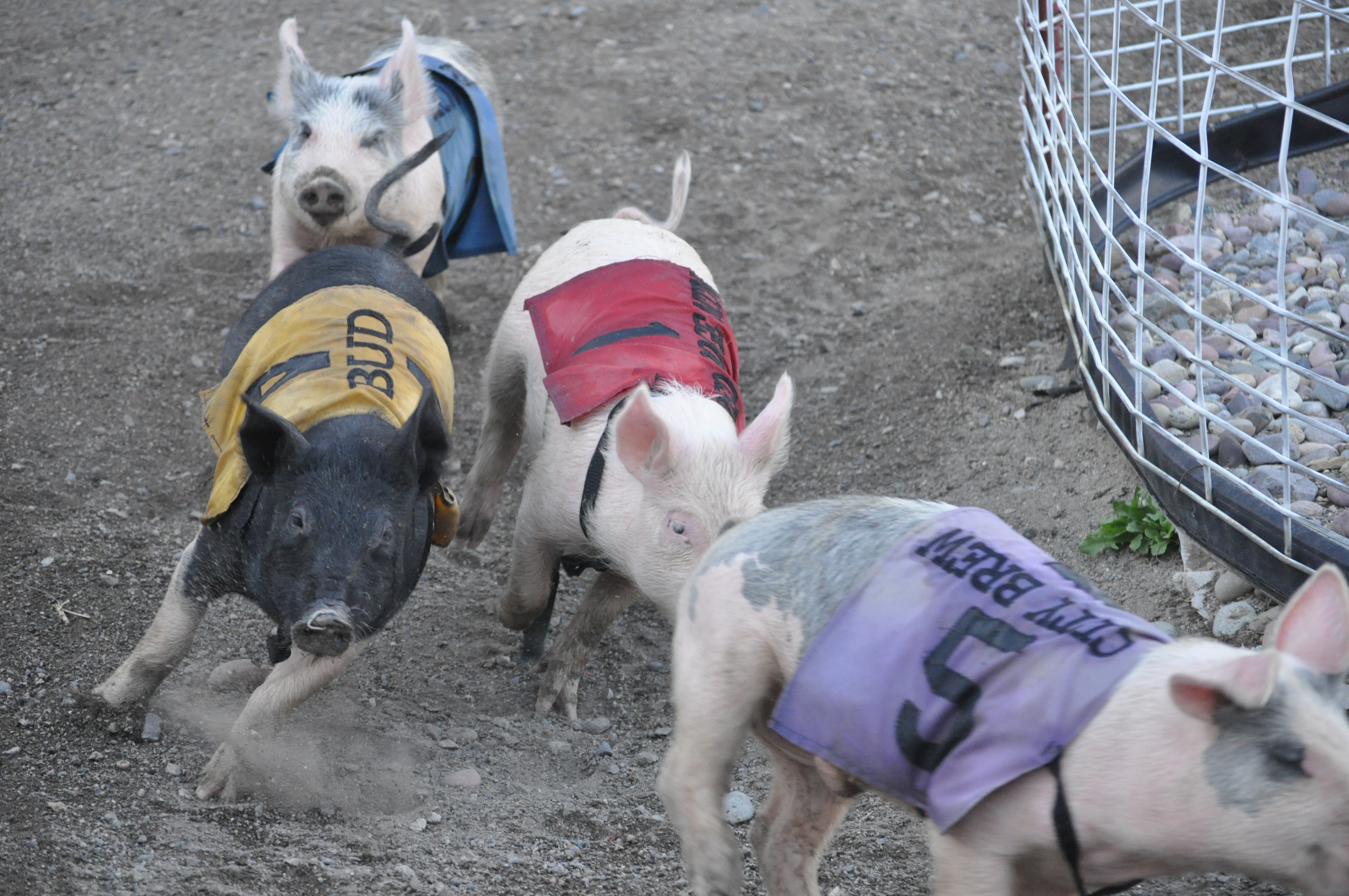
Yes, those are pigs racing. On my birthday, we went to hamburger joint in a tiny town near Red Lodge, Montana (we were on vacation there), that had pig races, one every fifteen minutes starting at 7 p.m. The kids absolutely loved it! I rooted for every little black pig, but not a one of them ever one. I think black pigs are CUTE!

NOTE: I wrote this a couple weeks ago, but am just now getting around to posting it.

I am 42 today. I woke without remembering this fact and had just about decided to slip out of bed without waking Dave when he whispered, “Happy Birthday, hon.” Since then I’ve been reminded of it often, since my children came up with the idea of singing “Happy Birthday” to me 42 times. They’re up to 12 by now, but I’m hoping they run out of steam.

I don’t mind the 40s, don’t mind getting older, but my birthday has reminded me of my “to be accomplished by 40” list. Actually, it was first a “by 30” list, but when it didn’t happen then, I just moved it, first to 35, then to 40.

The list only has one item:

Get a book accepted by a publisher.

It didn’t happen by 40, still hasn’t, but I’ve decided against a “by 45” list.

It’s not that I’ve given up. I’m still writing, still working on book proposals, still sending them out to be rejected and returned.

And, boy, am I still learning.

Still learning to write, more and more with every year, every assignment, every blog posting, every review one of my editor friends so graciously gives me—for free!

But I’m also learning about patience and faith. I’m learning about humility and peeling fingers off of brittle dreams and opening arms to the unknown.

It’s been an interesting journey.

About nine years ago, just before I learned I was pregnant with the twins, I decided my research/submit/rejection system wasn’t working, so I took a correspondence writing course. It started with baby steps: “Write an announcement for your church bulletin” and “Draft a help wanted ad.”

Two months in, it seemed to have barely moved forward. “Seek out opportunities to write for your church’s newsletter or for any small, local papers.”

“That isn’t the kind of writing I want to do,” I thought. “I want to write children’s and young adult stories. I want to write books.” I didn’t take the followup course, and the next spring I began attending a local writing class, where I shared the progression of my young adult novel, five pages a week.

Several from that class became good friends, and most of these have had some writing success. One has found a niche in genre literary journals; another works as a corporate freelance writer and is currently shopping around a novel; and the leader of the group is one of those professional editing friends who gives me the phenomenal advice I mentioned earlier.

But my journey has been more roundabout, as if God had some extra lessons for me that had nothing to do with the ability to write sizzling dialogue or attention-grabbing introductions.

In hindsight I can see His wonderful irony. For instance, my first “published” piece in those years was—aha!—a piece in our church’s newsletter. The second was the same.  Then we moved to Sterling, Kansas, primarily for Dave to coach the men’s soccer team at the college there but also so I could have more time to write, to finish the young adult novel and shop it around.

But I “fell” into a job almost right away, writing and editing copy for the college’s marketing department. I wrote brochures and letters, and worked my way into tracking down news releases, doing interviews, writing news stories for small-town newspapers, and, eventually, creating pretty much all the articles for the college’s alumni magazine.

It was exactly the kind of writing I had not been interested in a few years before.

But I learned so much! And I enjoyed it. In a tiny town in the middle of Kansas, I learned to value the “small stories” that, looked at with perspective, fit together into God’s BIG story.

And I began to value the “little” writing assignments I was getting to do as well.

Still, when Dave suggested that I write the story of Patrick’s adoption, I resisted—for lots of reasons, but in part because it’s just “one” adoption. I’ve met families who have adopted two, three, four children, others who took in kids with special needs. I’ve read about and known people who pursued orphans with a passion that makes mine look puny.

I’m writing it, though. I think I’m supposed to.

But I’m letting go of the dream of getting it published. Because maybe that’s not supposed to happen. Or maybe I’m supposed to swallow my pride and self-publish it.

Maybe this book—and every other bit of writing I do—isn’t supposed to be about me at all.

That, I think, is the biggest lesson of all.

A beautiful sunset we watched from the cabin’s back porch. We quoted “The heavens declare the glory of God!” a lot that week.

Practicing contentment


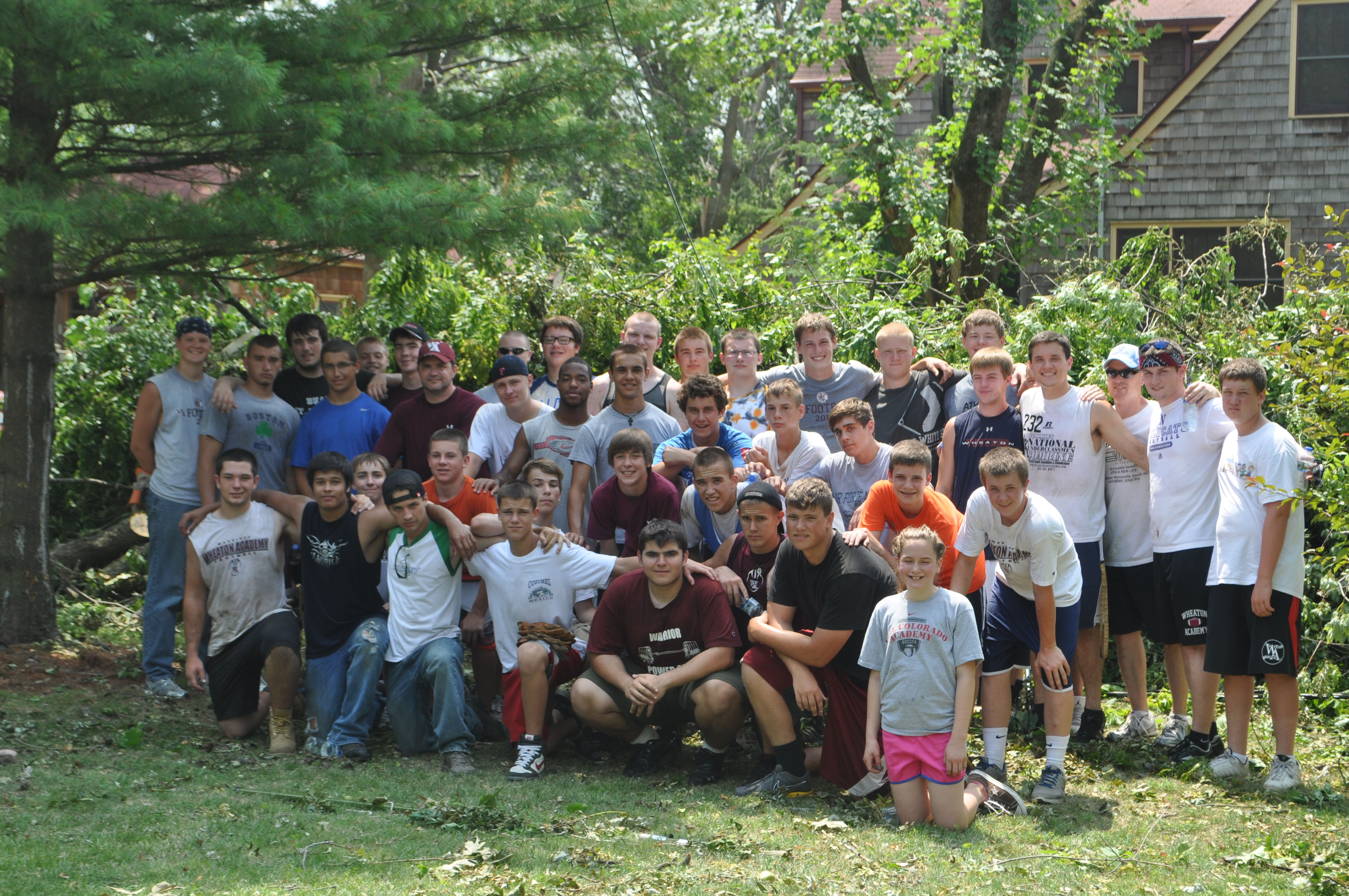
Here are the WA football players standing in front of the “hedge” they “built” in front of our house with all the tree debris they gathered from our yard on Tuesday. They were SUCH a blessing and encouragement to us.

After nearly five days without power, our street’s electricity was restored Thursday evening, so we moved out of the home of our very generous friends and back into our own. When we got there, the kids walked around and examined the house. Finally Jake said, “Well, it doesn’t look THAT different.”

Em and Maddie were shocked. “Jake, look at the yard. Half the trees are gone. There’s a hole where the pear tree used to be.”

“Yeah,” said Jake. “But look at the house without all the trees on it. It’s not that different. It’s good.”

What a great reminder. Because on the first day of this “experience,” it was pretty easy to realize that it could be a lot worse and not too difficult to focus on and pray for others’ needs and difficulties—but in the following days, when the power lines stayed down in the yard and the 6 ft. “hedge” of cleared brush grew brown and the insurance guy still hadn’t come out to give a quote so we could finally get the tree cleared off the back porch and I couldn’t get anything done…

I began to get a little grumpy.

Paul said he had to “learn” contentment. Well, it certainly doesn’t come naturally for me either!

I tried urging myself to “just be content,” but that didn’t work very well, and then I remembered Ann Voskamp’s words in One Thousand Gifts about voids. Paraphrase: You can’t replace sin with NOTHING. You can’t just try NOT to sin. Instead you have to “put off-put on,” a Biblical pattern (Voskamp does a beautiful job with this—and goes far deeper; I highly recommend her book.) My frustration/lack of contentment cannot be countered or replaced with nothing. Instead I have to fight it and replace it with its opposite (more accurately, I have to cry out for help to do this).

So what is the opposite of “discontent”? Voskamp suggests that “gratitude” is.

Ah, that evasive friend, gratitude!

When I practice gratitude, in all situations, I learn contentment.

I’ve prayed a lot about this (I’ve written about it a lot, too. “Looking for poop” is an earlier blog entry about this same topic), and I’ve discovered that the practice of consistent gratitude is linked to my focus. Contentment doesn’t happen when I go through life primarily noticing the negative. Contentment actually happens when I practice looking at all things, “good” and “bad,” as blessings from God.

THEN, my gratitude builds and my contentment grows.

This past week I had to practice a lot. I’d had plans to finish getting the house settled after we got back from vacation in Montana this past Sunday. I wanted to go through all my e-mails and lesson plans before heading off to teach at a month-long international student camp on July 7. But my to-do list had to be set aside. And I don’t handle that very well.

But God kept reminding me to practice this different way of looking that transforms frustrations into blessings.

I tried to see “days getting ‘nothing’ accomplished” as “unhurried hours building relationship with my children and my friend.” And when we moved back into our house on Thursday night, I refused to look at the box of still-packed “stuff” in Em’s room or the unhung pictures leaned up against walls—or even at the things completely out of my control, like the green tarp covering the empty dining room window frame.

Instead I focused on the organized kitchen and the naturally cool basement. I enjoyed turning lights ON and listening to the steady hum of the window air conditioners.

I read to my children before bedtime and then watched their peaceful sleep.

I had to practice again the next day, and I will have to tomorrow as well. And then again the day after.

Perhaps, someday, I will be able to say, with Paul, that “I have learned in whatever situation I am to be content.”

Based on my track record, though, that probably won’t happen till I’m 95.

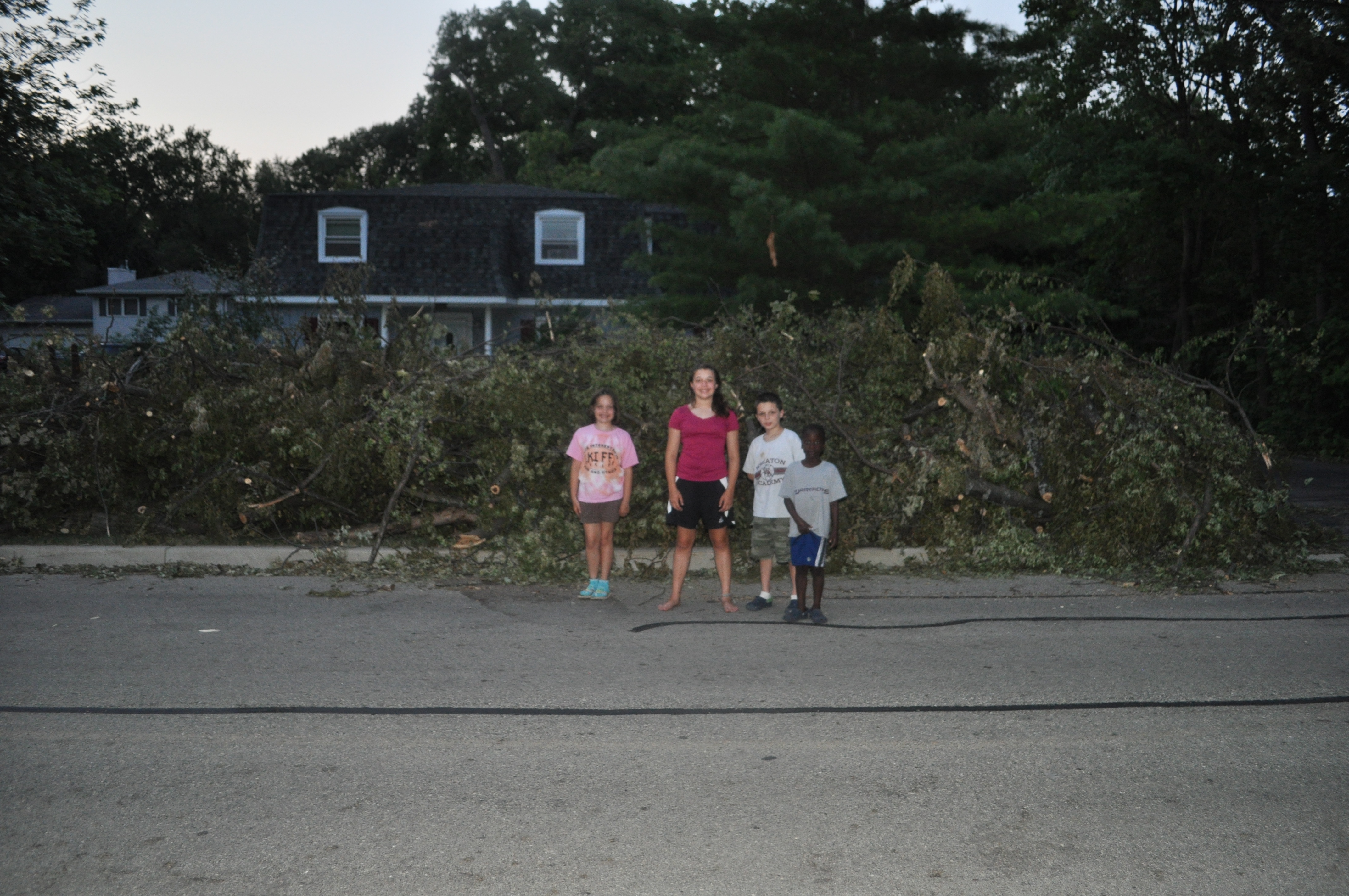
And here are our kids standing on the street side of “the hedge” on Thursday night. Kudos to the town of West Chicago and all the people who worked (and are still working) on the clean-up. Our hedge is gone now, and everyone has power restored.

Letting be

“Let be and be still and know that I am God.” Psalm 46: 10, Amplified.

We just moved for the second time in less than a year, and I want everything settled. I wake up with strange thoughts on my mind: “I wonder if the kids’ soccer stuff should go with winter wear downstairs or in the upper hall closet?”

I usually don’t spend a lot of thought on things like that.

And in the midst of this upheaval, it seems like my mind wants to worry on other unfinished matters: unsettled relationships, questions about this upcoming school year—on and on. “A place for everything and everything in its place,” this stranger mind says, “so what are we going to do about you not having called your grandmother in months? You need to fix this.”

God keeps whispering the Amplified version of Psalm 46:10 to me. “Let be.” “Be still.” “Know that I am GOD!”

More familiar versions leave that implied first part off, but it’s the part I’m hearing loudest of all. “Let it be, Jen. Let be.” Be all right with the chaos in your house. Remember that relationships are between fallen, messed-up people; they require a LOT of grace. An orderly life is not the equivalent of a “full, abundant” life.

Things will NEVER, this side of heaven, be perfect and settled, though right now I really want them to be. Actually, it helps when I realize that my desire for this perfection and order is truly my deep heart cry for the Perfect One. When I don’t wholeheartedly pursue Him, and instead become obsessed with creating complete order in my life, I’m actually creating chaos in my soul.

Far better to have some chaos in my home and in my life than chaos in my soul.

So even though I DO have to get my house settled, even though my life, with four/six kids, is always going to be kind of crazy, I will practice this verse.

“Let be and be still and know (recognize and understand) that I am God. I will be exalted among the nations! I will be exalted in the earth!”

And I will start with letting be.

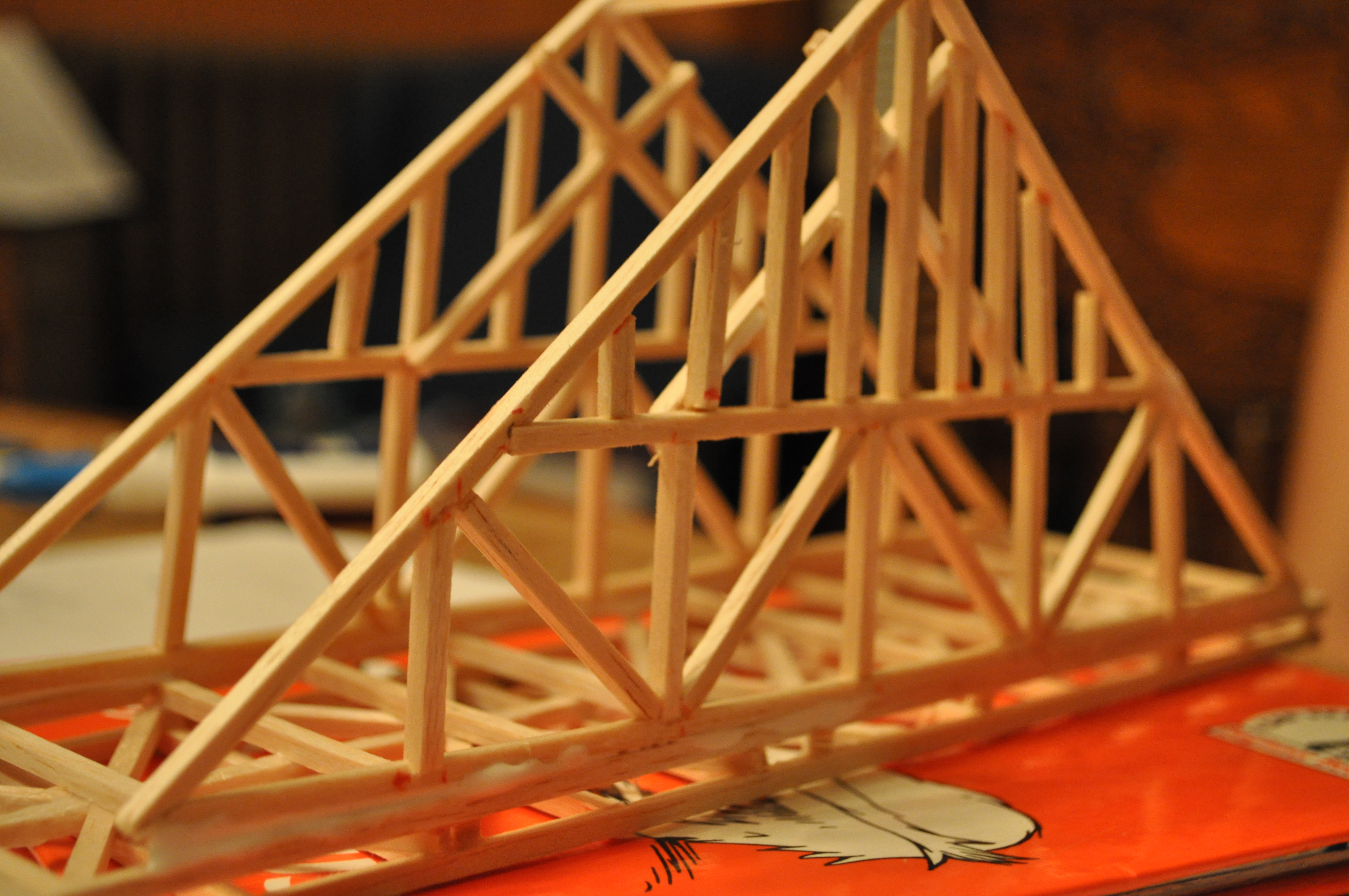
Other than the beautiful symmetry and order of this bridge that Jane, my international student daughter, built last month, this picture has little to do with this post, but I’ve been wanting to post a picture of the amazing bridge she built for her physics class. She did an excellent job.